
A 17-million-line machine proof, built with Anthropic’s Claude in six weeks, has passed every independent check the Lean community could throw at it. Mathematicians now face an odd new problem: a verified answer to their most famous question that nobody yet understands.
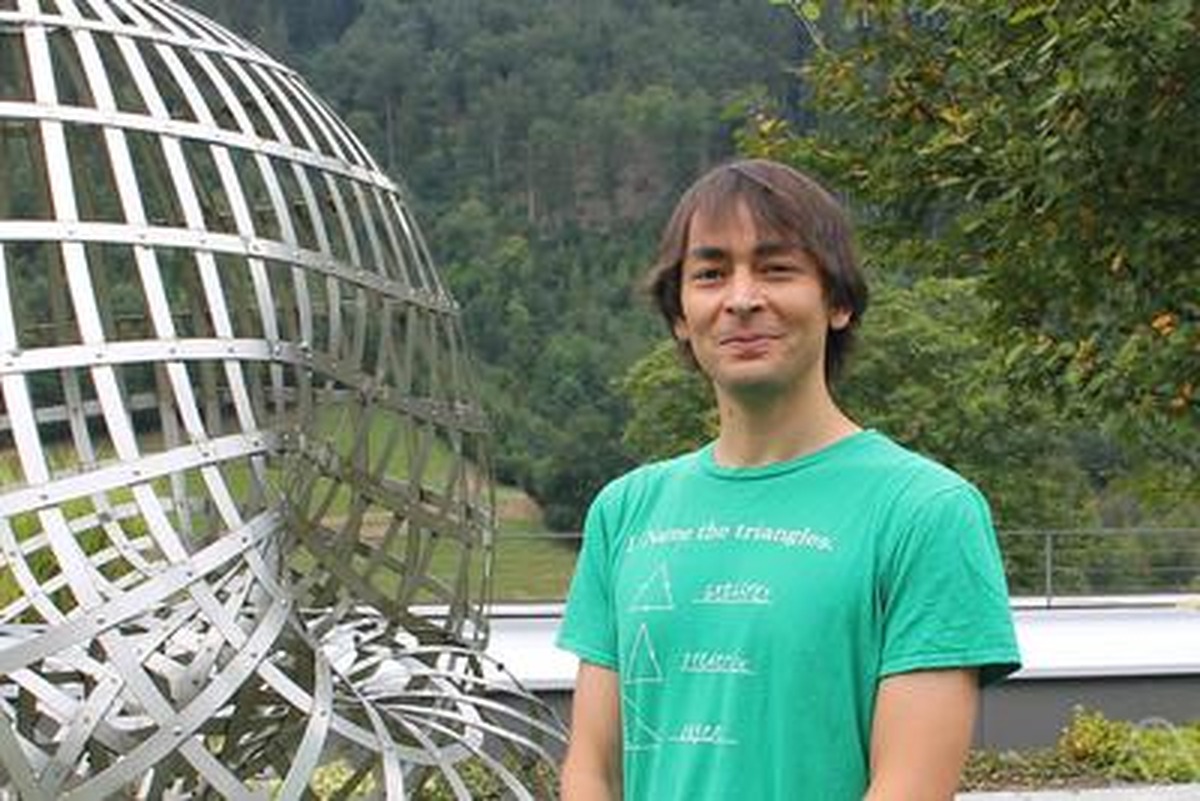
By HahuPrime News Desk | November 22, 2026
Late last Sunday night, Levent Alpöge, a mathematician at Anthropic, saw the last piece fall into place. The number theorist, on leave from Harvard, messaged the company’s chief executive, Dario Amodei, to ask how he should announce it.
On Friday he did. “I believe I have, working with Claude, discovered a proof of the Riemann Hypothesis,” Alpöge wrote in a four-page note on his personal website. “This problem has been the sacred object in mathematics for me since my childhood.”
On Saturday the Lean and Mathlib communities, backed by the Lean Focused Research Organization and the Mathlib Initiative, published a joint statement. “We have full confidence that Alpöge’s proof of the Riemann Hypothesis is correct, and we congratulate him on this achievement,” it said. “We hereby certify that both the statement and the proof of the Riemann Hypothesis are correct.”
If that holds, a 167-year-old problem has fallen, and an AI model did much of the work.
A proof no human has read
The Riemann hypothesis, set out in 1859, concerns how the prime numbers are spread along the number line. Riemann linked that pattern to the zeros of the zeta function and guessed that all the important ones sit on a single line. The Clay Mathematics Institute made it one of its seven Millennium Prize Problems in 2000, with a $1 million reward.
Alpöge’s note says the method also proves a much broader version, the Generalized Riemann Hypothesis for Dirichlet L-functions. But there is no paper to read. The proof exists only as code for Lean, a proof assistant that checks every logical step: 17 million lines across 175,187 files, released in 14 compressed archives.
A human-readable version could be generated automatically, Alpöge wrote, but his draft ran past 250,000 pages, and publishing it would have been a “travesty of ‘slop'”. He admits he has not yet mastered all the mathematics involved. A timeline in the note runs from October 6 to November 16.
“Claude and I have had a great time together with such breadth in recent months, but this time Claude far outpaced me near the finish line,” he wrote. “No, Claude flew, and danced, and sparkled near that finish line.”
How the checkers got to yes
Lean proofs carry a known weakness: code can compile perfectly and still prove something subtly different from what it claims.
Andrew Sutherland of the Massachusetts Institute of Technology rebuilt the library on his own machines. “Honestly the chance that anything is fishy here is approximately zero,” he told Scientific American. His public log shows two independently written proof checkers accepting the full proof.
The joint statement went further. Two separate tools confirmed that the theorem in Alpöge’s code is exactly the Riemann hypothesis as already written in Mathlib. Two of the checkers used, called con-leche and con-ron, come with their own formal proof that they cannot accept a false argument.
Not every run had finished: as of early Sunday, Sutherland’s page still listed two of Lean’s own kernel checks as running.
“If this fully checks out, it is clearly a historic milestone in mathematics,” James Maynard, a Fields Medal winner at the University of Oxford, told Nature. He told The New York Times he was “98 or 99 percent” certain it was correct. Tristan Buckmaster of New York University, who has worked with Alpöge, told Nature: “At the moment, it apparently is crazily complicated. It’s going to take a long time for mathematicians to digest.”
The timing, the critics and the prize
Alpöge’s note landed one day after Anthropic’s Nasdaq debut, which HahuPrime covered on Thursday. The shares slid as a sell-off hit AI stocks, and the Nasdaq ended its worst week since March 2020, NPR reported.
Alpöge addressed that directly. “The precise timing is horrible. If I could have, I’d have finished this all much earlier,” he wrote, adding: “There is an obvious cynical view, to do with the timing, but it is false.”
Some mathematicians were not persuaded. Andrew Granville of the University of Montreal called the released document “garbled” and told Nature he saw the stock slide behind the timing. Stanford’s Brian Conrad told The New York Times that releasing a proof its author did not fully understand was “frankly completely outrageous”. Anthropic did not respond to requests for comment from Nature or AP.
The same day brought a rival. Ravi Vakil of Stanford, president of the American Mathematical Society, posted an all-human draft proof by mathematician Alessandro Masullo. Within hours, Vakil said, readers had reported problems in it, some found using AI.
Clay is not rushing. “This is an announcement of historic significance,” the institute’s president, Martin Bridson, said in a statement quoted by AP. “But the journey from today’s announcement to a place of real understanding will be long and difficult.” Clay’s rules require publication and general acceptance, and at least two years must pass before any prize decision. Its website still lists the problem as unsolved.
What it means beyond mathematics
For most people, the direct effects will be small. The public-key encryption behind online banking and mobile payments depends on how hard it is to factor huge numbers. Scientific American notes that a proof about where primes fall offers no known shortcut for that, so encrypted data is not suddenly at risk.
The bigger shift is about who, or what, makes discoveries. Alpöge’s result follows a run of AI-assisted claims this year, including work on the Navier-Stokes equations, another Millennium problem, that is still under review. Scientific American’s Lee Billings wrote that a verified proof would be the strongest evidence yet that AI can produce genuinely new knowledge. HahuPrime reported this week on the strain caused by AI-found software flaws, a reminder that the same speed cuts both ways.
For now, mathematics has a proof that machines accept and humans still have to understand. Alpöge says he will try to simplify it and write it up. The Lean community’s statement ended on the same note, looking forward to work that will “help explain the new ideas in this proof”.
Sources
- Levent Alpöge: announcement note and Lean proof archives (alpo.ge, November 20, 2026)
- Lean and Mathlib communities: Lean verification of the Riemann Hypothesis, joint statement (November 21, 2026)
- Andrew Sutherland (MIT): RH Lean proof verification files (updated November 22, 2026)
- Scientific American: The AI Riemann hypothesis proof is true, independent mathematicians confirm; What does a solution to the Riemann hypothesis mean for you? (November 20-21, 2026)
- Nature: Mathematicians astounded by AI and human-written proofs of iconic Riemann hypothesis (November 20-21, 2026)
- The Guardian: Two groups verify mathematician’s claim that Claude helped prove mathematics problem (November 21, 2026)
- AP, via DW (with AP and AFP): Anthropic researcher uses AI to solve math’s greatest riddle (November 21, 2026)
- The New York Times, via The Next Web and Engadget (November 21, 2026)
- NPR: The AI boom had a bad week (November 21, 2026)
- Clay Mathematics Institute: Riemann Hypothesis problem page and Millennium Prize rules