
Washington says no hackers were behind a week that took down Outlook, grounded US flights and crashed the NSA’s classified network. Lawmakers and security researchers point to a different pressure: artificial intelligence is finding software flaws faster than the world can safely fix them.
By HahuPrime Analysis | November 21, 2026
On Friday, November 13, customers of Equity Bank in Nairobi were told to stop emailing and send a WhatsApp message instead. UBA Kenya, Stanbic and Standard Chartered sent similar notices. Their email had gone dark because Microsoft’s had.
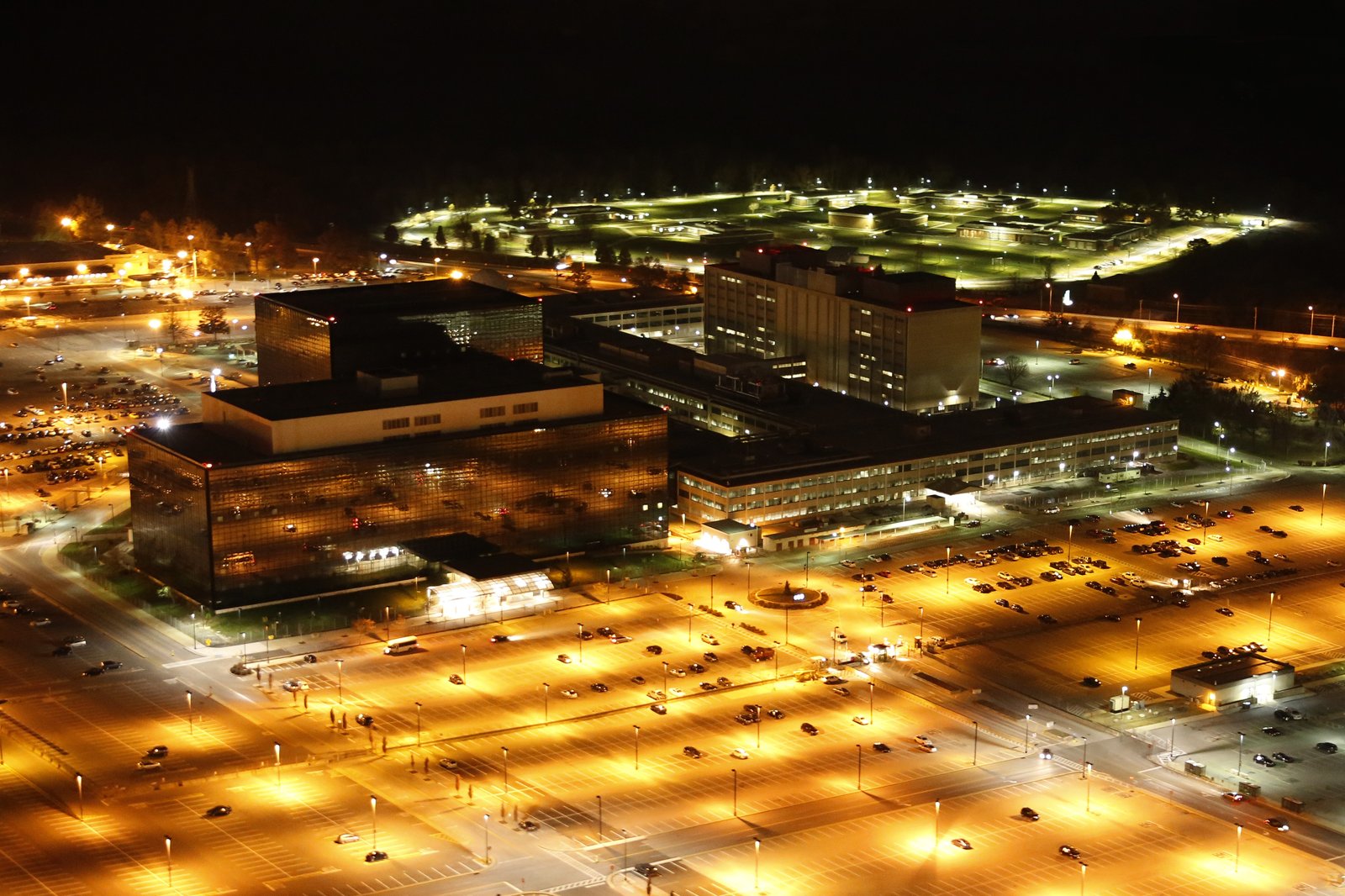
Within days the list had grown. A nearly five-hour ground stop halted US air travel. Chase customers saw “Some services aren’t available.” Apple Pay and iCloud stumbled. And at Fort Meade, Maryland, the National Security Agency staggered its staff’s arrival times because NSANet, the network it uses to share classified information, kept falling over.
Each organisation says it was not hacked. Yet a growing number of officials and researchers now argue that many of these breakdowns share a root.
“AI is making it possible to identify vulnerabilities across enormous numbers of systems at unprecedented speed, creating enormous pressure on companies and government agencies to patch those vulnerabilities immediately, often all at once, putting tremendous strain on systems that weren’t built to handle that pace of change,” Senator Mark Warner, vice chair of the Senate intelligence committee, said in a statement on Tuesday.
The patch that broke the spy agency
The clearest link runs through PHP, the programming language behind roughly 70% of websites. Last month researchers using AI tools found critical flaws in it, known as PHP2Shell, and on October 21 the FBI, NSA and CISA told organisations to patch at once or take vulnerable systems offline. HahuPrime reported that warning at the time.
The NSA followed its own advice, and paid for it. “The patching that has gone on following that has caused some of these systems to not come back up when you patch them as expected,” Director of National Intelligence Jay Clayton told Fox Business. “That is what has happened at the NSA today.”
NBC News reported that in the roughly two and a half months before its outage, Microsoft patched 3,554 security flaws, more than in 2024 and 2025 combined. Wired reports that the number of vulnerabilities recorded in 2026 has now passed 100,000, against about 25,000 in 2022, the last year before large language models went mainstream.
Microsoft chief executive Satya Nadella has warned that more “instability” could follow, because a “patch needs to go instantly from being available to being patched in production because it’s being exploited in the wild,” Wired reported.
Joe Slowik, director of threat research at Dataminr, described how the old routine has collapsed. “Historically, even a couple of years ago, a vendor releases a patch for a nasty bug. You might have some time to do some validation and apply it,” he told Wired. “Now, that may not even be an option.”
Not every failure fits the theory
The story is messier than a single villain. Microsoft’s own preliminary report traces its global outage, which began on November 12 and lasted just under 24 hours, to a dormant defect introduced in a July update to its network gateway servers. A traffic shift and a 14% loss of server capacity set it off. Ars Technica notes that Microsoft lists the incident as “a technical issue not related to cyber or AI/agents.”
The US Transportation Secretary, Sean Duffy, blamed the ground stop on a Juniper router installed by L3Harris at a remote Arkansas facility that “was not identified quickly enough.” Bernstein estimated the stoppage cost the four biggest US airlines $345 million. JPMorgan blamed a software bug in its own hardware, and Apple an internal update.
Taken individually, Wired wrote, the incidents “all seem to have routine explanations.” What has changed is the pace: old systems carrying years of “tech debt” are being patched faster than they were built to bear.
There is also a caution about scale. Only around 300 flaws have been added this year to CISA’s catalogue of vulnerabilities known to be exploited, and VulnCheck counts about 1,500, roughly 1.5% of all bugs found. “The number of vulnerabilities has certainly exploded, but the number of vulnerabilities that you need to care about has remained somewhat constant,” Slowik said. “The caveat is that the pace at which they’re being used or weaponized has increased dramatically.”
Why Africa felt it too
The Microsoft failure showed how far one company’s infrastructure reaches. TechCabal reported that Kenyan banks and insurers, including Old Mutual and APA Insurance, lost email, and that the outage spread to 74 countries and territories within about an hour, according to Downdetector. In South Africa, Downdetector logged 874 reports for Microsoft 365 by 07:53 on November 13, as workers logged on to find their inboxes would not load, The Citizen reported.
Payments kept working, but TechCabal noted that Kenya has few local fallbacks, after a planned $1 billion Microsoft and G42 data centre for East Africa stalled. HahuPrime has covered Microsoft’s retreat from its Nairobi engineering hub last month.
For African governments, banks and airlines, many of them running PHP websites and cloud email, the lesson cuts both ways. Skipping a patch for an AI-found flaw invites attackers. Rushing one can knock out the service itself. Ethiopian Airlines, which is still investigating a breach of its ShebaMiles programme, shows how costly the first risk can be.
What comes next
Few expect calm soon. “It’s going to feel like the sky is falling for two years,” Cloudflare chief executive Matthew Prince told Wired, though he predicts AI will eventually help defenders and “the background noise will actually tick down quite a bit.”
Representative Jim Himes, the top Democrat on the House intelligence committee, warned that the faster pace of patching “could cause more frequent outages,” but called it “vital to shore up the security of all IT infrastructure.” Warner called the disruptions “a wake-up call.”
Lea Schönherr of Germany’s CISPA Helmholtz Center for Information Security argued that the question of blame should not stop at the machines. “What matters to me is that we avoid blaming AI when things go wrong,” she told Wired. “Responsibility lies with the people and companies that choose to use AI and give it access to infrastructure.”
Sources
- Sen. Mark Warner: Statement on Network Outages (November 17, 2026)
- Wired: The Outages Are Just Getting Started (November 21, 2026)
- NBC News: The AI race to fix security flaws could be making tech outages more common (November 21, 2026)
- The Washington Post: Welcome to the age of endless digital breakdowns (November 21, 2026)
- CyberScoop: Consensus mounts that tech outages were fueled by patching of AI-discovered vulnerabilities
- The Record: NSA resumes normal operations following internal network disruptions
- CBS News: National Security Agency network outage linked to software vulnerability
- Ars Technica / BleepingComputer: Microsoft post-incident report on the Microsoft 365 outage
- CBC News (with Reuters and AP): Flights, banks, emails: What we know about a U.S. wave of tech outages
- TechCabal: Microsoft outage pushes Kenya’s banks onto WhatsApp and phone lines
- The Citizen (LNN): Global Microsoft 365 outage hits Outlook, Teams and Copilot across South Africa