
An alliance of the Rapid Support Forces and the SPLM-North says it has taken Bau and five areas in Geissan, about 40km from Ed Damazin. The army disputes the claims, and residents of the Blue Nile capital have started to leave.
By HahuPrime News Desk | November 21, 2026
ED DAMAZIN, Sudan — The video is short. Fighters from Sudan’s Rapid Support Forces (RSF) stand in front of the headquarters of Bau locality, in the Ingessana Hills of Blue Nile state, and declare the town theirs. Sudan War Monitor, which tracks the war using open-source material, geolocated the footage to the front of the building and dated it to Thursday, November 19.
A day later, the same alliance said it had pushed into Geissan locality, about 40 kilometres south-east of Ed Damazin, the state capital. In the city, some residents are already packing.
Elham Kamal, a Damazin resident, told Radio Tamazuj that some people had already left the city, while others were stuck because they could not afford to travel somewhere safer.
What the alliance claims, and what the army says
The offensive is being carried out by the RSF and the faction of the Sudan People’s Liberation Movement-North (SPLM-N) led by Abdelaziz al-Hilu, partners in a coalition called Tasis, or “Founding”. In a statement on Friday, the RSF said Tasis forces had captured Khor Mak, Al-Madina 10, Al-Madina 11, Singa Nabag and Al-Taqa village in Geissan locality, Sudan Tribune reported. The group claimed it had killed or captured hundreds of soldiers and seized 27 combat vehicles, six tanks and two armoured vehicles. None of those figures has been independently verified.
Bau, about 60 to 70 kilometres south-west of Ed Damazin, is the third locality headquarters the alliance says it has taken this year, after Kurmuk and Geissan. Sudan War Monitor reported that army units had pulled back from Bau to Miganza, about 20 kilometres north on the road to the capital, and verified a video of RSF fighters outside the Madina 11 health centre on November 20.
Hamouda al-Bishi, an RSF field commander in Blue Nile, said from inside the Bau headquarters that his forces would keep going until they controlled the whole region and would advance towards White Nile state, Radio Tamazuj reported. He told Damazin residents to stay away from military positions.
Sudanese authorities reject that picture. In a televised address on Friday, Blue Nile government spokesman Saif al-Nasr Minallah urged residents to stay calm and denied that the fighters were nearing the capital.
“We understand citizens’ fears and panic, and that war involves advances and retreats, but the reality on the ground is not as being depicted on social media,” he said, according to Anadolu Agency. “The armed forces still hold the initiative and are at the forefront so that security can be restored.”
He said the regional government was working with the army’s 4th Infantry Division and national leaders to bring in more troops and equipment. “The Blue Nile region will not be the breach through which these enemies penetrate,” he said, Sudan Tribune reported.
The 4th Infantry Division said it had repelled an RSF attack on Dirang, on the Kurmuk front, and the army said it had destroyed 28 RSF combat vehicles there. Bau’s commissioner, Abdel Ghani Dagais, said the rest of the locality remained under army control. Army sources told Sudan War Monitor that reinforcements had arrived, but their size has not been confirmed.
A new wave of displacement
Whatever the precise front line, people are moving. Dagais told local television on Friday that residents of 35 villages had fled to Ed Damazin. Humanitarian activists told Sudan Tribune that about 500 families had left Bau locality for Balang, Shitio and Shitalwa, while some 309 families fled Madina 12 for Bakori, Yara and Bambadi.
Ed Damazin was already crowded before this week. The International Organization for Migration (IOM) estimated that 119,782 people were displaced from locations across Blue Nile between January 11 and October 15. In an earlier update, it counted 45,740 displaced people in Ed Damazin alone. The UN refugee agency, UNHCR, has warned of overcrowding and shortages of shelter, food and clean water in the camps.
Ehab Al-Sir, a civil society activist in the city, called on officials to be honest with residents. “We call on the government and relevant authorities to provide clear and reliable information about the security situation and to take concrete measures to protect civilians,” he told Radio Tamazuj.
Why Ethiopia is watching
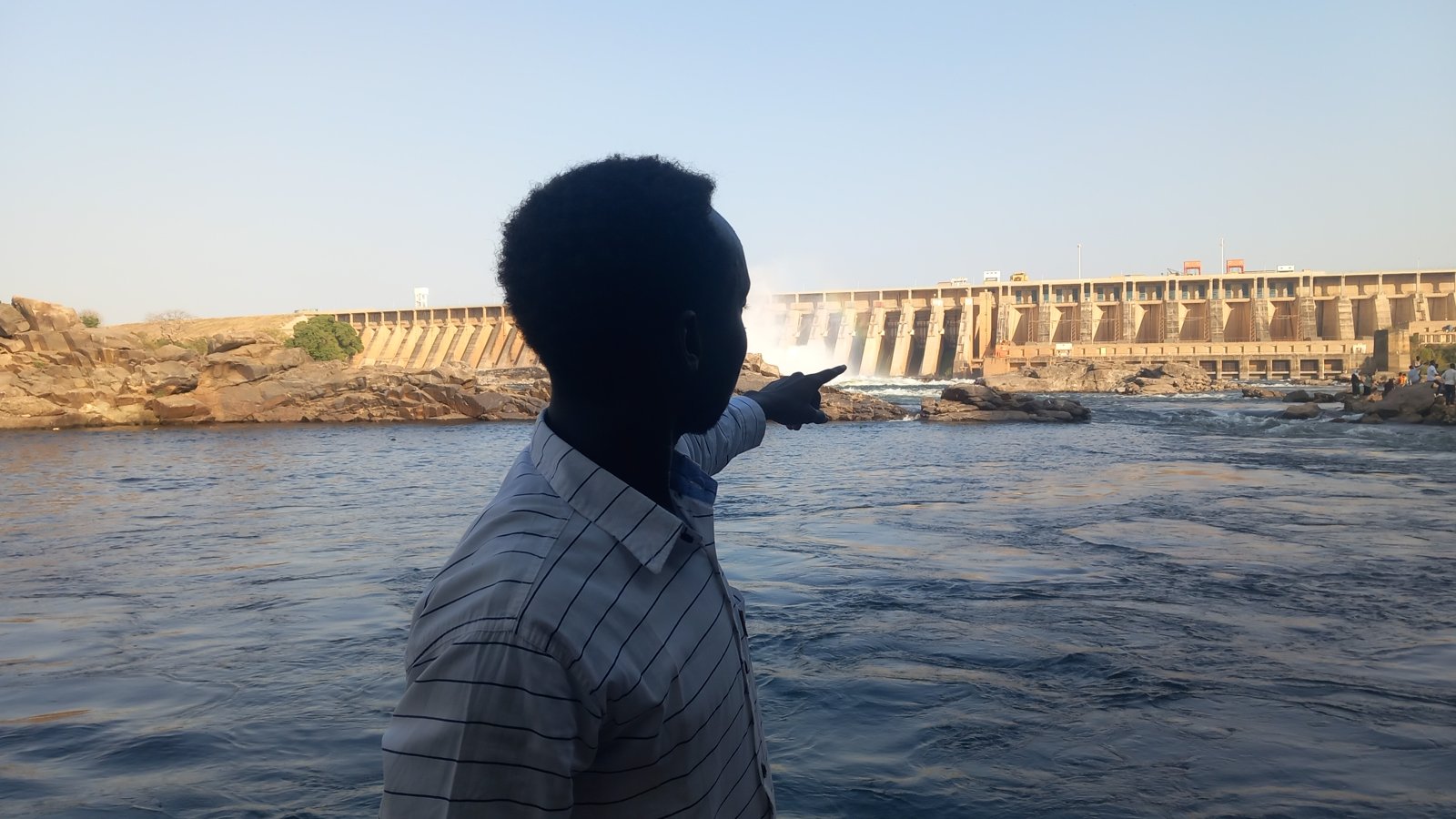
Blue Nile shares a long border with Ethiopia’s Benishangul-Gumuz region, and the fighting puts the war on one of Sudan’s most sensitive frontiers. Ed Damazin sits beside the Roseires Dam, downstream of Ethiopia’s Grand Ethiopian Renaissance Dam on the same river.
Relations between Addis Ababa and Khartoum have soured sharply this month. Sudan’s army-led government accuses Ethiopia of allowing the RSF to set up camps and launch drones from its territory, and has closed Ethiopia’s consulate in Gedaref after Ethiopia expelled Sudanese consular staff from Asosa. Ethiopia denies backing the RSF. It accuses Sudan, Eritrea and Egypt of supporting the Tigrayan forces fighting federal troops, which all three deny. The UN says it is working to stop the row from escalating.
On Friday, Bau’s commissioner repeated the charge, saying Ethiopia and South Sudan were “directly involved” in destabilising Blue Nile, according to Sudan Tribune. He gave no evidence, and neither government had responded by Saturday.
The Blue Nile push comes as the army presses its own offensive in West Kordofan, where it says it is closing in on the RSF-held city of Al-Nahud. The conflict monitor ACLED has described Blue Nile as shifting from a peripheral front to a central battleground, in a country where the World Food Programme says funding cuts have left hundreds of thousands without food aid.
What happens next
Bau links the south and west of the state to Ed Damazin, giving whoever holds it influence over supply lines towards Geissan and Kurmuk, Sudan Tribune said. Both sides have made claims that cannot yet be checked.
The questions now are whether the army can hold the road north of Bau and the approaches from Geissan, and whether aid agencies can reach the families arriving in Ed Damazin. The war, which began in April 2023, has already displaced around 13 million people across Sudan.
Sources
- Sudan War Monitor: Rebel advance in Blue Nile brings fighting closer to Damazin (November 21, 2026)
- Sudan Tribune: RSF and SPLM-N alliance claims capture of five new areas in Sudan’s Blue Nile (November 20, 2026)
- Sudan Tribune: Blue Nile government says it is mobilizing troops to counter rival alliance (November 20, 2026)
- Radio Tamazuj: RSF-SPLM-N alliance claims capture of Bau as Blue Nile fighting escalates (November 19, 2026)
- Radio Tamazuj: Panic in Damazin amid military operations in Bau, Geissan (November 21, 2026)
- Anadolu Agency: Sudanese authorities say army working to restore security in Blue Nile state (November 21, 2026)
- Addis Standard: RSF-allied forces claim advances in Sudan’s Blue Nile State bordering Ethiopia (November 21, 2026)
- IOM Displacement Tracking Matrix: Focused Flash Alert, Blue Nile State; UNHCR via Sudan Now (November 2, 2026)