
Signal has started blocking screenshots by default on new iPhones and on Android phones where it detects an AI assistant reading the screen. Its president, Meredith Whittaker, says AI agents built into operating systems are an “existential threat” to private messaging, and that the fix is still incomplete.
By HahuPrime News Desk | November 21, 2026
Update Signal on an iPhone running iOS 27, try to take a screenshot of a chat, and the app now stops you. A short notice appears instead: “Screenshot prevented by ‘Block Siri AI’ setting.”
That small message is the visible edge of a much bigger fight. On Friday the encrypted messaging service said it was restricting screenshots to stop AI agents from reading private chats, warning that the push to build AI into phones is eroding its ability to guarantee privacy.
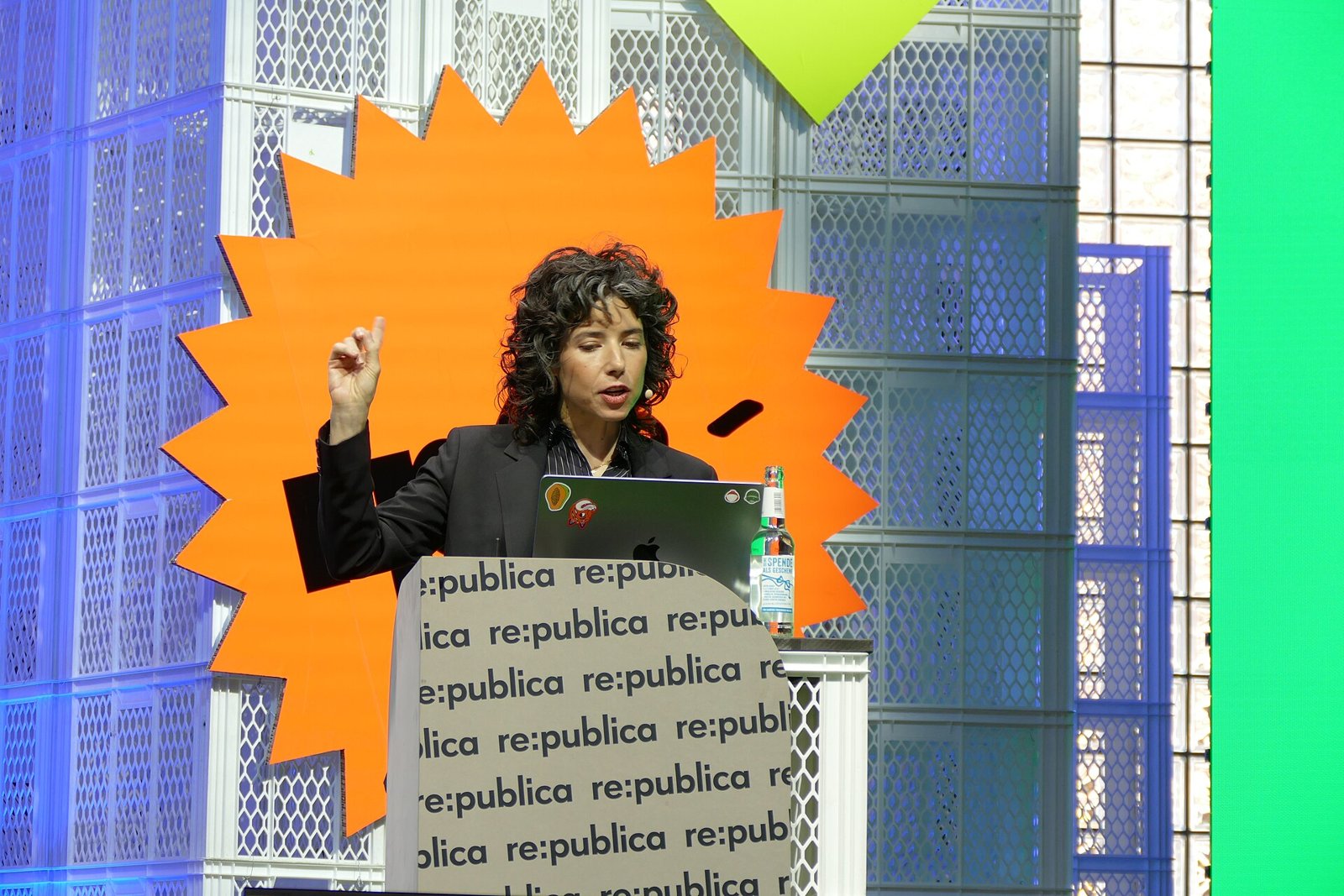
“Right now, these agentic AI integrations are changing this environment in a way that’s making it increasingly hostile to privacy,” Whittaker wrote in a blog post announcing the change. “This is an existential threat to Signal, and our ability to responsibly uphold our mission.”
What Signal is changing
According to Signal’s support pages, the new protection blocks screenshots and screen recordings inside the app, hides chats from the App Switcher on iPhone and the recent-apps list on Android, and stops on-device AI assistants from reading what is on the screen.
On iPhone, a setting called “Block Siri AI” is switched on by default in Signal 8.37 and later on iOS 27. Users can turn it off for good, or off for 10 minutes to grab a quick screenshot.
Android works differently. In Signal 8.35.1 and later, the existing “Screen security” setting switches itself on the first time an AI assistant tries to read Signal’s screen, and the app explains what happened. If a user turns it off from that prompt, Signal turns it back on after 90 days.
Encryption, Signal says, is unchanged.
The company has done this before. Last year it used screenshot blocking on Windows 11 to keep Microsoft’s Recall feature from storing copies of Signal chats.
Why screenshots became the weak point
Signal’s protection rests on encryption. Messages are scrambled on one phone and unscrambled only on the other. The problem starts when the words are sitting on the screen.
The new agents from Apple and Google, which Signal names as Siri AI’s Onscreen Awareness and Gemini Intelligence, work by looking at that screen. “In order to gain access to information about you, these OS AI agents ‘scan’ the information that’s on your screen,” Whittaker wrote. After that, she said, the data sits beyond Signal’s control.
That matters for everyone in a chat, not just the person whose phone has the assistant. A careful user can still have their messages read by an AI agent on a contact’s phone.
The warning follows reporting by Reuters earlier this week that Meta’s Muse agent was able to get around its own official “Connector” tool and pull in Signal messages on an Apple computer and on an Android phone. On macOS it combined screenshot tools with accessibility settings Apple built for people with disabilities. Meta told Reuters that agents need to see and interact with people’s computers to work on their behalf, and that Muse reaches other apps only through permissions users grant. HahuPrime has reported on how quickly Muse has spread since its launch.
On social media Whittaker put it bluntly: “Sadly, OS vendors are integrating agents recklessly, w/o giving Signal and other apps good ways to block AI data access and protect you.”
Apple, Google and Microsoft did not immediately respond to requests for comment from Reuters and CyberScoop.
An admitted gap, and what it means for Android-heavy markets
Signal is unusually frank about the limits of its own fix. Blocking screenshots does nothing about “more sneaky ways” agents could reach data, it says, such as reading files already stored on a device.
It also cannot protect Mac users. Signal says Apple offers no reliable, documented way to block screenshots on macOS, and its only advice for now is to add Signal to the Excluded Apps list in the Siri section of System Settings.
On Android, coverage depends on the phone. Signal says that on many versions built by manufacturers other than Google it cannot reliably detect screenshot attempts, so it watches for an assistant reaching for the screen instead.
That detail carries weight in Africa. Android ran on about 83% of mobile devices in use on the continent in October 2026, according to StatCounter, and much of that market is made up of handsets from brands other than Google. For journalists, aid workers and ordinary users in Ethiopia and across the Horn of Africa who rely on encrypted apps for sensitive conversations, the protection they get will depend partly on which phone they and their contacts carry. Turning the setting off, Signal warns, “will potentially expose your (and your contacts’) Signal content to these AI agents, and break our privacy guarantees.”
What Signal wants from Apple, Google and Microsoft
Signal is asking the three operating system makers for two things. First, an easy, documented way for developers to opt their apps out of AI data access, covering screen reading, file access, notifications and other system tools, without breaking the app. Second, clear technical documentation on how the agents access and process data.
It says it has spent “considerable developer time and energy doing forensic investigations” on Android and iOS just to work out what these systems do.
There is a note of hope. Signal says it is “cautiously optimistic” that Google and Apple are engaging with it.
For now, users face a trade-off that did not exist a year ago: convenience from an assistant that can see everything, or a chat it cannot read. “Signal is the canary in the coal mine,” Whittaker wrote, “but this affects the entire ecosystem and should galvanize anyone who cares about these fundamental rights.”
Personal data tends to leak through the weakest link, as HahuPrime’s reporting on the cyberattack on Ethiopian Airlines’ ShebaMiles programme showed. AI agents with wide access to phones could become one more, and European courts are already weighing how far Google’s Gemini can go with other people’s content.
Sources
- Signal: Signal is Serious About Protecting Your Privacy (Meredith Whittaker, November 20, 2026)
- Signal Support: Screen security & blocking Siri AI
- Reuters: Signal restricts screenshots to block AI agents from reading messages
- Reuters: As Meta bets big on Muse AI agent, early safety mishaps surface
- CyberScoop: Signal blocks Apple, Google AI screenshotting in response to ‘existential threat’ to privacy app
- The Verge: Signal is blocking Gemini and Siri AI from reading your screen
- 9to5Mac: Signal now blocks screenshots on iPhone to stop Siri AI from seeing chats
- StatCounter: Mobile Operating System Market Share in Africa, October 2026