
Two tankers were hit by unknown projectiles near Oman’s Khasab on Saturday, a day after another caught fire nearby. Iran says Friday’s ship struck a mine and claims it shot down two US drones, as talks to end the war stay stuck.
By HahuPrime News Desk | November 21, 2026
KHASAB, Oman — The first report reached the UK Maritime Trade Operations centre at 05:00 GMT on Saturday. A tanker sailing out of the Strait of Hormuz had been hit on the stern by an unknown projectile, 11 nautical miles north of Khasab, the small port at the tip of Oman’s Musandam Peninsula. Fifty minutes later came a second warning: a tanker 17 nautical miles east of Khasab had been struck in its engine room.
No casualties were reported in either case, the British agency said, but the environmental impact was “currently unconfirmed”. Both reports came from “military authorities”. It was not immediately clear whether the two alerts involved the same ship, CNBC reported, and no vessel names had been released by Saturday afternoon.
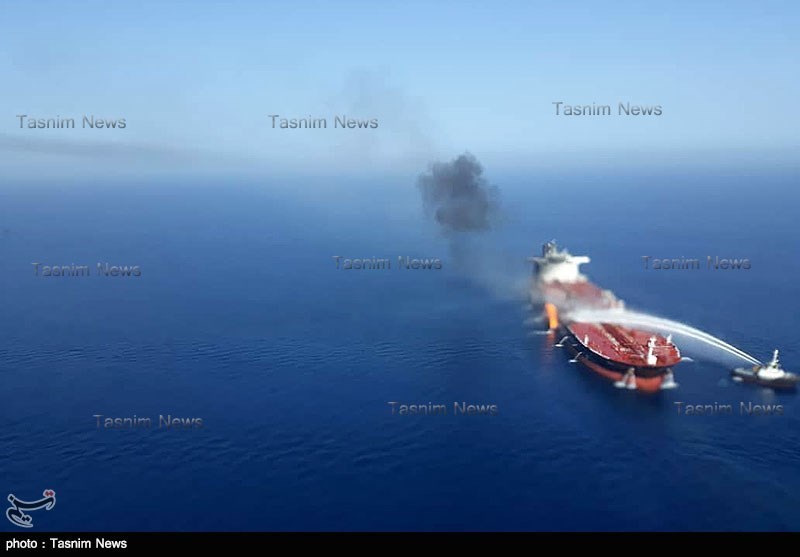
The incidents followed a third on Friday. At 15:00 GMT a tanker on an outbound transit was “struck on the port bow by an unknown projectile” eight nautical miles north of Khasab, according to UKMTO, and its company security officer reported a fire on board. That made at least three reported strikes in about 15 hours.
Iran says a mine, not a missile
Iran gave its own account of Friday’s fire. The navy of the Islamic Revolutionary Guard Corps (IRGC) said in a statement on Friday night that the tanker had exploded and caught fire after striking naval mines at the entrance to Khasab port, Tasnim news agency reported.
The IRGC said the ship had tried to cross the strait by an “unauthorised route” and blamed what it called “false assurances” from the US military. The movement of no “violating vessel” in the strait or the Gulf goes unnoticed, the statement warned. Tasnim later published IRGC graphics marking the location, labelled “violating tanker”. HahuPrime could not independently confirm whether the vessel hit a mine or was struck by a projectile, as UKMTO’s wording suggests.
Iran made a second set of claims on Saturday. The IRGC said a new air defence system had detected, tracked and shot down a US MQ-9 Reaper drone over the strait, which it called the 58th such drone downed since the war began. Later in the day it said it had also brought down an MQ-1 drone over Qeshm Island, Al Jazeera reported. There was no immediate comment from the US military, and neither claim has been independently verified.
The drone figures are hard to test. In August, The Washington Post reported, citing three US officials, that the United States had lost at least 45 MQ-9 drones during the war, about a quarter of its fleet, at a cost of more than $1.3 billion.
A strait that never fully reopened
The war began on February 28, when the United States and Israel attacked Iran. Tehran answered with strikes on Israel and on US bases in Arab states, and moved to close the Strait of Hormuz, which carried about a fifth of the world’s oil and gas in peacetime. Washington imposed a naval blockade on Iranian ports from April 13. US Central Command has said ships sailing to and from ports outside Iran may pass unhindered.
A memorandum of understanding signed in June was meant to open talks on free passage, Iran’s nuclear and missile programmes and sanctions. It was never fully put into practice, and fighting has flared on and off since July. This week the two sides traded direct blows again. The US military said on Tuesday it had hit a missile launch site on Qeshm Island in response to Iranian attacks on US personnel and property, Middle East Eye reported. Iran said it then attacked US drone and missile facilities at Ali al-Salem air base in Kuwait. Kuwait reported “hostile drone activity”, and Bahrain said it had intercepted Iranian aerial attacks.
The diplomacy has not caught up. Iran’s foreign minister, Abbas Araghchi, said on Friday that seven conditions Tehran sent to Washington in September “must be implemented for the Strait of Hormuz to reopen”. They include an end to the war and the lifting of sanctions and of the blockade on Iran’s southern ports. “The naval blockade must be broken,” he told reporters in Tehran.
Araghchi said the timetable was “flexible” but that talks depended on “confidence-building measures” from the American side. He ruled out sending Iran’s stock of 60 percent enriched uranium abroad, though he said some proposals from mediators were “worth examining”. The present “no war, no peace” state was undesirable, he said, but Iran would not accept a deal that would “hand victory to the other side”.
At the White House on Friday, President Donald Trump said Tehran wanted a deal, but not one he could accept. “We want to make a real deal, not a fake deal that they’ve been doing for 51 years,” he told reporters.
Pressure on both sides of the water
Washington is adding economic pressure. The US Treasury said on Friday it had sanctioned four Iranians it described as “oil trustees”, accused of collecting money from illicit oil sales so that Tehran could evade sanctions and the blockade. Among them are Mohammad Javad Bavand, a former IRGC intelligence officer, and Majid Taj, brother of Iranian football federation president Mehdi Taj.
For shipping, the warnings are the same as they have been for months. UKMTO advised vessels to “transit with caution and report any suspicious activity” while authorities investigate. The waters off Musandam form the narrowest stretch of the route.
That matters for the Horn of Africa too. The war at sea is not limited to Hormuz: the Saudi-led coalition and the Houthis are now trading strikes across the Red Sea, as HahuPrime reported when the coalition hit Hodeidah port on Friday. Energy importers such as Ethiopia, which relies on fuel shipped through Djibouti, feel each jump in oil prices. Regional states have also been drawn into the security debate, as when Ethiopia hosted a Red Sea naval forum last month. Talk of peace among the big powers, including the symbolic declaration issued by Trump, Xi and Putin this week, has not yet reached the strait.
Sources
- UKMTO: Warning 214-26, Attack, 20 November 2026; Warnings 215-26 and 216-26, Attack, 21 November 2026
- CNBC (Reuters): Two tanker attack incidents reported near Oman’s Khasab, UKMTO says
- Tasnim News Agency: Tanker Explodes after Hitting Sea Mine off Oman’s Khasab Port: IRGC; IRGC Downs 58th US MQ-9 Drone over Strait of Hormuz
- Anadolu Agency: Iran says tanker catches fire after striking naval mines near Oman’s Khasab port
- Al Jazeera (with Reuters): Iran says it downed US drones over Hormuz as bid to end war remains stalled
- Middle East Eye: Iran says new air defence system intercepted US Reaper drone over Hormuz