
Egypt says it is ready to use “all necessary measures” under its joint defence agreement with Sudan, as the two governments condemn drone strikes launched “from a neighboring country” and renew their attack on Ethiopia’s Nile dam. Addis Ababa answered on Tuesday that it will keep building dams.
By HahuPrime News Desk | November 3, 2026
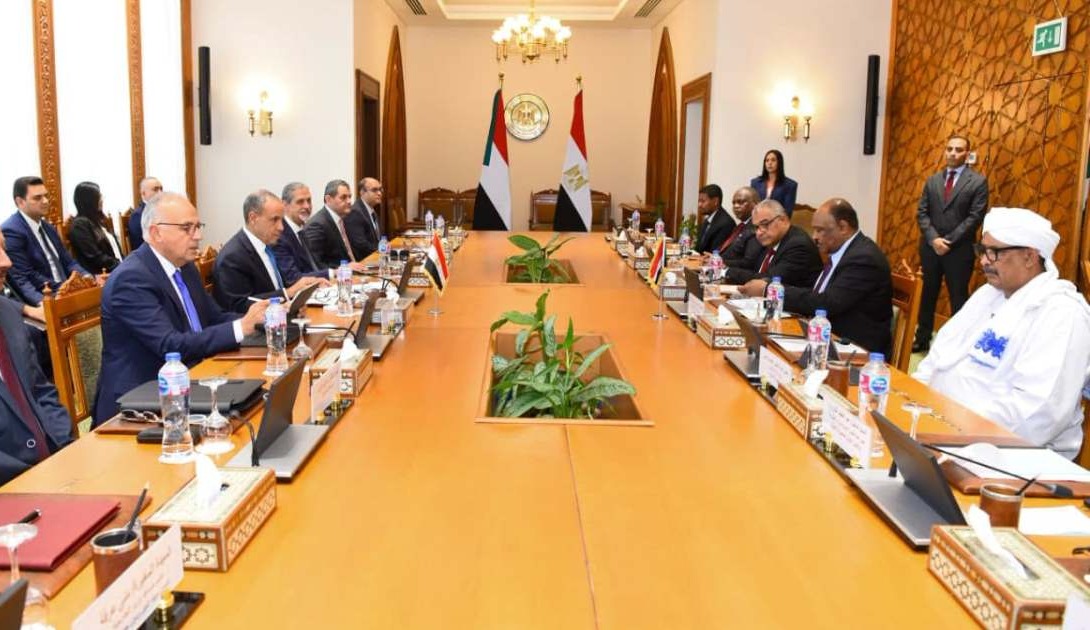
CAIRO — In a wood-panelled room in Cairo on Monday, beneath a chandelier and the two countries’ flags, Egypt’s foreign and irrigation ministers sat across a long table from their Sudanese counterparts. The 14-point statement they issued afterwards went well beyond water.
In the third round of the so-called “2+2” consultations, Egypt’s Badr Abdelatty and Hani Sewilam and Sudan’s Mohieddin Salem and Ismat Qurashi linked three disputes that have been running side by side: the Grand Ethiopian Renaissance Dam, control of the Red Sea, and the drone war over Sudan’s power grid. Ethiopia is at the centre of all three.
The sharpest line was about defence. Egypt “reaffirmed its full readiness to take all necessary measures and actions permitted under international law and the Joint Defense Agreement between the two brotherly countries to support Sudan and ensure that these red lines are neither undermined nor crossed,” the English text of the joint statement says.
The statement does not name Ethiopia in that passage. It ties the pledge to a December 18, 2025 statement by Egypt’s presidency that linked Egyptian and Sudanese national security, and to Cairo’s rejection of any “parallel entities” in Sudan, a reference to the administration set up by the Rapid Support Forces (RSF), the paramilitary that has fought the Sudanese army since April 2023.
Drones “from a neighboring country”
The two sides condemned “the targeting by rebel militias of infrastructure in the Republic of Sudan, especially power stations and water facilities, through launching drones from a neighboring country.” Khartoum has been less coy.
Late on Sunday, Sudan’s foreign ministry said it had filed complaints with the UN Security Council and the African Union Peace and Security Council, accusing the RSF of using Ethiopian territory to launch drones at civilian sites and power stations. The ministry said this “places Ethiopia before international law,” Al Jazeera reported,.
The complaints came with a report from Sudan’s army-led Transitional Sovereignty Council. It alleges that 70 attacks involving 187 one-way attack drones were launched from Ethiopia between February 15 and October 27, killing or wounding 484 civilians and killing 176 soldiers. It names Asosa airport, the Kurmuk-Gizen area and Bahir Dar airbase as launch sites. These figures come from one party to the war and have not been independently verified. HahuPrime covered the report’s release on Sunday, after earlier Sudanese claims about launches from Bahir Dar.
Ethiopia denies backing the RSF. It had not publicly answered the new complaints by Monday, Anadolu and The Abay Times reported. At a Security Council meeting on October 16, Ethiopia’s UN ambassador, Tesfaye Yilma Sabo, rejected Sudan’s accusations as “baseless”. “No security justification can excuse unlawful attacks on civilians or civilian infrastructure,” he said. Ethiopia in turn accuses Sudan of supporting Tigrayan forces fighting federal troops, which Khartoum denies.
In Sudan, the mood is hardening. “The mutual accusations are many and almost daily, and the tension on the part of the Sudanese army has reached high levels,” Sudanese border affairs specialist Abdul Kareem Al-Almin Ahmed told Al Jazeera. Some voices around the army, he said, are now calling for war with Ethiopia.
The dam and the sea
On the Nile, the ministers repeated their position that “the unilateral Ethiopian dam in violation of international law, entails grave consequences and poses a persistent threat to the Nile’s two downstream states.” They called on Ethiopia to return to “prior notification, consultation, and consensus,” reaffirmed their shares under the 1959 Nile Waters Agreement between the two downstream states, and rejected what they called Ethiopia’s attempts to bring other Nile Basin countries into the dispute.
The Red Sea paragraph will be read closely in Addis Ababa. Its governance “remains exclusively under the responsibility of its littoral states,” the statement says, rejecting “any maritime access granted to non-littoral states” that harms the sovereignty or port security of coastal states. Ethiopia, landlocked since Eritrea’s independence, has made sea access a central foreign policy goal. Egyptian President Abdel Fattah al-Sisi made a similar argument against “militarisation” by non-coastal states at a summit in Moscow last week.
Addis Ababa pushes back
Ethiopia’s answer on the dam came on Tuesday through the state Ethiopian News Agency (ENA). Mohamed Al-Arousi, an adviser to the Minister of Water and Energy, accused Egypt of using the media to misrepresent Ethiopia’s water plans and said the country would not be deterred.
“We have built dams, and, God willing, we will continue building a series of dams,” he told ENA. He rejected the charge of unilateralism and pointed to the collapse of the three-way talks. “Who is refusing to negotiate and insisting on unilateral practices?” he asked.
Al-Arousi said downstream concerns should rest on science, not political narratives, and pointed to the 2015 Declaration of Principles as the framework for the dispute. “If you approach the matter in good faith, sit at the negotiating table, and present scientific facts upon which your concerns are based, you do not need anyone’s sympathy,” he said.
The Cairo meeting followed a four-way summit in El Alamein, where al-Sisi hosted Eritrea’s Isaias Afwerki, Somalia’s Hassan Sheikh Mohamud and Sudan’s army chief Abdel Fattah al-Burhan. Abdelatty backed that summit’s outcomes on Monday and, according to his spokesperson, told Salem that neighbouring countries must stay out of Sudan’s internal affairs. For Ethiopia, already fighting in Tigray and Amhara and at odds with Eritrea, the result is a tighter grouping of neighbours that disputes its positions on the river, the sea and Sudan’s war at the same time.
Neither the Security Council nor the AU Peace and Security Council has said when, or whether, it will take up Sudan’s complaints.
Sources
- Al Alam Al Youm: Joint Statement, Third Round of the “2+2” Consultation Mechanism Between the Ministers of Foreign Affairs and Irrigation of Egypt and Sudan
- Sudan Tribune: Egypt, Sudan warn against Nile dam unilateralism, reaffirm defence pact
- State Information Service (Egypt)/MENA: Joint statement: Egypt and Sudan reject any unilateral action in the Eastern Nile Basin
- Al Jazeera: Sudan files complaints against Ethiopia with UN over deadly drone spree
- Al Jazeera: Deadly RSF drone attacks reveal deep divisions between Sudan and Ethiopia
- Al Jazeera Arabic: Egypt and Sudan call on Ethiopia to change its policy on the Renaissance Dam
- Anadolu Agency: Sudan files complaints against Ethiopia with UN, African Union over drone attacks
- The Abay Times: Sudan files UN and AU complaints against Ethiopia; Ethiopia rejects Sudan’s accusations at UN Security Council
- Egypt Today: Abdelatty discusses Egypt’s support for Sudan’s sovereignty, reconstruction
- Ethiopian News Agency: Al-Arousi Accuses Egypt of Distorting Ethiopia’s Nile Rights, Vows More Dam Construction