
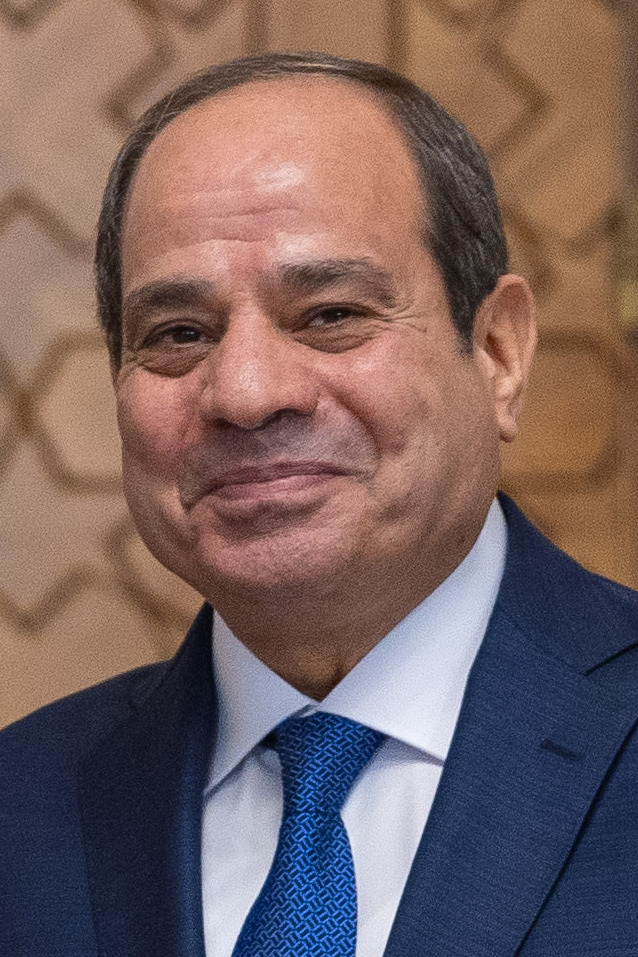
Speaking a day after Ethiopia showed off a dozen new Russian warplanes, Egypt’s president told the Russia–Africa summit that states with no Red Sea coastline should keep their militaries off its shores. He did not name Ethiopia. He did not need to.
By HahuPrime News Desk | October 29, 2026
MOSCOW — The words were measured, read from a prepared text under the gilded ceilings of the Grand Kremlin Palace. But in a room that also held Ethiopia’s prime minister and Eritrea’s president, Abdel Fattah el-Sisi’s message on Thursday landed like a warning shot.
“We are deeply concerned by the escalating tensions in the Horn of Africa,” the Egyptian president told the plenary session of the third Russia–Africa summit, according to the text published by his office. “We reject any threats that violate the sovereignty of the region’s states or interfere in their internal affairs, as well as any actions that seek to exploit regional vulnerabilities to militarize the Red Sea or impose a military presence by non-littoral states along its coasts.”
Sisi did not mention Ethiopia by name. Yet the phrase “non-littoral states” has become Cairo’s shorthand in a long-running dispute with Addis Ababa, which has been landlocked since Eritrea’s independence in 1993 and whose prime minister, Abiy Ahmed, calls access to the sea an “existential” question for his country of more than 120 million people.
The timing sharpened the point. Only a day earlier, on the summit’s opening day, Abiy announced that Ethiopia had taken delivery of 12 Russian Su-35 fighter jets and planned to acquire four S-400 air defence systems, the BBC reported. He called it “a milestone” and said the planes had arrived ahead of schedule. HahuPrime reported on the delivery, and on the disputed jet count, on Wednesday.
Two speeches, two visions of the region
Abiy took the same stage on Thursday with a very different emphasis. His address, as reported by Ethiopia’s state-affiliated Fana Media Corporation, dwelt on food, energy and knowledge rather than on soldiers or seas.
“For Ethiopia, this begins with sovereignty,” he said. “Independence gives us the right to decide. Capability gives us the means to put those decisions into action.”
He opened with history: the Russian Red Cross mission that treated Ethiopian wounded after the Battle of Adwa in 1896 and translated a medical guide into Amharic. He pitched Russian help with Ethiopia’s first nuclear power plant, to be built under International Atomic Energy Agency safety standards, and announced a new Medemer University of Artificial Intelligence in Addis Ababa, inviting Russian universities to take part. He also offered to host the summit when it next comes to Africa. “Addis Ababa, home of the African Union, will be honored to host it,” he said, according to Fana.
Fana said Abiy also reaffirmed Ethiopia’s support for “negotiated solutions” and African-led mediation. HahuPrime could find no direct public response from Addis Ababa to Sisi’s remarks by Thursday evening.
Sisi, for his part, used the rest of his speech to restate Egypt’s other red lines. He said Cairo “categorically rejects any attempts to undermine the unity of Sudan” and called for a “Sudanese-led, Sudanese-owned dialogue”. And he returned to the Nile, which supplies almost all of Egypt’s fresh water. Transboundary rivers, he said, should be governed by “not causing harm, prior notification, consultation, and consensus”, a familiar reference to the Grand Ethiopian Renaissance Dam, which Ethiopia built and filled without the binding agreement Egypt has long demanded.
An old quarrel finds a new stage
Egypt’s position on the Red Sea is not new. Cairo has repeated it with Eritrea, Somalia and Djibouti for more than a year, and in early October Sisi hosted Eritrea’s Isaias Afwerki, Somalia’s Hassan Sheikh Mohamud and Sudan’s Abdel Fattah al-Burhan at a summit in New Alamein, where the four leaders pledged closer security coordination and rejected “unilateral measures” on shared rivers. Earlier this week Egypt’s parliament authorised Sisi to help defend Saudi Arabia against the Houthis, a sign of how far Cairo now sees the Red Sea as its own security front.
What is new is the setting. Russia sells weapons to Ethiopia, Egypt and Eritrea alike, and is trying to present itself as a neutral broker. On Tuesday Foreign Minister Sergey Lavrov offered to bring Abiy and Isaias together during the summit. “If the leaders of the two countries show this kind of interest, now, tomorrow or the day after, at the summit, we will create every opportunity for them to make contact,” he said, according to BBC Amharic. HahuPrime covered that offer on Wednesday.
By Thursday, no meeting between the two leaders had been confirmed. Abiy met Putin in the Kremlin on Wednesday, and Kremlin aide Yuri Ushakov has said Putin will see Isaias on Friday, after the summit closes, according to Russian media. The EastAfrican noted that the early delivery of Russian jets to Addis Ababa has raised questions about how neutral Moscow can be.
The backdrop is grim. Fighting resumed in Tigray last month between federal forces and the Tigray People’s Liberation Front, and each side blames the other for breaking the 2022 Pretoria agreement. Addis Ababa accuses Eritrea of backing the TPLF, which Asmara denies. Reuters has warned that the new war, unlike the last one, sits inside a web of rivalries stretching from Sudan to the Gulf.
What Putin wanted from the day
For the host, the Horn’s quarrels were one thread among many. Putin told the nearly 50 delegations that “Russia and Africa are united by truly strong bonds of friendship,” the Associated Press reported, and called the two “natural allies in building a multipolar, genuinely democratic world order.”
He said Russian trade with Africa topped $27 billion last year, that Russia shipped more than 18 million tonnes of grain to the continent last year and has military-technical cooperation agreements with 45 African countries. When Kenya’s William Ruto said Africa “can’t continue without permanent representation on the United Nations Security Council”, Putin agreed that its absence was “unfair.”
The summit closed with a Moscow declaration, approved on Thursday evening according to RIA Novosti, alongside an action plan for 2027–2029 and a declaration on civilian artificial intelligence, according to the Kremlin.
Paper agreements, though, will not settle what was left unsaid in the Grand Kremlin Palace. Ethiopia wants a coast. Egypt and Eritrea say outsiders should stay off it. And the one country offering to sit them down is the one arming more than one side.
Sources
- Egyptian Presidency: President El-Sisi’s Speech at Plenary Session of 3rd Russia-Africa Summit
- Egypt Today: El-Sisi: Egypt rejects Red Sea militarization, concerned over escalating Horn of Africa tensions
- Associated Press (via Fortune): Putin calls Africa a ‘natural ally’ as Moscow courts leaders from nearly 50 nations
- BBC News: Ethiopia acquires Russian fighter jets and air defence systems amid war in Tigray
- Fana Media Corporation: PM Abiy Puts Ethiopia’s Food Security, Energy and Knowledge Priorities at Center of Russia–Africa Summit
- Fana Media Corporation: PM Abiy Says Ethiopia Ready to Host Russia–Africa Summit When It Next Comes to Africa
- The EastAfrican: Russia offers to mediate Ethiopia-Eritrea tensions
- Reuters: Why renewed fighting in Ethiopia’s Tigray risks a regional war
- Kremlin: Third Russia – Africa Summit
- RIA Novosti: Putin: Moscow Russia–Africa summit declaration approved