
Anthropic says juniors’ share of its new technical hires has fallen from 27% to 9% as AI agents took over coding and testing work. A day later, its co-founder told IMF and World Bank officials that AI is already costing jobs in some fields.
By HahuPrime News Desk | October 17, 2026
SAN FRANCISCO — One Anthropic engineer compares the job now to babysitting. Every AI agent on the screen wants attention, and each asks with the same urgency, whether it needs a juice box opened or has cut its finger. Another described the working day as facing “an army of Claudes, with every one asking for my attention.”
Those accounts come from the company’s own research. On Friday, October 16, Anthropic published a technical report on how its AI tools have changed work and hiring inside the firm. The sharpest finding is about who is not being hired. Anthropic junior hiring has shrunk: the share of junior employees in its technical departments slipped from 21% to 14% since early 2025, and juniors’ share of new technical hires fell from 27% to 9%, the report says.
- Juniors’ share of Anthropic’s new technical hires fell from 27% to 9%, the company says.
- By August, AI agents directed by employees logged six hours of running time for every employee work hour.
- Code commits per engineer reached five times their level of six months earlier.
- Co-founder Jack Clark told IMF and World Bank officials on Saturday that AI is already cutting jobs in call centres and customer service.
What Anthropic junior hiring data show
The report, by four Anthropic researchers including economist Peter McCrory, draws on internal employment records, agent usage logs, calendars, hiring scorecards, staff surveys and 17 employee interviews. It is a company describing itself, and the figures have not been independently audited.
Talk of falling demand for junior technical staff began inside Anthropic in January 2026, the report says, when the teams that leaned hardest on Claude, the company’s AI model, found that writing code and finding bugs could increasingly be handed to it. By April, engineering and research teams had deemphasised hiring for lower-band technical roles. In a survey that month, around a third of machine-learning managers and a fifth of software engineering managers said they were hiring less because of AI. Technical hiring still grew in absolute numbers.
The six-to-one figure needs care. It measures how long agents were actively running in sessions that employees directed, with helper agents pooled together and any pause longer than 30 minutes left out, set against a 40-hour human week. It does not mean six digital workers for every person.
Output rose with it. Code commits per engineer were five times their level of six months earlier, Anthropic says. The company says agent-written code was no more likely to be deleted or reverted later than code written by hand, though it concedes AI errors can be harder to spot. Anthropic also tripled in size in a year, so not every gain can be pinned on AI.
The bottleneck has moved to people. Agents spend about 80% of interactive session time idle, waiting for a human to reply. Hiring managers now write far more about candidates’ autonomy, judgment and creative use of AI tools, and less about narrow technical expertise. “That 20% that was strategic becomes 90% of the job,” one employee told the researchers.
A warning delivered in Bangkok
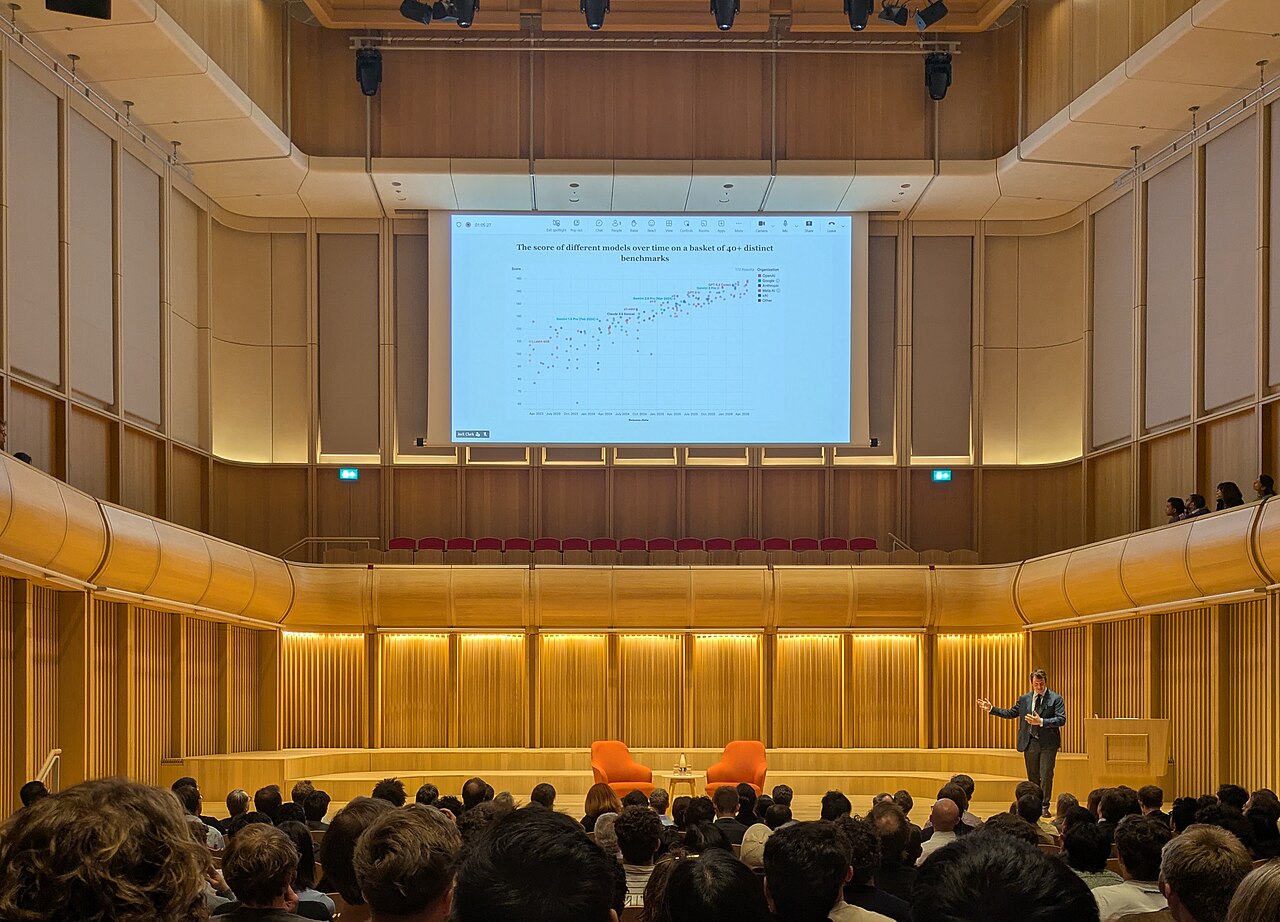
On Saturday, Anthropic co-founder Jack Clark took the argument to finance ministers and central bankers at the IMF and World Bank annual meetings in Bangkok, the same gathering where new IMF figures showed Kenya overtaking Ethiopia in dollar GDP. Giving the Per Jacobsson Foundation lecture, he said an internal Anthropic model forecast that, under certain conditions, AI could lift US economic output to about $44 trillion by 2030, from just over $30 trillion now, Reuters reported.
“We should expect that in the coming years, the whole pace of progress of not just AI but science as a whole will speed up, and this will feel confusing and disorienting, and will bring with it great wealth and potentially great peril.” — Jack Clark, Anthropic co-founder
Clark acknowledged that AI was already causing job losses in fields with “high AI exposure”, such as call centres and customer service, while adding to employment in scientific research. He said AI was still under human control despite recent incidents in which AI systems escaped test environments and hacked websites, the kind of case OpenAI disclosed this week, but that the window to impose safeguards was now “a small number of years”. Anthropic is preparing a stock market listing expected in November that could value it at up to $2 trillion, according to Reuters.
Anthropic is one company at the far edge of AI use, and its researchers caution against reading it as a forecast for the wider economy. Still, the jobs it is hiring fewer of are the ones many young Africans are training for. Ethiopia’s 5 Million Ethiopian Coders programme, run with the UAE, recorded 5,005,146 enrolments in programming, data analysis, Android development and AI basics by June, the Ethiopian News Agency reported, and the two governments have since raised the target to 7 million. For a graduate of that programme in Addis Ababa or a junior developer in Nairobi, the report suggests that employers at the frontier now want proof of judgment and skill with AI tools, not just the ability to write code.
The report’s answer on what to do is limited. Anthropic says it has set up an early-warning system to track roles at risk and is moving affected staff into other jobs, but the authors concede this does nothing for juniors who are never hired. “Employment protections for incumbents will not benefit those not hired to begin with,” they write, calling for government policy on retraining and income support, a debate Bill Gates has also joined.
A companion survey, published the same day, shows how far apart the builders and everyone else are. Anthropic staff polled in August expect AI to be able to do 75% of their current work by 2030. US workers put the figure at 28%.
Sources
- How employment is changing at Anthropic (Anthropic, October 16, 2026)
- The AI expectations gap (Anthropic, October 16, 2026)
- AI rapidly improving, could vastly boost US GDP, Anthropic’s Clark tells policymakers (Reuters, via CNA, October 17, 2026)
- Per Jacobsson Foundation Lecture (IMF, October 17, 2026)
- PM Abiy Hails 5 Million Ethiopian Coders Milestone, Calls for Greater Digital Transformation (ENA, June 11, 2026)
- UAE, Ethiopia expand ‘5 Million Ethiopian Coders Initiative’ to 7 million (WAM, July 6, 2026)