
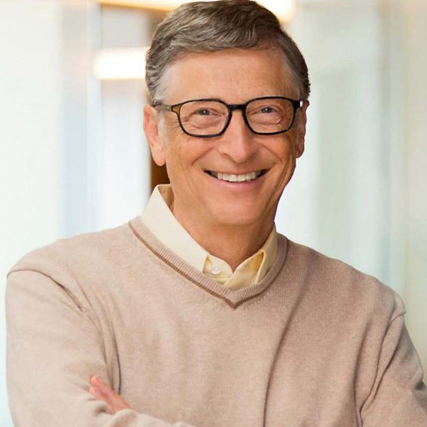
Bill Gates warns AI will wipe out jobs for good, and wants some work reserved for humans
Bill Gates says the world is walking into one of the most turbulent periods in modern history without a plan. In a nearly 6,000-word essay published this week on Gates Notes, the Microsoft co-founder argues that artificial intelligence and robots will permanently eliminate large numbers of jobs, and that governments should act now — before the economic incentives to replace people become irresistible.
The essay, titled The turbulent AI era is here. The choices we make are critical, is Gates’s first long piece on AI in three years. His central claim is blunt: this is not another slow industrial shift that plays out over generations. It is happening in about a decade.
“AI will take on work in law, customer service, medicine, software, and manufacturing,” he wrote. “It will hit these industries rapidly, over the course of a decade rather than a few generations. There will be some new jobs, but without the right policies, there will be far fewer than exist today.”
White-collar first, then the factory floor
Gates says companies already have a strong reason to automate. Once AI can do work with almost no errors, and no longer needs a human checking every output, the business case for keeping people in those roles weakens fast. Entry-level and mid-level jobs are the most exposed first: paralegals, customer support, junior software work, loan assessment, data analysis and parts of medical triage.
He also rejects the idea that only office workers are at risk. Dexterous robots are advancing quickly, much of that work happening in China, he says. By the end of the decade, “smart” robots could compete with people on physical tasks in construction and hospitality.
The result, in his view, is structural unemployment rather than a temporary slump. Some of the lost roles may never come back. New jobs will appear, but many will demand skills that take years to learn — too long for a 55-year-old factory worker told to start over.
“Human Reserved” work
Gates’s most striking proposal is to treat some jobs the way countries treat nature reserves: land that could be developed, but is left alone because the loss would be too great.
He calls this domain Human Reserved.
The idea is personal. When his father was dying of Alzheimer’s, paid caregivers understood needs his father could no longer explain. “Something in the care they gave my dad was irreplaceably human,” Gates wrote. “No robot could or should have done it.”
His other example is clinical and moral, not technical. A robot could tell a patient they have an incurable disease. There is no technical reason it could not. “Yet it shouldn’t.”
In interviews around the essay, he added childcare and jury service to the list of work that should stay human. Education and healthcare, he says, should not ban AI outright. Those fields should remain a mix: a human in charge, using the tools to do more.
He sees two kinds of reservation. Some roles would stay human forever because empathy, trust and accountability matter. Others would be protected only for a time, to shield workers who cannot realistically change careers. In an extreme version, he told Axios, perhaps 40 percent of jobs could be reserved at first. He said he could not get the number higher.
Tax the machines, rebuild the safety net
Gates also wants to change the tax system that, in his words, “pushes you to replace people with machines.” Hiring a person often means payroll taxes. Buying a robot or running an AI model is treated more like a capital investment. He proposes taxing AI tokens — the units of text these systems process — and robots. The aim is not to stop AI. It is to slow the rush away from human labour and raise money for retraining and a stronger safety net.
He is frank about the scale. It would be a bigger tax shift than any he has seen in his lifetime, at a moment of deep political division.
Beyond tax, he wants new institutions. Current governments and agencies were not built for a technology that spreads this fast and touches almost every part of life. He compares the required response to the institutional overhaul after 9/11 — and says this one needs to be larger. He also wants international coordination, including with China, because countries will not all draw the same line between human work and machine work.
Three risks, one warning
Jobs are only the first of three dangers Gates names. The second is deliberate misuse: cyber attacks, scams, and more dangerous tools in the hands of bad actors. The third is the possibility that increasingly powerful systems could eventually act against human interests.
“AI will either be the greatest equaliser ever invented or the worst source of injustice,” he wrote. “Unfortunately, right now we are not preparing for it. I don’t see evidence that leaders, experts and communities are confronting the challenges adequately. There is no plan to ease the entry into the AI era.”
That is the political core of the essay. Gates is not arguing that AI should be stopped. He is arguing that prosperity from AI will not automatically be shared, and that waiting until the layoffs arrive will be too late.
The hard questions remain unanswered. Who decides which jobs are reserved? How is that enforced across borders? What happens if one country protects caregivers and another rolls out care robots at scale? Gates does not pretend those problems are simple. His point is that they are already here — and that leaving them to the market alone is itself a choice.