
The UN’s political mission in Somalia shut its doors on Saturday after more than three decades, a day after the first Ugandan soldiers flew home from Mogadishu. Both exits leave a country divided over its next election and still at war with al-Shabaab.
By HahuPrime News Desk | October 31, 2026
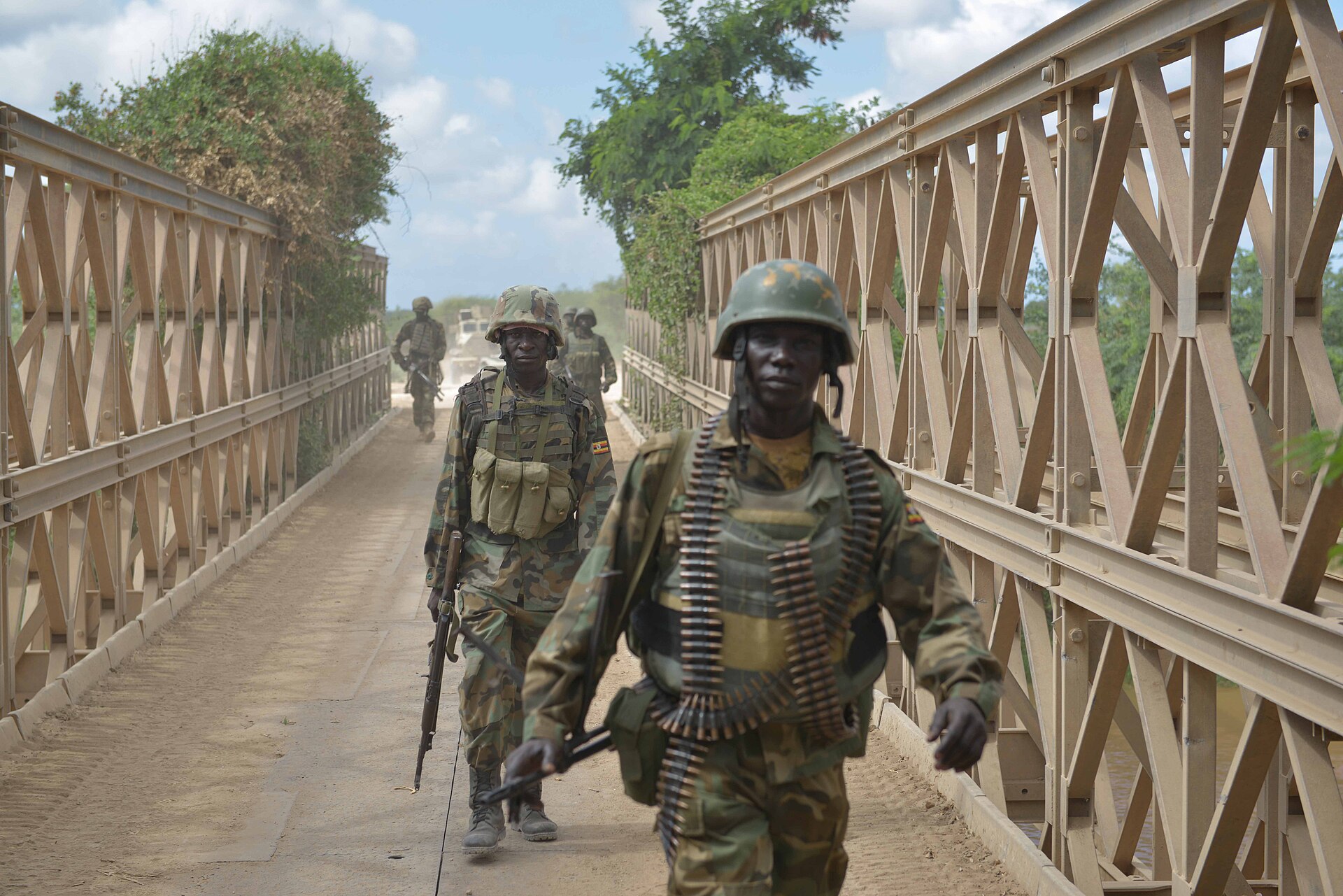
MOGADISHU — On Friday a Kenya-registered plane chartered by Kampala lifted off from Mogadishu’s airport with 109 Ugandan soldiers on board. They were the first contingent to leave Somalia since Uganda’s army chief announced, a day earlier, that his troops were going home after nearly 20 years, the Somali Guardian reported.
Less than 24 hours later, on Saturday, the United Nations Transitional Assistance Mission in Somalia (UNTMIS) ceased operations. Its closure ends more than three decades of successive UN political missions in the country.
Taken together, the two departures mark one of the biggest changes to Somalia’s outside support since the African Union first sent troops in 2007. They also come at an awkward moment. President Hassan Sheikh Mohamud and his opponents are deadlocked over elections, and al-Shabaab is still fighting.
“A lot of blood and sacrifice”
General Muhoozi Kainerugaba, Uganda’s chief of defence forces and the son of President Yoweri Museveni, announced the start of the pullout on X on Thursday.
“As we promised, we have started withdrawing UPDF from Somalia. After 20 years of a lot of blood and sacrifice we are handing over security to our Somali brothers,” he wrote.
He did not say how many troops would leave, or how quickly. In August he had set a hard deadline: “We are withdrawing completely from Somalia by the 1st of August 2027.” Ugandan outlet edge.ug noted that Thursday’s post did not say whether that date had been brought forward.
Mogadishu had tried to slow things down. Mohamud flew to Entebbe on October 26 for a one-day visit and asked Museveni to delay the withdrawal from strategic towns in Lower Shabelle, including Barawe, Bulo Marer, Qoryoley and Janaale, so Somali forces would have more time to prepare. According to the Somali Guardian, Museveni turned him down and said part of the force would leave before November 15. The handover of forward operating bases to the Somali army is due to run until November 4.
Mohamud’s office said after the meeting that he had praised Uganda’s contribution and hoped its troops would “remain in Somalia longer”. Three days later, the withdrawal began.
The stakes are concrete. Ugandan troops hold river-crossing towns in Lower Shabelle that guard the approaches to the capital and help block al-Shabaab infiltration. Uganda is the largest contributor to the African Union Support and Stabilisation Mission in Somalia (AUSSOM), with 4,500 troops authorised by the AU, Hiiraan Online reported. It is not yet clear how their departure will affect Mogadishu’s security.
Money, Washington and a mission running dry
The pullout comes as the money behind the African Union force dries up. Uganda’s Daily Monitor reported that in July the United States told the AU it would not support renewing AUSSOM’s mandate at the UN Security Council in December. Washington has objected to a funding model in which international bodies cover more than 90 per cent of the mission’s costs.
The UN Support Office in Somalia (UNSOS), which supplies AU troops with food, fuel, medical care and transport, has cut its support by 25 per cent, the Monitor said, and front-line operations have felt it. Reuters reported in September that a US-backed plan could close UNSOS altogether by December 2027.
On paper, AUSSOM still plans a phased drawdown ending in December 2029. Uganda’s timetable is now well ahead of that.
The UN steps back from politics
The UN mission’s closure was planned. Mohamud’s government formally asked for it in 2024, and the Security Council approved a two-year transition. Its tasks have been handed to Somali institutions, UN agencies and UNSOS.
At a farewell ceremony in Mogadishu on Monday, Deputy Prime Minister Saleh Ahmed Jama called it a “day of victory” and said Somalia was leaving behind the “era of transition”, Al Jazeera reported. Relations with the mission had often been strained, and Somali leaders had at times accused it of interfering in domestic politics.
Raisedon Zenenga, the mission’s officer-in-charge and the UN Secretary-General’s deputy special representative, struck a more cautious tone. “Somalia today possesses national and federal institutions that did not exist when the UN’s political engagement began,” he told UN News. “However, continued engagement by the international community will remain important to sustaining progress and addressing outstanding priorities.”
“Today is not an end to the partnership between the United Nations and Somalia,” he said. “It marks the conclusion of one chapter and the beginning of another.”
Critics see a gap. The mission helped rival Somali leaders reach past election deals, and, as the Associated Press reported, no replacement for that mediation role has been agreed. Opposition leaders reject the government’s view that constitutional changes let Mohamud and parliament stay in office until 2027. Mohamud has invited his opponents to talks, but the main opposition groups have not confirmed they will attend.
What stays, and what Somalia still faces
About 25 UN agencies and programmes will keep working in Somalia on aid and development. They face a hard year. The UN humanitarian office says 4.8 million Somalis, out of a population of just under 20 million, need help. Aid agencies asked for $852 million to reach 2.4 million of them. By mid-October only about 35 per cent had arrived. In August, UNICEF said 205 health and nutrition facilities had closed because of aid cuts.
The changes matter well beyond Somalia’s borders, since several neighbours, Ethiopia among them, have troops or security interests there. Ethiopia’s ties with Mogadishu have been tested by its approach to Somaliland and its push for sea access, which surfaced again this week when Ethiopia’s navy hosted a Red Sea forum with Somaliland and Puntland but not Mogadishu. Egypt, meanwhile, has warned against Red Sea “militarisation” by non-coastal states, a pointed message to Addis Ababa.
For now, the scene at Mogadishu’s airport says it plainly. The soldiers who once pushed al-Shabaab out of the capital are starting to leave, the UN’s political mediators have already gone, and Somalia’s own forces and leaders are being asked to fill both gaps at once.
Sources
- Associated Press: UN political mission ends in Somalia with no agreed replacement to handle election dispute
- Al Jazeera: UN closes Somalia mission, ending three decades of political engagement
- UN News: Somalia looks to the future as the UN’s political mission closes
- United Nations in Somalia: Statement by the Spokesperson for the Secretary-General on the conclusion of the UNTMIS mandate
- Somali Guardian: Uganda begins troop pullout from Somalia after 20 years
- Hiiraan Online: Uganda begins withdrawing troops from Somalia after nearly 20 years
- Daily Monitor: UPDF starts Somalia exit as financial pressures, diplomatic shifts reshape peace mission
- edge.ug: UPDF starts withdrawing from Somalia