
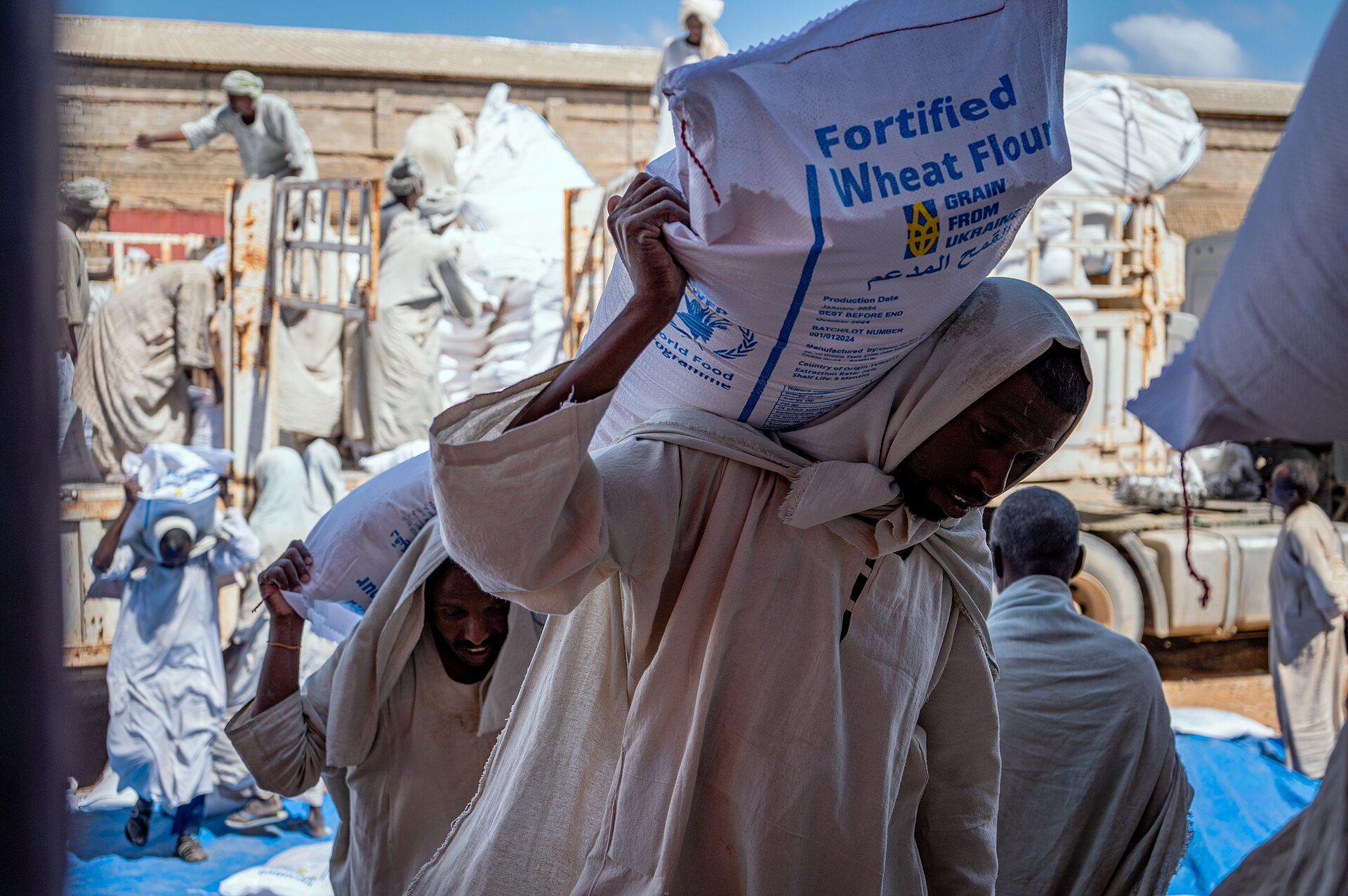
The United States, the European Union and about 30 other governments say Sudan’s hunger crisis is sliding towards famine, and they are blaming the men with guns. Their joint statement lands as drought, a collapsing currency and aid cuts squeeze millions of people in Darfur and Kordofan.
By HahuPrime News Desk | October 27, 2026
WASHINGTON — In two camps for displaced families in Eastern Jebel Marra, in Sudan’s South Darfur, aid workers weighed and measured children in September. In one camp, 38 per cent of them were acutely malnourished. In the other, 30.8 per cent. Both figures sit above the line the world uses to declare famine, and the surveyors also recorded severe hunger and high death rates.
Those numbers now sit behind one of the bluntest diplomatic warnings of Sudan’s war. In a joint statement released by the US State Department on Monday, the European Commission and more than 30 governments, including the United States, said the country was facing “an alarming deterioration in its food security” and called for “urgent action” to stop famine taking hold in the coming months.
“The parties to the conflict bear primary responsibility for alleviating the suffering of the Sudanese people,” the statement said. It urged Sudan’s army and the paramilitary Rapid Support Forces (RSF) “to lift all impediments on humanitarian assistance”.
The text first appeared on October 23 on the websites of the British, Canadian and EU governments, with Australia following a day later. Washington’s release on Monday, reported by Reuters and Al Jazeera, put the full weight of the United States behind it.
What the statement asks for
An estimated 19.5 million people, or 41 per cent of Sudan’s population, face high levels of acute food insecurity, including 5 million at emergency levels. Without a change of course, the governments warned, the number of children with severe acute malnutrition “could exceed the projected 825,000”. The number of food-insecure hotspots, first put at 14, is expected to double.
The demands are practical rather than grand. The signatories want both sides to authorise aid convoys across front lines and borders, and to open air access into Darfur so that aid can be flown in and sick or wounded aid workers flown out. They want faster visas for aid staff and fewer permits and taxes on aid. They also asked both sides to stop striking civilian infrastructure, “including agriculture and food systems”.
“In the face of a potential famine, we call on all members of the international community to urgently scale up funding in response to increased needs,” the statement said. It also urged support for the winter harvest and for “locally led responses”, such as the volunteer kitchens that have fed many Sudanese since the war began.
HahuPrime found no public response to the statement from the army or the RSF by Tuesday afternoon. Last month, the State Department said that neither force “represent[s] legitimate, constitutional governance for Sudan”, according to Reuters.
Drought on top of war
The diplomatic warning follows an alert on October 12 from the Integrated Food Security Phase Classification (IPC), the UN-backed hunger monitor. It said the risk of famine was growing across Greater Darfur and Greater Kordofan, where fighting, mass displacement and an El Niño-driven drought are feeding on each other.
The drought now covers more than half the country. In North Darfur, 64 per cent of cropland shows poor plant growth, the IPC said. The rains came in late September, too late to save most cereal crops, and grain prices are expected to keep rising.
Kordofan, which the IPC described as the epicentre of the conflict, has seen more than 300,000 people forced from their homes since October 2025. Markets there have been hit by more than 170 airstrikes, lootings and armed clashes this year.
“Famine is the collapse of systems,” the IPC’s Famine Review Committee said. “We are witnessing a humanitarian catastrophe, already of historic proportions.”
Less money, fewer meals
The warnings arrive as the aid system shrinks. The World Food Programme (WFP) reached 3.1 million people in Sudan in September, including 880,000 in areas at risk of famine, according to its October country brief. That was down sharply from 4.1 million in August, and the agency put the drop down to a lack of funding. As of October 8, less than half of the UN’s humanitarian appeal for Sudan had been paid for, the IPC said.
Money that does arrive buys less. The Sudanese pound fell to 7,500 to the dollar in WFP’s own cash programmes in September, cutting what families could buy with each transfer. On the open market it has since crashed past 10,000 to the dollar, sending bread prices soaring.
Aid workers also face direct danger. Two trucks contracted by WFP came under fire on October 2 and 3, killing at least one person, according to the IPC. Only 26 per cent of children expected to need hospital care for severe malnutrition had received it by August. Without treatment, as many as two in three of those children could die.
On Monday, the same day Washington released the statement, Luke J. Lindberg took office as WFP’s new executive director. “Conflict is driving people into hunger, and extreme weather and maritime choke points exacerbate this reality,” he said. “We cannot do it alone. Governments, institutions, businesses, and individuals need to stand with us, fund the work, and help get food to people before it’s too late. No more famines.”
Sudan’s war began in April 2023, when the army and the RSF fell out over plans to merge their forces. It has killed tens of thousands of people and displaced more than 13 million. Talks in Geneva this month ended with only “baby steps” as both warring sides stayed away. On Monday, drones knocked out five power stations and blacked out four states.
The statement from Washington, London, Brussels and their partners does not come with new money attached. Whether it moves the generals, or the donors, will be clear soon enough in the camps of Jebel Marra.
Sources
- US State Department: Joint Statement on Famine in Sudan (media note, October 26, 2026)
- UK Foreign, Commonwealth and Development Office: Joint ministerial statement on the risk of famine in Sudan (October 23, 2026)
- Global Affairs Canada: Joint statement on the risk of famine in Sudan, with list of signatories (October 23, 2026)
- Reuters (via Al Jazeera): US, EU and 30 countries warn of famine risk in Sudan, call for aid
- Integrated Food Security Phase Classification: Sudan Food Insecurity and Malnutrition Alert (October 12, 2026)
- UN News: Sudan: Drought and war push Darfur and Kordofan towards famine
- AP: Sudan’s famine risk worsened by conflict, drought and funding shortages, report says
- WFP: Sudan Country Brief, October 2026 (ReliefWeb)
- UN News (via APO): Lindberg takes helm at WFP with call to end famine