
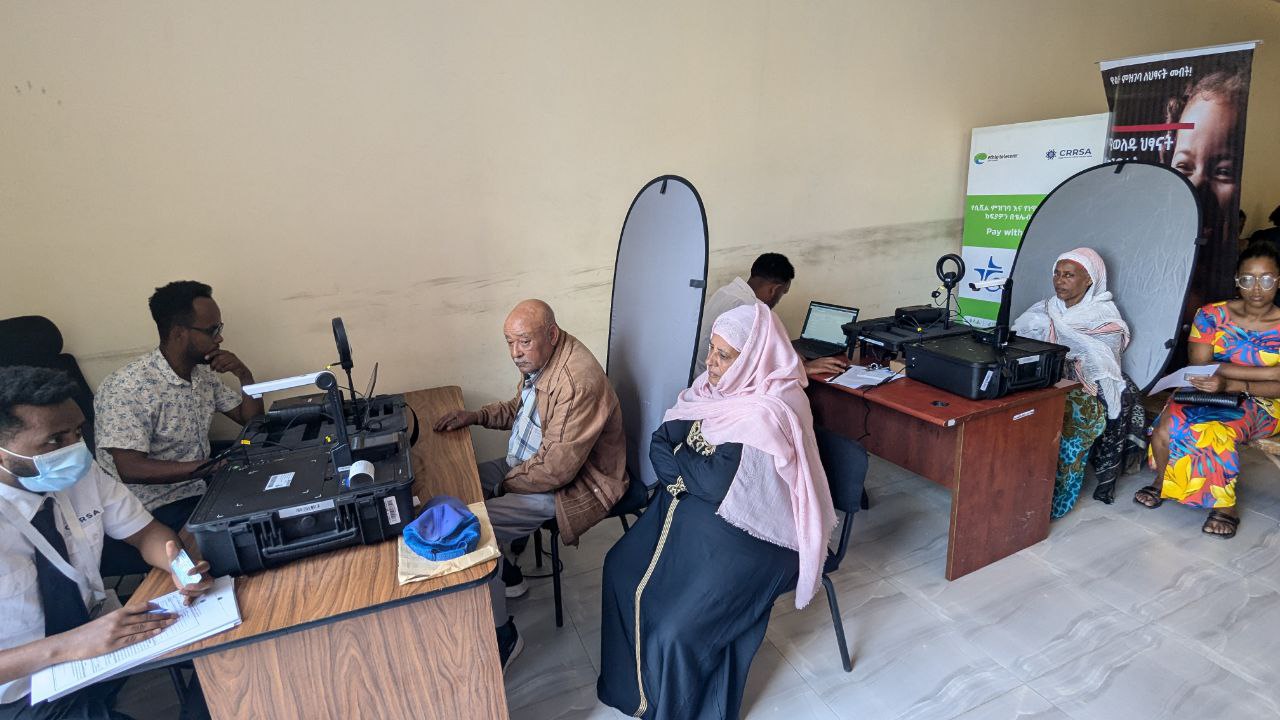
Ethiopia’s national digital ID company has started billing banks every time they check a customer against Fayda. The banks say the terms were imposed without consultation, bar them from passing on the cost and even charge for failed checks.
By HahuPrime News Desk | October 21, 2026
ADDIS ABABA — For most of the last decade, opening a bank account in Ethiopia started at the photocopier. A clerk took your ID card, made a copy and filed it, usually without checking whether the card was genuine. FaydaVerse, the company that now runs the national digital ID, says those copies cost banks 10 to 20 birr each and did little to stop fraud.
Fayda was meant to end that, with a one-time password or a fingerprint confirming in seconds that customers are who they say they are. Since August, though, each of those checks comes with a bill. Ethiopia’s banks are not happy.
“Digital infrastructure requires continuous growth and improvement, and identity authentication is a utility service,” Saminas Seifu, FaydaVerse’s stakeholder engagement director, told Capital in an interview published on Sunday. “We provide these services on a fee basis because a reasonable charge is necessary to sustain them.”
From free public service to paid utility
The fees follow a change in who owns Fayda. The National ID Program, launched with a 350-million-dollar World Bank financing package, was rebranded as FaydaVerse in August and placed under Ethiopian Investment Holdings, the state’s sovereign investment arm, according to Addis Fortune. Prime Minister Abiy Ahmed launched it as a commercial state enterprise meant to build digital public infrastructure for Ethiopia and beyond.
Until then, banks used Fayda for free, and it cleaned up about 200 million of their customer records at no charge, Fortune reported. Biometric Update, citing official figures, says enrolment passed 52.9 million people this month, with more than 209 million authentications to date, about 14.9 million printed cards and more than 150 institutions connected.
How much the checks cost depends on who you ask. Saminas told Capital that the fees run from five to 10 US cents per verification and vary by service. The draft contract sent to commercial banks, as described by Fortune, sets out four categories and 11 volume tiers priced in birr. A bank retrieving records for more than a million customers would pay 10 birr each, and one making 100,000 inquiries or fewer would pay double. Biometric checks start at 20 birr a person and rise to 40 birr at low volumes. HahuPrime could not reconcile the two sets of figures, and FaydaVerse has not published a full tariff.
What the banks object to
The Ethiopian Bankers Association says the problem goes beyond price. Fortune reports that the contract bars banks from passing the cost on to customers, requires payment for failed attempts and lets FaydaVerse raise or withdraw fees, or change discounts, at any time.
The banks also point out that they helped build the system. Most of them, apart from Hijra, Rammis, Shabelle and Omo, bought 4,000 biometric registration kits for 17 million birr, half of them paid for by the Commercial Bank of Ethiopia.
“They’re asking to be paid for the information we collect when we retrieve it,” Demessew Kassa, the association’s secretary general, told Fortune. He argued that the banks’ upfront investment should be credited against the fees.
The association’s chairman, Abie Sano, who is also president of the Commercial Bank of Ethiopia, wrote to FaydaVerse asking for joint talks with the National Bank of Ethiopia. He called the prices high and urged zero or near-zero fees for onboarding young people, women and rural customers. The banks want a price fixed for two to three years and no charge for failed checks.
Tadesse Hatiya, president of Sidama Bank, accepts paying for the service in principle but not the terms. “The contract says we can’t transfer the cost to customers,” he told Fortune. “That is a burden on us.”
FaydaVerse is not backing down on the essentials. Saminas confirmed the banks’ letter and promised more talks. He said FaydaVerse paid banks for every successful registration during enrolment, so there is no double charging. He said a fixed multi-year price was impossible because the company deals with many institutions and regulators. Failed checks, in his view, are still a service delivered. “We have no plans to adjust the prices at the moment,” he told Capital.
Why it matters beyond the banks
For ordinary Ethiopians, enrolment stays free. Saminas pointed to research suggesting that 40 percent of Ethiopians once had no proof of identity, and said Fayda has since let millions open bank accounts and use other services. The open question is whether a bank weighing a 10- or 20-birr check against a small rural account will still go looking for that customer. That is the worry behind the bankers’ request for free onboarding of the poorest customers.
Charging for identity checks is not unusual. Pakistan’s NADRA charges banks per query and India’s UIDAI charges private firms a small fee for Aadhaar checks, while citizens pay nothing, as Biometric Update notes. The difference is in the terms, and in whether a regulator sits between the seller and the buyer. Doha-based financial analyst Aminu Nuru told Fortune that “verifying a name and age is essentially a government function and a poor basis for a revenue stream,” and argued that any fee should recover costs rather than turn a profit.
Fayda sits at the centre of Ethiopia’s wider digital push, from local cloud infrastructure to the World Bank’s plans for shared AI computing in Africa, and to an economy now measured against Kenya’s. How the fight over a few birr per check is settled will show whether that infrastructure is run as a public good or as a business.
Saminas says the system uses one-time passwords, follows the Personal Data Protection Act and logs which institution accessed what data and for how long. The National Bank of Ethiopia has not said publicly whether it will step into the pricing talks.
Sources
- Capital: FaydaVerse begins charging banks for digital ID verification
- Addis Fortune: Banks Baulk at a Bill from Public ID That Turns Commercial
- Biometric Update: Ethiopia puts Fayda digital ID verification on a fee-based footing
- ID Tech: Faydaverse Discloses Bank Charges for Fayda Identity Authentication