
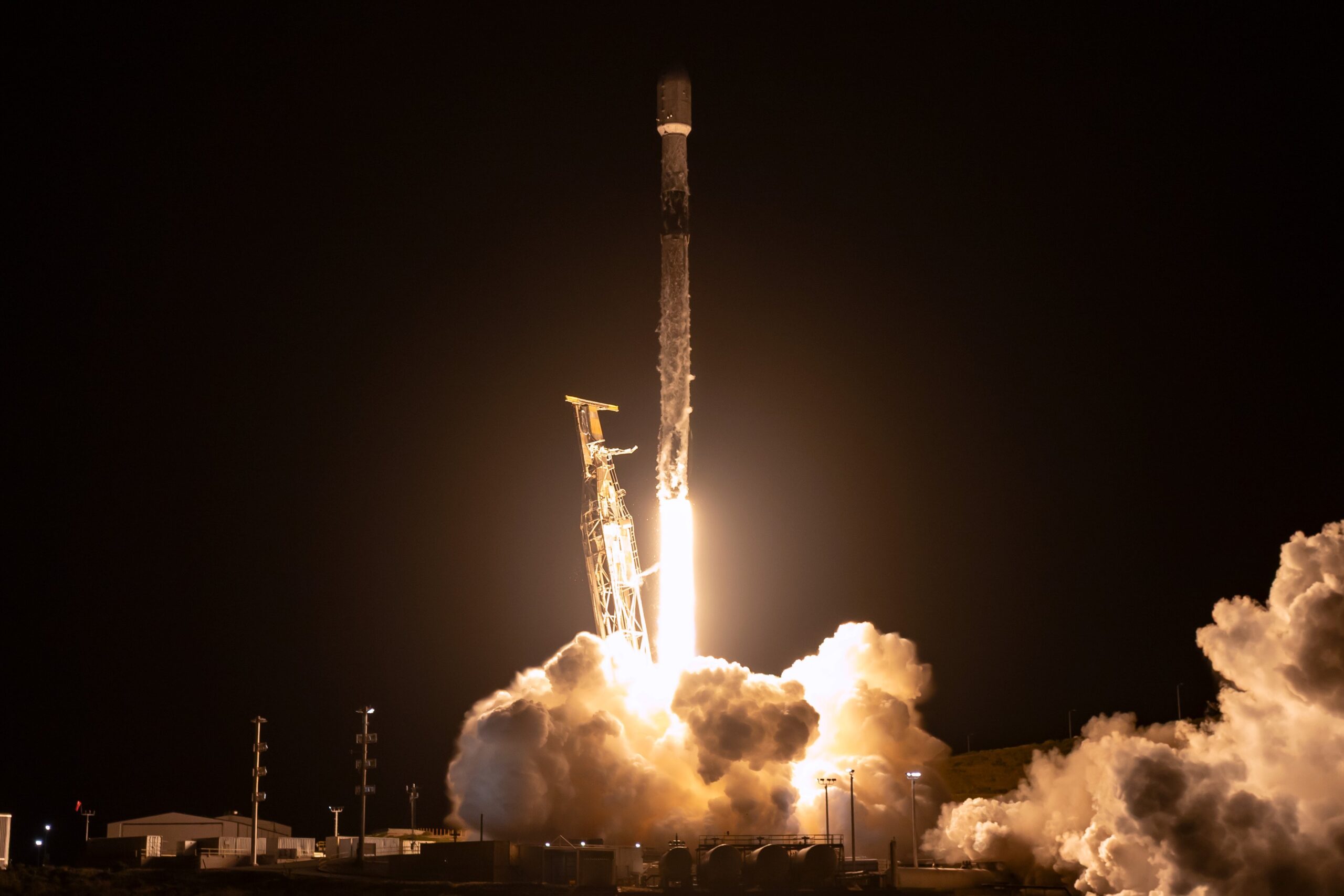
In a stunning display of operational efficiency, SpaceX has once again demonstrated why it operates on an entirely different level from the rest of the global space industry. In the last 24 hours, the company successfully executed two Falcon 9 missions, delivering a total of 148 satellites to orbit with flawless precision.
The first mission, the Transporter-16 rideshare flight, lifted off from Vandenberg Space Force Base in California early on March 30, 2026. The Falcon 9 carried 119 payloads — including CubeSats, MicroSats, hosted payloads, a reentry vehicle, and orbital transfer vehicles — into low Earth orbit. This dedicated smallsat rideshare mission underscores SpaceX’s role as the go-to provider for affordable access to space for universities, startups, and commercial entities worldwide.
Later the same day, a second Falcon 9 launched from Space Launch Complex 40 at Cape Canaveral Space Force Station in Florida, deploying 29 Starlink V2 Mini satellites. These additions further expand Elon Musk’s Starlink constellation, bringing high-speed internet connectivity closer to even more remote and underserved regions around the globe.
That’s 148 satellites in one day — a feat that has become increasingly routine for SpaceX but remains almost unimaginable for most other launch providers.
A Pace That Leaves the Industry Behind
While traditional space agencies and commercial competitors often require months or even years to prepare and execute a single launch, SpaceX’s rapid cadence continues to redefine what’s possible. Reusable Falcon 9 boosters, streamlined operations, and vertical integration have enabled the company to achieve launch rates once thought impossible.
As of late March 2026, SpaceX has already conducted dozens of Falcon 9 flights this year alone, with plans pointing toward even higher throughput. The company’s ability to turn around boosters quickly — with some flying more than 10–20 times — has dramatically reduced costs and increased reliability.
Elon Musk’s Vision: A Launch Every Hour
Elon Musk, the driving force behind SpaceX, has been vocal about the company’s ambitious future. In recent comments, he projected that in 4 or 5 years, SpaceX could reach a launch cadence of one every hour — primarily powered by the next-generation Starship vehicle.
Musk has previously highlighted that Starship could eventually launch as frequently as once per hour within a few years, transforming not just satellite deployment but also enabling large-scale space infrastructure, interplanetary travel, and beyond.
This vision aligns with the explosive growth of the Starlink network, which already provides broadband service to thousands of users and continues to scale rapidly. With competitors like Amazon’s Project Kuiper entering the satellite internet arena, SpaceX’s unmatched launch tempo gives it a significant edge in building and maintaining orbital infrastructure.
What This Means for the Future
Two launches in 24 hours is no longer a headline-grabbing anomaly for SpaceX — it’s becoming the new normal. This pace accelerates the deployment of critical technologies: global internet access, Earth observation, scientific experiments, and more.
For the broader space industry, the contrast is stark. While others play catch-up, SpaceX continues to push boundaries, proving that reusability, innovation, and relentless execution can turn science fiction into daily operations.
As Musk often emphasizes, the goal isn’t just more launches — it’s making life multi-planetary and unlocking the vast potential of space for humanity.