
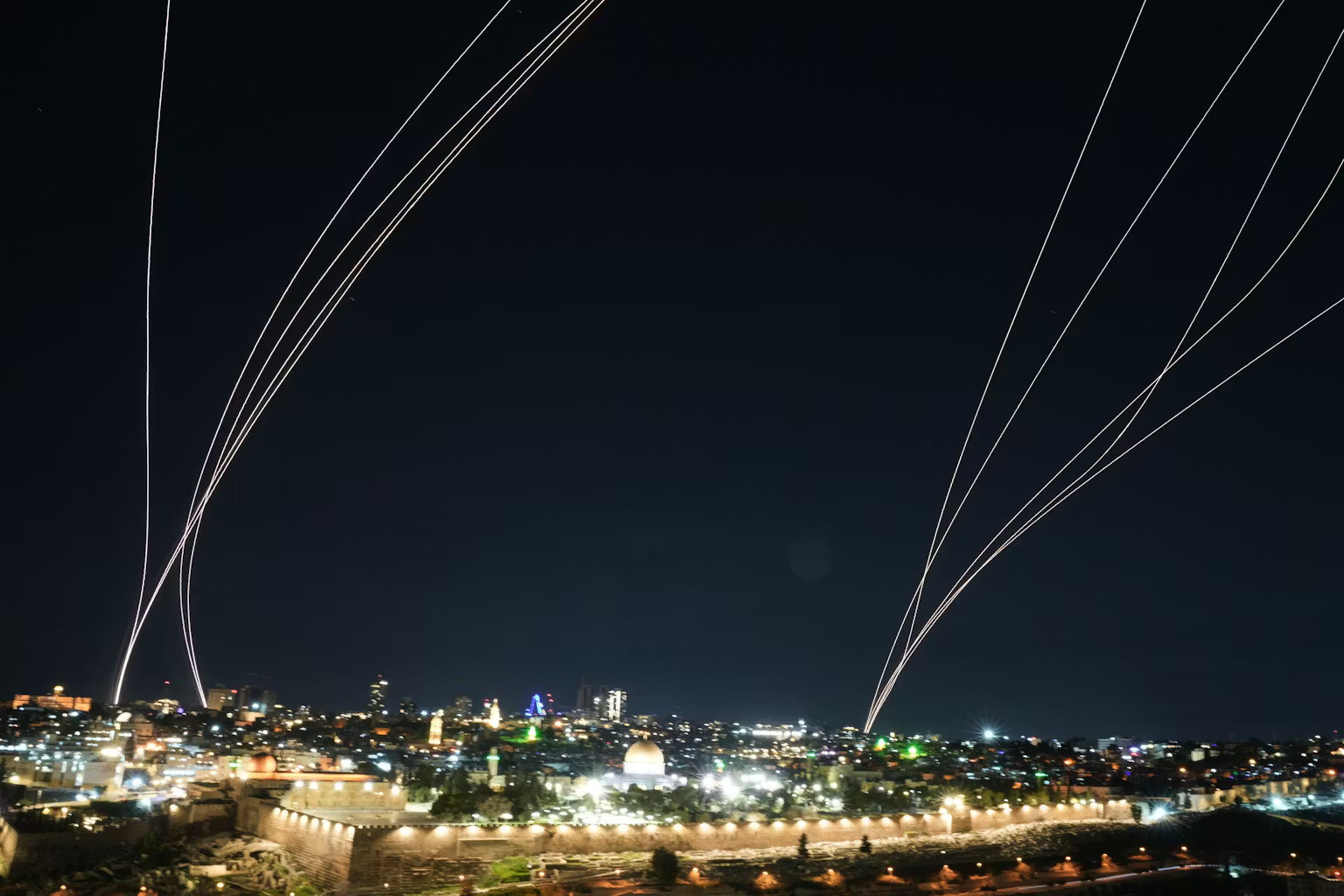
Why Israeli Air Defenses Keep Failing Against Iranian Missiles…
By Staff Analysis • March 30, 2026
Three layers. Iron Dome for short-range rockets. David’s Sling for medium-range missiles. An arrow for long-range ballistic threats in space.
It sounds nearly impenetrable — until Iran unleashes sophisticated solid-fuel systems like the Sejjil, nicknamed the “Dancing Missile” for its mid-flight zigzagging and terminal-phase maneuvers that confuse radars and force defenders to commit multiple high-value interceptors per threat.
A single large Iranian barrage is estimated to cost Tehran around $200 million. Israel and its partners can burn through up to $1 billion in interceptors defending against it. Five weeks of that math — sustained saturation attacks mixing ballistic missiles, decoys, drones, and cluster munitions — and the defender’s stockpiles start running dry while the attacker’s production lines keep feeding the fight.
The debate exploded online after commentator Mario Nawfal’s widely viewed X threads on live missile alerts and incoming strikes, amplified by posts like the one from Ai Telly that framed the layered shield as cracking under pressure. While critics rightly call out the “failure” narrative as overstated, the numbers and battlefield reality reveal a deeper truth: even a 90–92% interception rate leaves real vulnerabilities when volume, cost asymmetry, and innovative maneuvering collide.
Israel’s Multi-Layered Shield: World-Class, Yet Finite
Israel’s air defense architecture remains one of the most advanced and battle-tested on Earth, developed over decades with U.S. collaboration:
-
Iron Dome: Handles short-range rockets, artillery shells, and lower-altitude threats. In recent weeks, batteries have been adapted to intercept some ballistic elements and even dispersed submunitions.
-
David’s Sling: Counters medium-range ballistic missiles, cruise missiles, and larger rockets. Each Stunner interceptor costs roughly $1 million — a relative bargain compared to higher tiers.
-
Arrow (Arrow 2 and Arrow 3 variants): Designed for long-range and exo-atmospheric intercepts of ballistic missiles. Arrow 3 alone can cost $2–3.5 million per shot, with “shoot-look-shoot” doctrine sometimes requiring multiple launches per target.
U.S. assets, including THAAD batteries and naval interceptors, have provided critical reinforcement, firing hundreds of missiles in support.
According to IDF statements as recent as March 22, Iran has fired more than 400 ballistic missiles since the current phase of the war began, with an overall 92% successful interception rate. Earlier open-source assessments and JINSA reports put the figure consistently at 90–92% or higher across hundreds of threats, a performance level that has prevented billions in damage and saved countless lives. In the June 2025 12-day war, rates fluctuated between 86–93% depending on Iranian tactics.
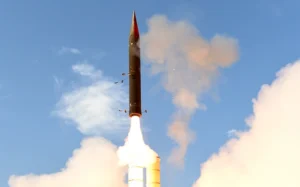
Yet success is not perfection. An 8–10% penetration rate in mass salvos still means impacts. Debris from intercepted missiles rains down, causing collateral damage. And Iran has increasingly used cluster munition or bomblet warheads that disperse submunitions even after the parent missile is hit — creating multiple smaller threats that overwhelm local defenses and have caused injuries in Tel Aviv, Beersheba, and central Israel in recent barrages.
The Sejjil Factor: Iran’s “Dancing Missile” Raises the Stakes
What makes the current pressure different is the sophistication of Iran’s evolving arsenal — especially the Sejjil family (including Sejjil-2 variants).
This two-stage, solid-fuel ballistic missile offers major operational edges over older liquid-fuel designs:
-
Rapid launch readiness: Fully fueled and stored, it can be erected and fired in minutes — shrinking the window for preemptive detection or Israeli/U.S. strikes on launchers.
-
Range and speed: Approximately 2,000 km, easily reaching deep into Israel (Tel Aviv in roughly seven minutes). It re-enters the atmosphere at hypersonic speeds, with some reports citing Mach 13+ in the terminal phase.
-
Maneuvering re-entry vehicle (MaRV): Nicknamed the “Dancing Missile” for its ability to zigzag, shift trajectory, and evade prediction algorithms during the terminal phase. This unpredictability strains every layer of Israel’s system simultaneously — forcing radars to re-track, command centers to recalculate, and interceptors to expend more shots.
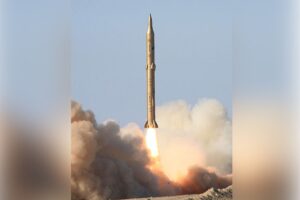
Iran has reportedly deployed the Sejjil in recent waves (including Wave 54 and later barrages in March 2026), alongside decoys, swarming drones, and other systems. While not every incoming threat is a Sejjil, its solid-fuel mobility and hypersonic maneuvering represent a clear evolution in Tehran’s strategy to saturate and penetrate layered defenses.
Saturation Tactics Meet the Defender’s Dilemma
Iran’s playbook is classic saturation warfare: coordinated waves of dozens or hundreds of missiles, drones, and decoys designed to overwhelm radars, command systems, and interceptor stockpiles at once.
Launch rates have dropped sharply from initial peaks — IDF assessments credit combined Israeli-U.S. offensive strikes with destroying around 300 Iranian launchers since the war intensified. Barrages are now lower-volume but persistent (six or more per day in early March, down from 20+ earlier). Still, the cumulative effect is draining.
In response, Israel has rationed high-end Arrow interceptors, shifting heavier reliance onto David’s Sling and even adapted Iron Dome batteries. Open-source reporting and think-tank analyses (including from RUSI and others) indicate significant depletion: Israel entered this phase with already reduced Arrow stocks from the June 2025 fighting. Some estimates suggested 80%+ of Arrow 2/3 inventories expended by late March, with David’s Sling also under strain. The IDF has pushed back, stating it is “ready for any scenario” and using fewer interceptors than anticipated, but the pressure is undeniable.
Cluster munitions exacerbate the issue — submunitions force additional lower-tier intercepts, accelerating burn rate.
The Brutal Economics of Attrition
The numbers tell the story of asymmetry:
-
A single large Iranian barrage: ~$200 million (ballistic missiles often $100k–$1M or low millions each; advanced variants higher but still mass-producible).
-
Israeli/U.S. defense cost for the same salvo: Up to $1 billion (or $285 million per intense night in some analyses), driven by expensive precision interceptors and multiple shots per maneuvering threat.
Arrow 3 and THAAD shots can run into tens of millions per single engagement when multiples are fired. Over five weeks, cumulative costs for Israel and allies have reached billions. Iran’s defense budget (over $25 billion annually) can absorb repeated $200M salvos far more sustainably than the defender can replenish high-end munitions, which have long production timelines.
This is the classic defender’s dilemma in modern missile warfare: cheap, numerous offensive weapons versus expensive, limited defensive ones. Analysts describe it as a 4:1 or even higher cost advantage to the attacker in prolonged exchanges.
Lives Saved, Damage Limited — But Sustainability Is the Real Test
Defenders of Israel’s systems emphasize the human and strategic reality: 90–92% interception under sustained barrage conditions is an impressive technical feat, not failure. The shield has protected population centers, critical infrastructure, and military sites on a daily basis. Cumulative casualties from direct hits and debris remain relatively low (dozens killed, over 1,000 injured across weeks), especially compared to the scale of attacks.
Yet the psychological toll of constant sirens, the economic strain, and the occasional penetration (with cluster bombs scattering shrapnel across residential areas) cannot be ignored. No system on Earth offers 100% protection against determined, high-volume saturation backed by maneuvering threats.
Broader Strategic Lessons for Modern Conflict
The ongoing Israel-Iran exchanges — part of a wider regional war involving the United States — highlight a fundamental shift in 21st-century warfare:
-
Technological superiority in defense must be matched by production depth and logistical resilience.
-
Purely reactive postures are vulnerable to attrition; offensive suppression of enemy launchers, command nodes, and stockpiles is essential (as demonstrated by the hundreds of Iranian launchers already destroyed).
-
Economic and industrial base matters as much as hardware. Western systems excel in precision but struggle with the volume-vs.-cost math against mass-produced adversaries.
Western military doctrines have long prioritized preemption. Saturation strategies flip the script, keeping the defender on the back foot and forcing difficult choices about which threats to engage.
Looking Ahead: Endurance Will Decide the Outcome
As the conflict enters its next phase on March 30, 2026, the balance between defensive technology and resource sustainability remains the decisive factor. Key questions include:
-
How quickly can Israel and the U.S. ramp up interceptor production or secure emergency resupply?
-
Will Iran’s launch rates continue to decline due to offensive degradation, or can Tehran sustain pressure with its remaining Sejjil and other assets?
-
Will the defender shift further toward lower-cost countermeasures or more aggressive preemption?
The sophistication of systems like the Sejjil adds complexity, but offensive actions on both sides are already reshaping the battlefield. The debate sparked by posts from Mario Nawfal, Ai Telly, and others reflects deeper tensions in modern warfare: even the best shields face real limits when tested by volume, innovation, economic reality, and a determined adversary willing to absorb losses for persistent pressure.
This analysis is based on publicly available IDF statements, open-source defense reporting, think-tank assessments (JINSA, RUSI), media coverage, and commentary circulating as of March 30, 2026. Specific cost figures, exact interception rates, and stockpile levels vary across sources and should be evaluated alongside official updates as the situation develops rapidly.