
Iran’s Islamic Revolutionary Guard Corps (IRGC) announced on March 11, 2026, that its naval forces had struck two commercial vessels transiting the Strait of Hormuz, intensifying the maritime dimension of the ongoing war that erupted following U.S. and Israeli strikes on Iranian targets under Operation Epic Fury in late February.
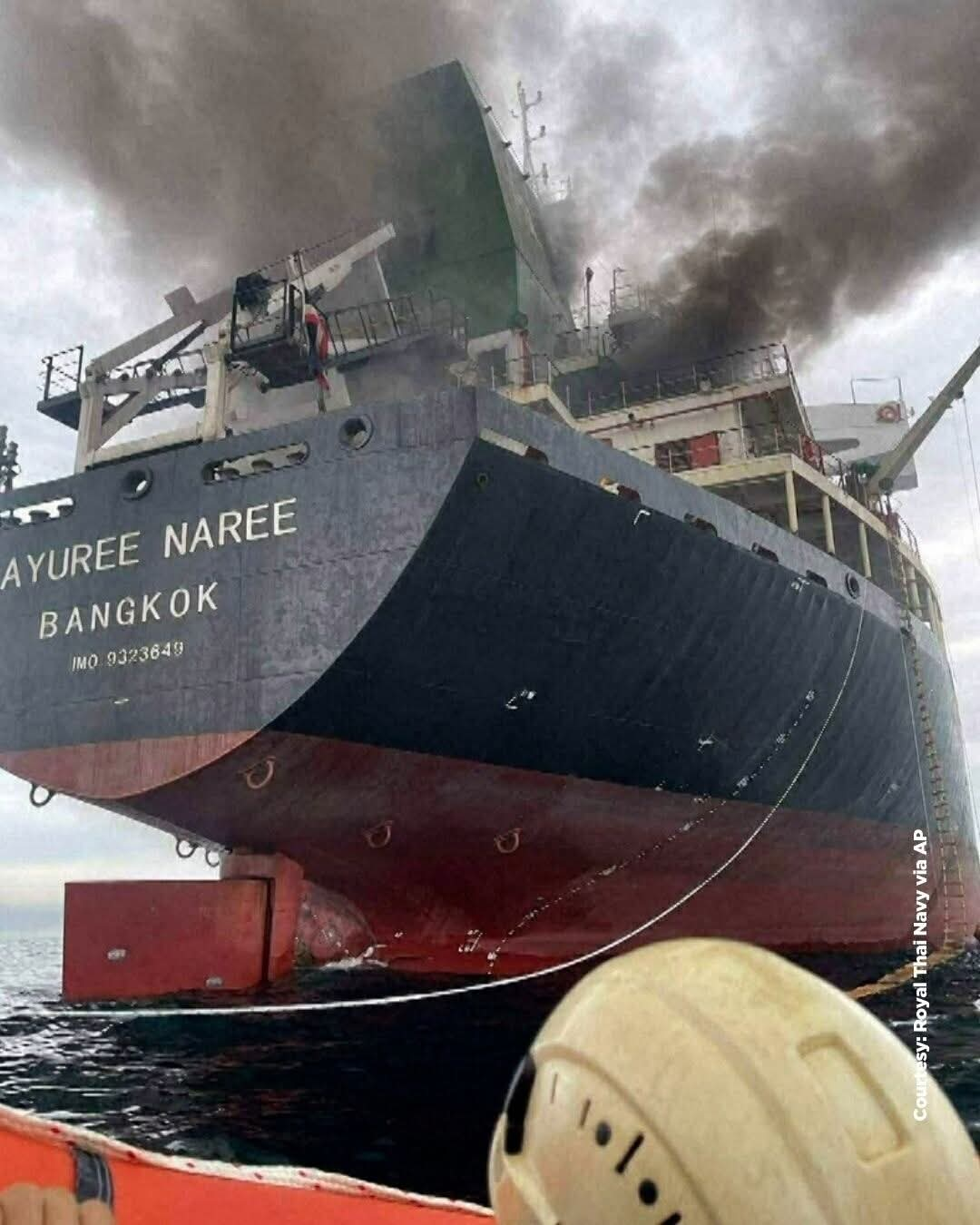
The targeted ships were the Liberia-flagged container ship Express Rome, which the IRGC described as Israeli-owned or linked to Israel, and the Thai-flagged bulk carrier Mayuree Naree. According to the IRGC’s statement, released through state-affiliated media outlets including Fars News and ISNA, both vessels were hit by projectiles after they repeatedly ignored warnings from Iranian naval units and persisted in attempting to pass through the strait without obtaining prior authorization from Iran.IRGC Navy Commander Admiral Alireza Tangsiri reinforced the group’s position in a public post on X, declaring that “any vessel intending to pass must get permission from Iran.” He specifically referenced the crews of the Express Rome and Mayuree Naree, suggesting they had relied on “empty promises” of safe passage before being intercepted and struck, underscoring Iran’s unilateral assertion of control over the vital waterway.
The attack on the Mayuree Naree, a roughly 30,000-deadweight-ton bulk carrier owned by Thailand’s Precious Shipping and en route from Khalifa Port in the UAE to Kandla Port in India, proved particularly severe. Reports indicate the vessel was struck by two projectiles around 08:15 local time, igniting a fire that engulfed parts of the ship, including damage near the engine room. With a crew of 23 onboard, 20 seafarers were safely evacuated in a rescue operation supported by Omani authorities and elements of the Royal Thai Navy. However, three crew members remained unaccounted for or possibly trapped amid the blaze, prompting ongoing search efforts and concern from Thai maritime officials. The ship’s owners confirmed it carried war risk insurance coverage to address potential losses.
In contrast, claims regarding the Express Rome, a larger container vessel of approximately 123,000 deadweight tons, have not been independently verified. Maritime security analysts, including firms like Vanguard Tech, noted that the ship’s most recent AIS signals placed it anchored northeast of Dubai among dozens of other stationary vessels, with no confirmed evidence of damage, fire, or direct engagement. The IRGC’s labeling of the ship as “Israeli-owned” aligns with its broader rhetoric framing vessels associated with the United States, Israel, or their allies as legitimate military targets in retaliation for the wider conflict.These incidents formed part of a broader wave of attacks on March 11, with UK Maritime Trade Operations (UKMTO) and other international monitors reporting that at least three commercial vessels sustained hits from unidentified projectiles across several hours in and around the strait. The events have heightened fears that Iran is actively enforcing a de facto closure of the passage, a choke point responsible for roughly one-fifth of global oil flows and a substantial share of liquefied natural gas shipments. Commercial traffic has already plummeted dramatically since early March, with many tankers idling in the Persian Gulf, rerouting via longer and costlier paths, or canceling voyages altogether due to skyrocketing war risk premiums and outright refusals of coverage by insurers.
The strikes occur against the backdrop of escalating tit-for-tat actions in the nearly two-week-old war. The United States has conducted aggressive countermeasures, including the destruction of at least 16 Iranian mine-laying boats near the strait to prevent potential mining operations that could turn the narrow waterway into a prolonged hazard. Iran, meanwhile, has continued missile and drone barrages against regional targets while issuing repeated warnings that unauthorized transits—particularly those tied to adversarial nations—will face direct force.Global energy markets have reacted sharply, with oil prices experiencing significant volatility and upward pressure as traders weigh the risks of sustained disruption. International bodies and shipping associations have urged restraint, while calls mount for diplomatic intervention to restore freedom of navigation under established international law, which treats the Strait of Hormuz as an international strait granting transit passage rights without requiring prior permission from coastal states.
As the conflict enters its critical phase, the targeting of neutral-flagged commercial shipping has raised the stakes considerably, threatening not only regional stability but also the broader global economy dependent on uninterrupted energy flows through this strategic artery.