
Former Minister Urges Nile Payment From Egypt; Hydrology Supports the 86% Figure, Not the Invoice
By Tesfaye Alemayohu
ADDIS ABABA — August 27, 2026
A former Ethiopian water minister said Addis Ababa should seek payment from Egypt for Nile water and keep building dams on the Abay. The remarks were first published by Fana Media Corporation and the Ethiopian News Agency, both state-affiliated. They are a policy argument, not a new cabinet decision, and not a settled rule of international water law.
Fana posted the comments on X on 27 August 2026, quoting former Water Minister Shiferaw Jarso and the claim that Ethiopia supplies about 86 percent of the Nile’s flow. ENA published the same interview. HahuPrime has not interviewed Jarso. This report is based on those accounts, later regional coverage, and published hydrology.
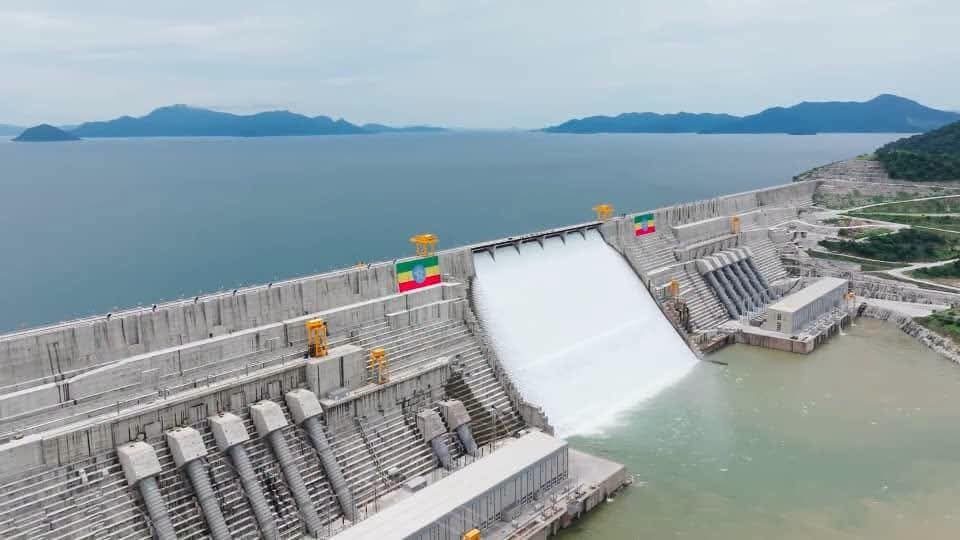
Jarso said Egypt’s warnings about more Ethiopian works on the Abay were familiar and would not stop further dams already listed in Ethiopia’s water master plan. Most of those dams, he said, are for hydropower and would not take “additional” water: the same flow could generate power at the Grand Ethiopian Renaissance Dam and again at plants downstream. He said Ethiopia still releases water from the GERD and is pursuing what he called equitable use rather than cutting Egypt off. He argued Ethiopia should seek compensation as the main source of the river while downstream states take most of the benefit. He also said that, when he was minister, even a small supply scheme in Gambella was treated as needing Egypt’s assent — a phase he said had ended.
What the measurements support
The “about 86 percent” line is a long-used basin figure for runoff that originates in the Ethiopian highlands and leaves through the Abay/Blue Nile, the Tekeze/Atbara and the Baro-Akobo/Sobat. Published tallies put those Ethiopian-origin tributaries in the range of about 85–90 percent of Nile water on the main stem, with one compilation near 86.5 billion cubic metres a year from those branches.
That is not the same as saying the Blue Nile alone is 86 percent of the Nile in every season. Over a typical year the Blue Nile is roughly half, or a little more than half, of flow measured toward Aswan; the White Nile and Atbara make up the rest. In the Ethiopian rainy season the Blue Nile’s share of what arrives downstream rises sharply, often into the 80-percent range. Annual means and flood-season peaks are different numbers.
Rain that falls in Ethiopia is a geographic fact. There is no established Nile-basin mechanism under which Egypt is required to pay Ethiopia for rainfall-generated river flows.
Hydropower versus extra consumption
A hydropower plant does not divert the river onto farms. Water passes the turbines and continues downstream. The losses that do exist are evaporation and seepage from the reservoir, and any change in when the water arrives. Studies of the GERD put evaporation from that reservoir at about 1.4–1.7 billion cubic metres a year, depending on water level and method. That is consumption. It is small next to the Nile’s long-term mean near Aswan, often cited near 84–86.5 billion cubic metres a year. It is not zero.
A cascade of power dams can use the same water more than once for electricity. That matches how hydro systems work. It does not stay true if large irrigation is taken from the same reservoirs. Irrigation is consumptive. Modelling of further Blue Nile development shows a trade-off: more upstream irrigation reduces water and power downstream and can cut generation at the GERD itself. Some ENA-linked write-ups of Jarso also had him urging irrigation dams for food production. If that is part of his position, “no additional water” and “build irrigation” cannot both be left unqualified.
Whether extra Ethiopian reservoirs would reduce evaporation at Egypt’s High Aswan Dam is a modelling result, not a benefit already delivered. Timing of releases in a drought year is the operational issue Cairo treats as material.
Law and the other capital
Articles 5 and 6 of the 1997 United Nations Convention on the Law of the Non-Navigational Uses of International Watercourses set out equitable and reasonable utilization. Article 7 requires states to take all appropriate measures to prevent causing significant harm. That convention does not create a tariff on upstream rainfall, and it has not settled the Nile dispute among Ethiopia, Egypt and Sudan.
Egypt’s public position rests on historic use and on the 1929 and 1959 Nile arrangements, which Ethiopia never signed.
Arabic-language coverage after the ENA interview quoted an Egyptian official source describing talk of new unilateral dams and control of flows as a violation of international law. Egyptian commentators described “pricing” the Nile as political escalation. HahuPrime did not obtain a named, on-the-record comment from Egypt’s Ministry of Water Resources and Irrigation for this article.
The GERD file is still open: filling and operating rules were never locked in a treaty ratified by all three states. Egyptian officials have also, in 2026, claimed the dam has already cost Egypt water. Those are competing political claims. Neither is a court judgment.
Jarso did call on Ethiopia to seek payment from Egypt. That is confirmed. Fana and ENA reported the remarks. HahuPrime did not hear them first-hand.
The idea that the Ethiopian highlands supply most of the Nile is supported by hydrology. Figures in the mid-80s to about 90 percent refer to water that leaves Ethiopia through the Blue Nile, the Tekeze/Atbara and the Baro-Akobo/Sobat together. The rounded “86 percent” used in politics is that basin picture, not a new measurement from this interview.
It is not accurate to treat the Blue Nile alone as 86 percent of the Nile in every season. Over a full year the Blue Nile is about half, or a little more than half, of flow toward Aswan. Its share rises in the Ethiopian rains, sometimes into the 80s. Those are two different numbers.
The claim that hydropower dams use “no additional water” is mostly right for turbines only: the river still goes downstream. It is not fully right. Reservoirs lose water to evaporation and seepage. The GERD’s evaporation is estimated at about 1.4–1.7 billion cubic metres a year. Dams also change when water arrives. If irrigation is taken from the same reservoirs, that water does not return in full. Some reports of the same interview also had Jarso urging irrigation dams. Those two aims do not sit together without qualification.
The claim that Egypt is required to pay Ethiopia is not established. No Nile treaty in force creates that bill. Rain in Ethiopia is a fact. A price is a political demand.
The claim that the current Ethiopian government has adopted that demand is not shown in the Fana or ENA copy. A former minister spoke. A cabinet circular did not.
The Water and Energy Ministry in Addis Ababa has not, in the material reviewed here, issued a matching formal claim. No sum was attached to “compensation.” No treaty, arbitration or power-for-water swap was tabled.
HahuPrime did not receive comment from either ministry before publication.