
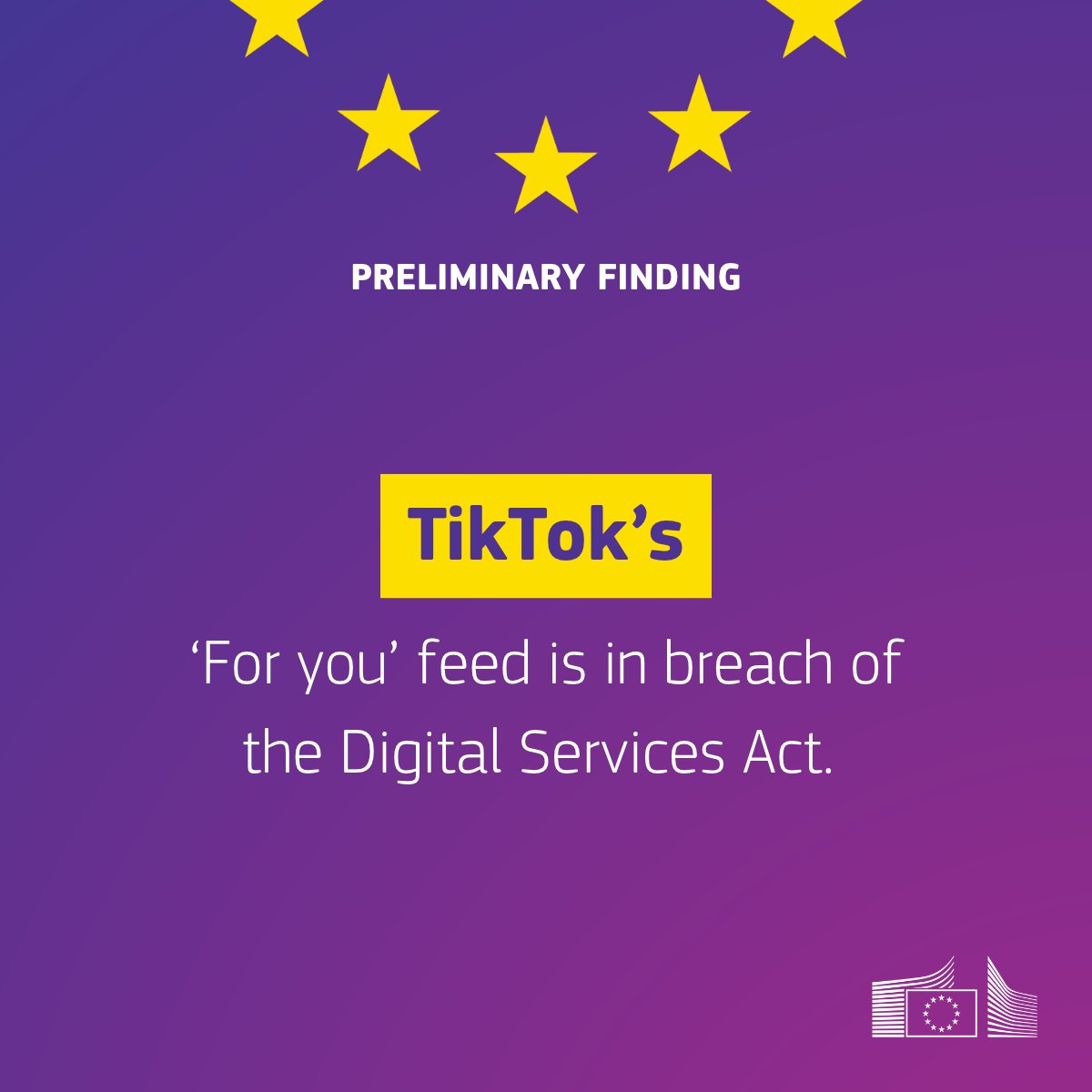
The European Commission said on Friday it had preliminarily found TikTok in breach of the European Union’s Digital Services Act over the design of its “For You” feed, arguing that repeated recommendations can harm users’ mental health.
The finding is not a final ruling. It concerns how TikTok assesses and limits risks from its recommendation system, rather than a blanket finding that every video on the platform is harmful.
Repeated recommendations under scrutiny
In its announcement, the Commission described a feedback loop: the more someone interacts with a particular kind of content, the more similar videos the system recommends. It said endless exposure to material about sadness, isolation or body image could have a detrimental effect, especially on vulnerable adults and children.
The regulator’s preliminary assessment covers both TikTok’s evaluation of those risks and the measures it has introduced to reduce them. Brussels acknowledged that the company had taken steps, but considers those safeguards insufficient.
According to Reuters’ reporting on the announcement, the Commission said TikTok should change the design of its feed, put more weight on users’ explicit preferences, improve the accessibility and usability of controls, and regularly test its recommendation algorithm.
TikTok disputes the findings
TikTok rejected the Commission’s conclusions, saying they misrepresent how its platform works and the protections it has implemented, Euronews reported. That response leaves the regulator and the company at odds over whether the existing safeguards adequately address the risks.
The distinction between preliminary findings and a final decision matters. The announcement sets out the Commission’s current assessment; it does not establish that a fine has already been imposed or that the proceedings have concluded.
For users, the central issue is whether they can meaningfully change what the feed keeps showing them. The case examines the cumulative effect of repeated recommendations, not simply whether an individual clip should be removed.
For other large platforms, it also highlights the EU’s scrutiny of recommendation systems themselves. The question is not only what content a service hosts, but how its design repeatedly directs people toward it.