
One year after the Rapid Support Forces seized El Fasher, satellite images show weeds growing through empty neighbourhoods, and survivors describe schools turned into detention sites. Aid groups say only a fraction of the city’s people have come back.
By HahuPrime News Desk | November 2, 2026
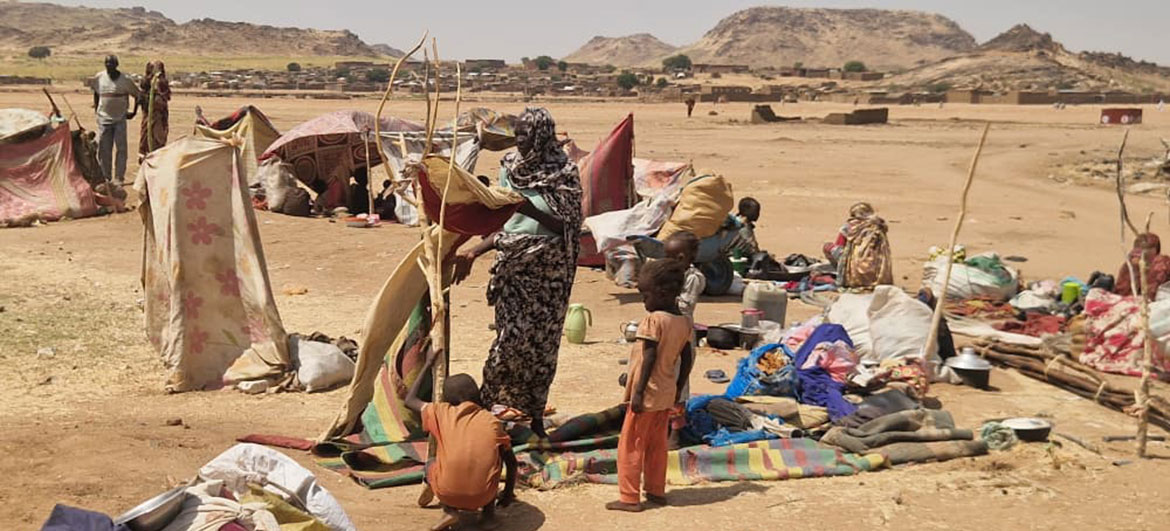
EL FASHER, Sudan — Salwa’s father’s house in El Fasher is still standing. Strangers live in it now. “My house was destroyed,” she told RFI. “They smashed everything and threw all our things into the street.” She fled a few days before the city fell to the Rapid Support Forces (RSF), and she has not gone back.
A year has passed since that fall, on October 26, 2025. The capital of North Darfur had held out through a siege of about 500 days. What came after, survivors and investigators say, was one of the darkest chapters of Sudan’s war. Today the city is largely empty, and the people who do pass through say they feel watched.
New research from Amnesty International, Yale University’s Humanitarian Research Lab and RFI draws the same picture: a city the RSF calls safe for returns, but that its former residents still fear.
A city the satellites say is empty
Yale’s lab, which tracked the siege from space, published its findings on October 28. In populated places, people, animals and cars keep plants down. In El Fasher, vegetation across the city rose by 9.02% in the first three months of 2026 compared with the same period in 2019 to 2023.
Only one of nine major markets, the Daraja Oula central market, showed signs of trade. None of the city’s 19 healthcare facilities showed significant human or vehicle activity. Analysts saw burn pits at five hospitals and burial activity at three, some of it, Yale said, consistent with human remains.
“Few civilians remain or have returned to El-Fasher,” the lab concluded.
Pre-siege estimates vary widely because many residents lived in displacement camps such as Zamzam; Yale put the metropolitan population at one to two million. Amnesty, citing humanitarian groups working in the city, said fewer than 70,000 people are there now. Solidarités International, a French aid group that has returned to El Fasher, estimates that 40,000 to 60,000 people have either come back or travel in and out, out of a pre-war city population of at least 300,000.
“When the market where you used to get food is now a meagre affair with a few stalls and exorbitant prices, those aren’t conditions under which you can return with your family,” Renaud Douci, the group’s field coordinator in Sudan, told RFI.
Schools turned into detention sites
Amnesty interviewed 25 people in August and September, including 19 residents and six humanitarian workers. Seventeen of the residents said they had been detained by the RSF, some during the capture of the city and some when they came back to collect belongings or search for missing relatives. Zaghawa and Masalit people, several said, were singled out. Names were changed to protect them.
Modathir, a 29-year-old Zaghawa man, was held in Shala prison until he escaped in July. “Torture is something which is permanent in any [RSF] detention,” he said. “If you sleep a lot, they don’t like that, they will execute you. They ask, ‘You want to take a rest? We will give you permanent rest’.”
Women, children, older people and the wounded were held in schools. Hadia, a 30-year-old woman whose husband was shot during the capture, was too malnourished to breastfeed her 18-month-old child. When she reached the town of Tawila in August, all three of her children were diagnosed with malnutrition. “My children were very skinny and weak,” she said.
Others described forced labour. Musa, 23, said he and his father were made to collect corpses and to tell cameras that El Fasher was safe. “They paraded us inside the city and told us to talk [about how] El Fasher is good and safe,” he said.
Release often came only with money. A journalist with El Fasher Radio and Television, held for nine months at Dagris prison near Nyala, came out sick and blind in one eye after his family paid $2,000, his wife told RFI. Rights groups say Dagris held between 13,000 and 19,500 people earlier this year, several times its official capacity of 4,500.
Amnesty said it wrote to the RSF on October 9 about its findings and had received no reply by publication. The RSF-led Tasis coalition, which runs a parallel government from Nyala, has urged displaced residents to return and says it is helping them do so. Former residents told RFI that newcomers from outside are being given their homes, a claim HahuPrime could not independently verify.
A war that has moved on, but not ended
The fall of El Fasher gave the RSF control of almost all of Darfur. The UN estimated that about 6,000 people were killed when the city fell, but researchers studying satellite images believe the toll may run into the tens of thousands. By January, Yale estimated that at least 70,000 people were missing from the first two months of RSF control. A UN fact-finding mission said the killings bore the “hallmarks of genocide”.
The fighting has now shifted to Kordofan, where the UN has warned that El Fasher’s history could repeat itself. Amnesty’s Secretary General, Agnès Callamard, said the world had failed the city. “The RSF’s claims that El Fasher is safe for civilians to return to after the horrific massacres that took place one year ago could not be further from the truth,” she said.
Amnesty blamed both sides for blocking a way out. It said the United Arab Emirates has continued to support the RSF, which the UAE denies, and that the Sudanese Armed Forces have opposed a wider arms embargo and a ceasefire. It called for an immediate ceasefire, an international force to protect civilians and an arms embargo covering the whole of Sudan.
Official assessments say famine is highly likely in North Darfur in the months ahead. HahuPrime has reported on warnings from the US, the EU and 30 countries that Sudan is sliding toward famine, on stalled peace talks in Geneva and on Sudan’s accusation that drones are being launched at it from Ethiopia.
For now, Amnesty researcher Laura Mills told RFI, the city remains frozen. “There are pockets of houses still standing. And between each pocket, the streets are deserted,” she said. “Why return when you risk being arrested and tortured at any moment?”
Sources
- Amnesty International: Sudan: El Fasher civilians suffer unlawful killings, detention and torture one year after city’s capture by the RSF – new testimony
- Yale School of Public Health Humanitarian Research Lab: El-Fasher, One Year Later (Situation Report No. 81)
- RFI: A year after the fall of El Fasher, Sudan’s war has left a ghost town in its wake
- Sudan Independent: Everybody is terrorised: El Fasher population drops, Amnesty says