
The Cape Town supercomputer that Strive Masiyiwa’s Cassava Technologies built with Nvidia has run out of spare capacity, its data-centre chief says. The company is now reported to be seeking up to $1 billion for more chips. Whether that money arrives will help decide how much of Africa’s AI work stays on African soil.
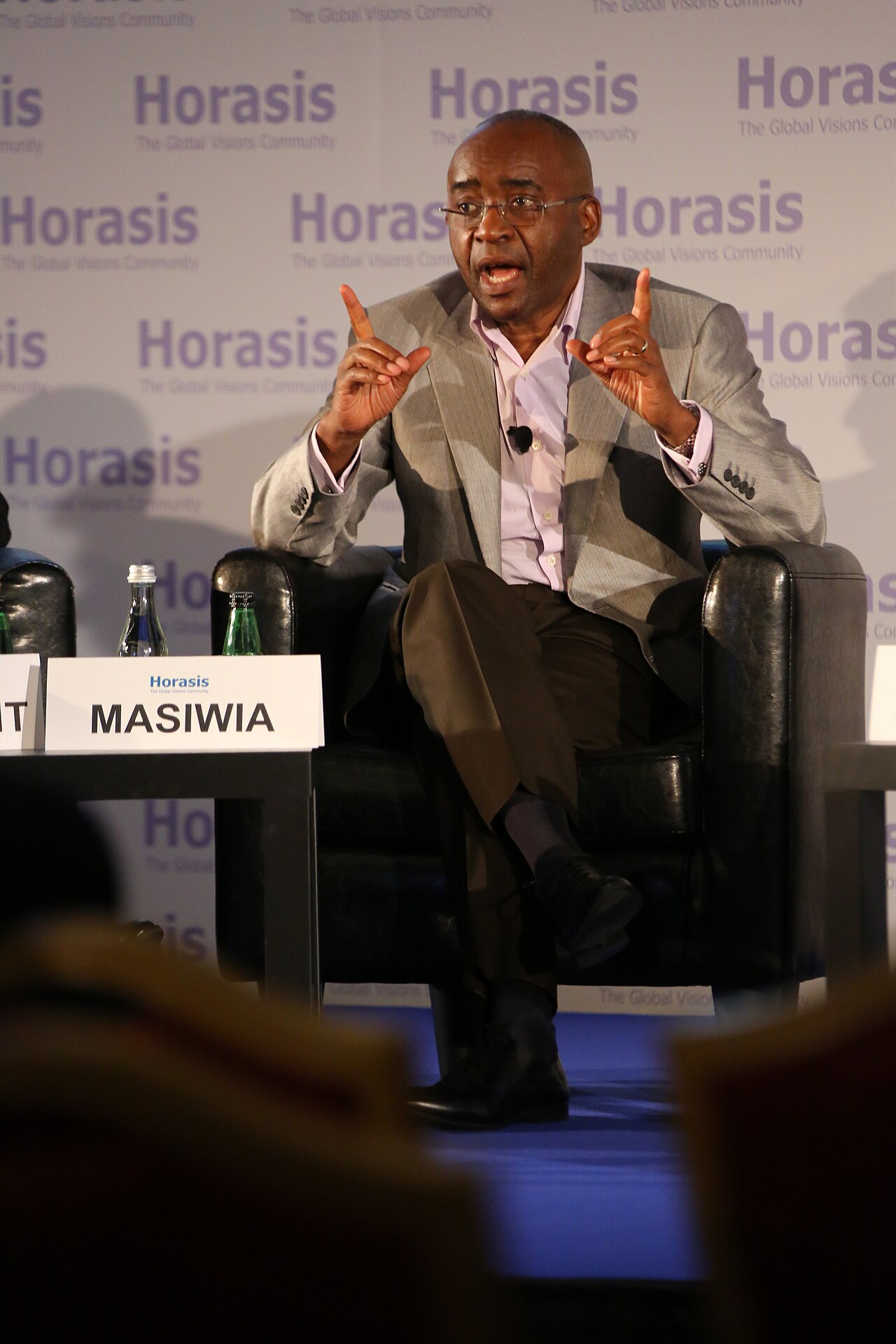
By HahuPrime News Desk | November 24, 2026
CAPE TOWN — Inside a 3-megawatt hall at Africa Data Centres’ site in Cape Town, just over 2,000 Nvidia graphics processors are now working flat out. There is no idle rack left to rent.
“As of November 1, we are at full capacity within our AI Factory,” Boyd Chislett, chief executive of Africa Data Centres, the digital infrastructure arm of Cassava Technologies, told South Africa’s Business Day in an interview published on Monday.
“It’s a 3-megawatt facility, just over 2,000 GPUs, all fully utilised, so we’re really proud of the achievement,” he said. “This captures the take-up and demand we’ve seen in the market.”
Cassava, founded by Zimbabwean billionaire Strive Masiyiwa, sold the Cape Town system in 2025 as Africa’s first “AI factory”, Nvidia’s term for a data centre built mainly to train and run artificial intelligence models. A full house suggests that African banks, telecoms operators and start-ups will pay for local computing power when it exists.
A reported $1 billion raise
The next question is money. Bloomberg reported on November 17 that Cassava is seeking to raise as much as $1 billion, mostly to buy more Nvidia chips, with some of the funds going to prepare its fibre and data-centre networks for AI workloads.
The report cited people familiar with the matter who asked not to be named. They said Cassava was talking to investors in the Middle East and the United States, and that the talks might not produce a deal. Cassava declined to comment to Bloomberg. No investors or terms have been made public, and HahuPrime has not been able to confirm the fundraising independently.
What is on the record is the gap between plan and reality. When Cassava and Nvidia announced their partnership in March 2025, the company said it would deploy 12,000 GPUs across Africa over three to four years, an investment Bloomberg put at up to $720 million. Eighteen months on, the one working site holds about 2,000.
The Cape Town machine is not small. Built by HPE with Nvidia H200 processors, it was ranked 36th on the TOP500 list of the world’s fastest supercomputers in June 2026 and sits 39th on the November list with unchanged performance, according to the TOP500 listing.
Cassava has named Egypt, Kenya, Nigeria and Morocco, along with South Africa, as markets for further AI sites. In Egypt it signed a deal in September with Vodafone Business and Elsewedy Electric on a $1 billion data-centre project that includes what the partners call the country’s first sovereign AI data centre. That project is separate from the reported new raise.
Demand is shifting from tests to real work
Cassava’s cloud unit says the customers are changing. “On the enterprise AI side, we’ve seen massive demand shifts in the past six months,” Vinay Hiralall, chief commercial officer of Liquid C2, told Business Day on the sidelines of the Africa Tech Festival in Cape Town. “Many enterprises had first spent time testing how to use AI in their operations. Now it’s about execution and implementation.”
He said about one in three deals the unit is now working on is focused on enterprise AI.
Chislett offered a more cautious note. Adoption by South African companies “has been slower than what we thought”, he said, “not because there’s not demand, but organisations are trying to distil use cases into practical business outcomes.”
Most AI models are trained and run in data centres in the United States, Europe and Asia. Africa holds less than 1% of the world’s AI data-centre capacity, according to Bloomberg. African firms that use AI tools usually send their data abroad, which adds cost and delay, and raises questions about who controls sensitive information such as bank records, health files and government documents.
Local capacity also matters for language. Models that understand Amharic, Hausa or Luganda need data and computing close to the people who speak them. Earlier this month Google picked Uganda’s Crane AI Labs, which builds offline AI tools for health workers, for its first Africa Applied AI Lab cohort.
A crowded race, and a power problem
Cassava is not alone. MTN, Africa’s largest mobile operator, has set up a data-centre venture with a UAE-based investor and is targeting about 150 megawatts of AI-ready capacity in South Africa and Nigeria. Microsoft, Amazon and Google are expanding cloud capacity too. South Africa’s President Cyril Ramaphosa took the country’s AI pitch to Silicon Valley this month, as HahuPrime reported.
Development lenders are also trying to fill the gap. The World Bank is betting on rented AI chips to close Africa’s computing gap.
Two hurdles stand out. The first is electricity. AI data centres draw large, constant loads, and many African grids already struggle to keep the lights on. The Egyptian project alone is planned to grow to 200 megawatts, its partners have said.
The second is Washington. On November 16 the US Commerce Department’s Bureau of Industry and Security issued a rule requiring a licence before advanced AI chips go to data centres that supply large amounts of computing to companies headquartered in China and other restricted countries. African operators buying top Nvidia chips will face closer scrutiny of who their customers are. Nvidia itself has just been through a leadership upheaval, with Jensen Huang returning as chief executive on Monday after US officials weighed in.
What it means for the Horn of Africa
For Ethiopia and its neighbours, the nearest large AI computing remains far away, in South Africa, Kenya or the Gulf. Ethiopia’s Artificial Intelligence Institute last week graduated 51 young innovators from a Pan-African AI residency in Addis Ababa, but the region still lacks the kind of dedicated GPU capacity now sold out in Cape Town.
If Cassava’s raise closes and its Kenyan and Egyptian sites are built, East African developers could rent computing closer to home. If it stalls, they will keep sending their data overseas. For now, the one AI factory Africa has is full.
Sources
- Business Day: Strive Masiyiwa’s AI bet pays off as Cassava factory hits full capacity
- Bloomberg (via The Next Web): Cassava reportedly seeks up to $1bn for Nvidia chips for African AI
- Business Tech Africa: Cassava Technologies Seeks $1 Billion to Expand Nvidia Powered AI Infrastructure in Africa
- TOP500: Cassava AI Factory – HPE Cray XD670, NVIDIA H200 SXM5
- Connecting Africa: Vodafone, Cassava, Elsewedy Electric unveil $1B Egypt data center project
- US Bureau of Industry and Security: BIS Issues Rule Addressing Remote Access to American Super Intelligence Technology
- Google Africa Blog: Meet the 10 startups joining the first Google Africa Applied AI Lab cohort
- ENA: Pan-African AI Residency Strengthens Cross-Border Partnerships, Advances Innovation