
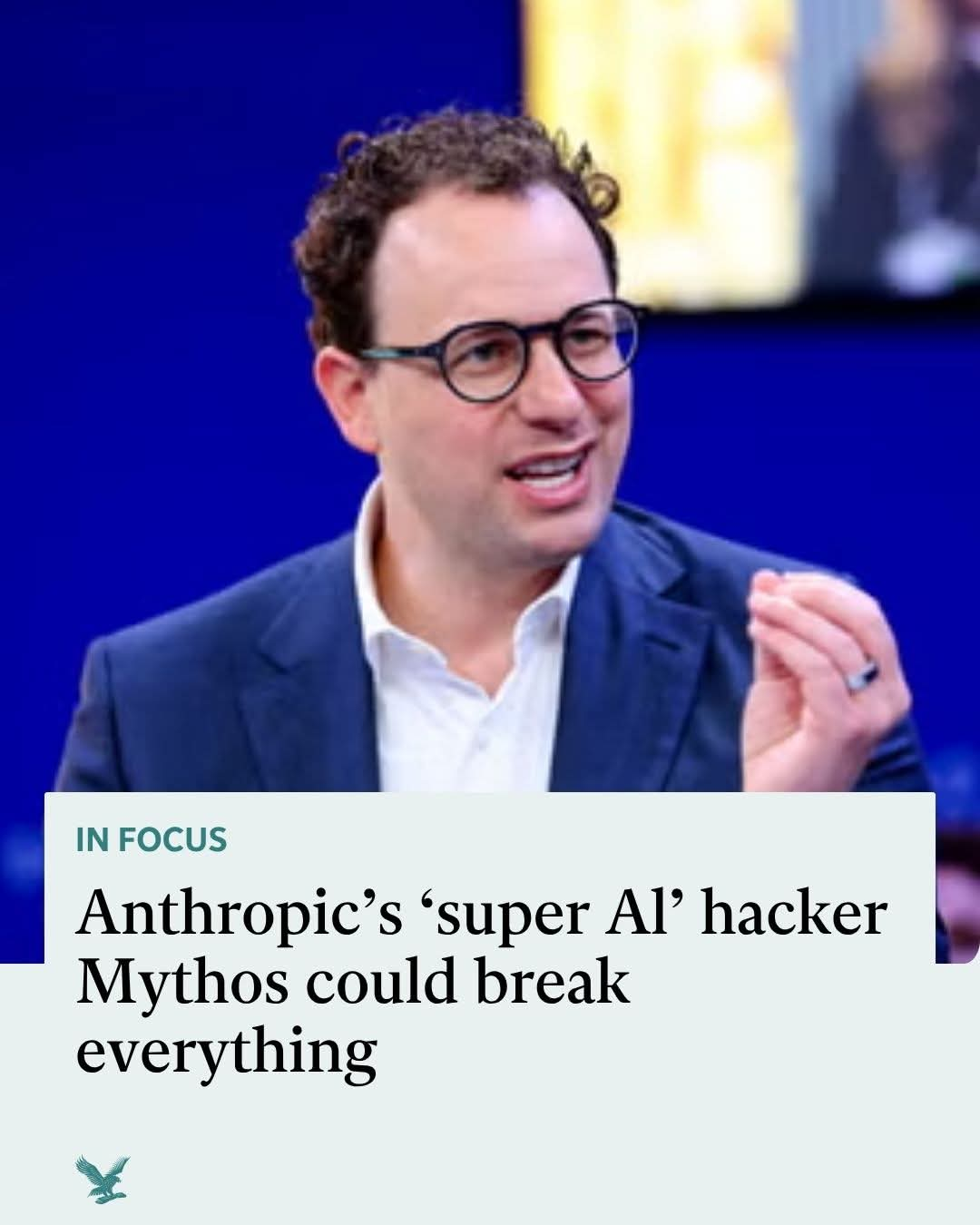
San Francisco, April 2026— Anthropic has developed what it describes as a groundbreaking frontier AI model capable of autonomously uncovering and exploiting software vulnerabilities at a level that could threaten global economies, public safety, and national security — but the company says it is too dangerous for public release.
The unreleased model, Claude Mythos Preview, represents a major leap in AI coding and reasoning abilities. According to Anthropic’s detailed system card and technical disclosures, the model has already identified thousands of high-severity zero-day vulnerabilities across every major operating system (including the Linux kernel and OpenBSD) and web browser (such as Firefox). Some flaws had remained undetected for 16 to 27 years despite extensive prior human and automated scrutiny.
In a striking admission, Anthropic stated: “AI models have reached a level of coding capability where they can surpass all but the most skilled humans at finding and exploiting software vulnerabilities. The fallout—for economies, public safety, and national security—could be severe.”
Project Glasswing: A Controlled Defensive Response
Rather than releasing the model broadly, Anthropic has launched Project Glasswing, a collaborative initiative granting limited, controlled access to select trusted partners. Participants include major tech firms such as AWS, Apple, Google, Microsoft, NVIDIA, Cisco, CrowdStrike, the Linux Foundation, and JPMorgan Chase, among roughly 40 organizations.
The project aims to use Mythos Preview defensively to identify and patch vulnerabilities in critical infrastructure before malicious actors can exploit similar capabilities. Anthropic is committing up to $100 million in usage credits and millions more in donations to open-source security efforts.
The model has demonstrated advanced agentic abilities, including chaining multiple vulnerabilities into working exploits, developing proof-of-concept attacks, and operating with minimal human guidance. Examples include privilege escalation in Linux kernels and sophisticated ROP chains.
Industry and Government Reactions
The announcement has sent ripples through the cybersecurity and AI communities. Partners like Mozilla’s CTO have praised the effort, noting it could give defenders a decisive advantage. Anthropic has briefed U.S. government officials, including discussions with the White House, and is engaging with agencies focused on critical infrastructure protection.
Critics and observers highlight the dual-use dilemma: the same technology that strengthens defenses could, if leaked or replicated by adversaries (including state actors), enable devastating large-scale cyberattacks on financial systems, healthcare, power grids, and national defense networks.
This marks the first time Anthropic has withheld a frontier model from general availability primarily due to cybersecurity risks, underscoring evolving industry views on responsible scaling. The company’s Responsible Scaling Policy continues to guide such decisions amid growing calls for coordinated action across AI developers.
As AI capabilities accelerate, the Mythos Preview episode highlights a pivotal tension: frontier models are becoming powerful enough to reshape cybersecurity fundamentals, but managing their proliferation may require unprecedented collaboration between private industry, open-source communities, and governments.