
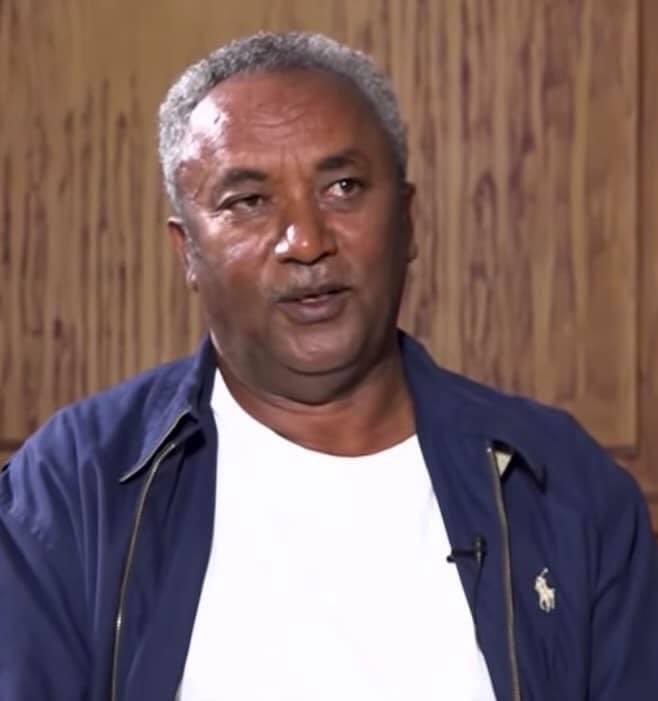
Tigray Interim President Accuses TPLF of Nullifying Pretoria Agreement with Move to Reinstate Pre-War Regional Council
April 21, 2026 | Addis Abeba
Lt. Gen. Tadesse Worede, President of the Tigray Interim Administration, stated that the Tigray People’s Liberation Front (TPLF) Central Committee’s decision to reinstate the pre-war Tigray Regional Council violates the 2022 Pretoria Peace Agreement and threatens post-war stabilization efforts in the region.
Speaking at a press briefing on April 21, Lt. Gen. Tadesse described the TPLF move as effectively “nullifying” the Pretoria Agreement. He called for a careful assessment of its potential positive and negative consequences while affirming that the Interim Administration would continue its operations uninterrupted. “The Cabinet of the Interim Administration will continue its work, and government offices remain operational,” he said, emphasizing that governance and service delivery would not be disrupted.
The remarks came two days after the TPLF announced its decision following a Central Committee meeting held on April 15–16, 2026. In its statement, the TPLF called for the reinstatement of the Tigray Regional Council — elected by more than 2.8 million people in 2020 and suspended “for the sake of peace” — describing it as the primary source of sovereign authority in the region. The party also signaled plans to restructure the interim administration, citing stalled implementation of the Pretoria Agreement, deteriorating conditions, alleged federal violations (including withholding funds for civil servants), and the need for an inclusive executive body involving various Tigrayan resistance forces.
TPLF Position and Pretoria Agreement Context
The TPLF argued that the federal government’s unilateral extension of the Tigray Interim Administration’s mandate (including Lt. Gen. Tadesse Worede’s term) violated the spirit and provisions of the Pretoria Agreement, which requires bilateral political dialogue between the signatories. The party maintained that the pre-war council’s temporary suspension was meant only to facilitate the peace process, not to permanently replace elected structures.
The Pretoria Agreement, signed in November 2022 in South Africa, ended the devastating 2020–2022 Tigray war. It established a framework for a permanent cessation of hostilities, disarmament, demobilization, and the creation of an interim administration to oversee transition and recovery. Key unresolved issues include the return of displaced persons (with hundreds of thousands still affected) and territorial disputes, particularly in western and southern Tigray.
Interim Administration’s Response
Lt. Gen. Tadesse stressed that issues of displaced populations and Tigray’s territorial boundaries are “fundamental” and should not be prioritized hierarchically. He cautioned against political polarization, warning that labeling or dismissing differing views would harm the region. “There is no solution through rumors or hearsay,” he said, urging stakeholders to harmonize ideas and work collectively for peace and development.
The Interim Administration, federally backed and established after the peace deal, has faced criticism from TPLF-aligned voices, who view it as lacking full legitimacy without broader Tigrayan consensus. Lt. Gen. Tadesse has previously defended his appointment and the extension as legal and necessary for stability.
The TPLF’s announcement has sparked widespread concern. Former TPLF spokesman and current adviser to Prime Minister Abiy Ahmed, Getachew Reda, described the move as “deeply alarming” and a clear repudiation of the post-war governance structure created under Pretoria. Observers fear it could jeopardize fragile recovery efforts and raise risks of renewed instability in northern Ethiopia, though no immediate violence has been reported.
The development highlights deepening divisions within Tigrayan politics between the federally supported interim setup and TPLF efforts to reassert pre-war elected institutions. Both sides continue to accuse each other of undermining the Pretoria Agreement, while core challenges — displacement, territorial integrity, and full implementation of the peace deal — remain unresolved.
The Tigray Interim Administration has pledged to maintain regular functions amid the political tensions. Further developments are expected as stakeholders respond to the competing claims over regional governance.
Addis standard, Martine pluat and Aljazeera