
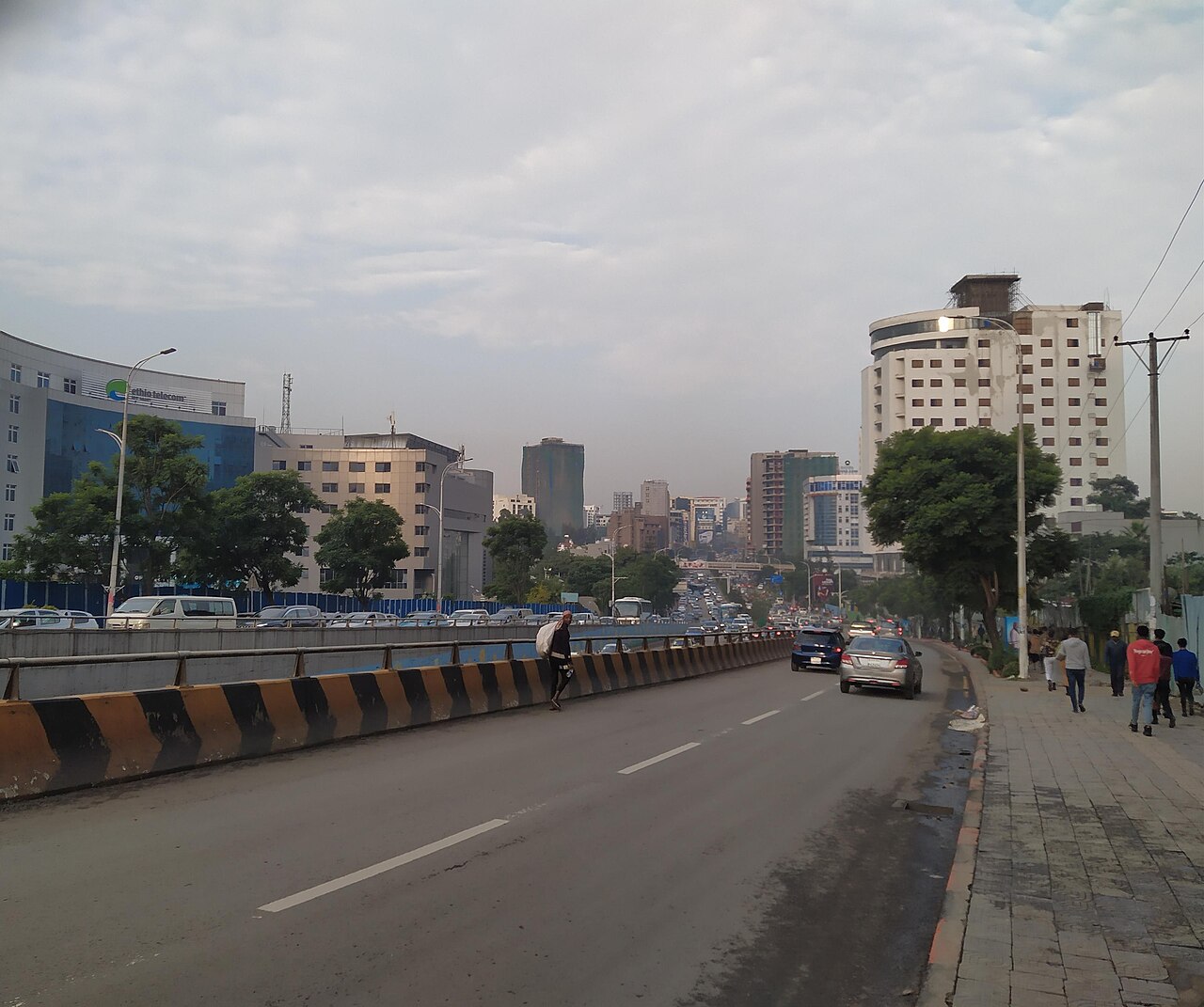
Prime Minister Abiy Ahmed has opened the latest stretch of Addis Ababa’s corridor development programme, a 57-hectare project in and around the Bole area that city officials say adds new roads, walkways, cycle lanes, car parks and public spaces to one of the capital’s busiest districts.
The project was inaugurated late on Wednesday, according to the state-run Ethiopian News Agency and the private outlets Abay Times and Birr Metrics. It covers six main routes: Bole Medhanialem to Golagul and the British Embassy, Bole Medhanialem to Moenco, Bole School to the Adey Abeba model village, Imperial Hotel to Shalla Park, Chechnya to Bole Rwanda, and Adey Abeba Stadium to Bole Road, along with a web of connecting internal roads.
What the city says has been built
According to figures released by the city and reported by Abay Times, the works include about 17 kilometres of road, 34 kilometres of pedestrian walkway, 8 kilometres of cycle lanes and three bridges for vehicles and pedestrians. Car parks can hold 5,880 vehicles, and the project adds 150 electric-vehicle chargers and 13 taxi and bus stops. Drainage, drinking water, power, telecoms and traffic-system lines have been laid underground along the routes.
The city also lists 91 commercial buildings, more than 3,000 shops, a model village of 152 houses, cafés, restaurants and some 440 renovated buildings. Public facilities include two libraries, seven playgrounds, seven sports fields and gyms, plazas and public toilets, while two schools and two police stations were built or expanded.
Mayor Adanech Abiebie said 23,000 people found work during construction and that 10,000 permanent jobs would follow, Abay Times reported. She urged residents to look after the new facilities. These figures come from the city administration and have not been independently verified.
“More than infrastructure”
In remarks carried by state media and Birr Metrics, Abiy said the quality of urban development “increasingly defines a nation’s productivity, human dignity, social order and environmental resilience.” He described the programme as part of a wider vision for Ethiopian cities that are “productive, inclusive, green, resilient” and planned around future population growth and climate pressures.
The corridor initiative has been rolled out in phases since an earlier Bole Road section was completed in 2024. Birr Metrics notes that Abiy opened an 8-kilometre corridor from Meskel Square to Megenagna in September and a riverside development stretching from Kechene to Bambis in October. Similar projects are under way in cities including Bahir Dar, Gondar, Hawassa and Dire Dawa.
The programme has become one of the government’s most visible undertakings, reshaping large parts of the capital in a short time. Officials have not published the total cost of this latest phase. The city also says it expects 600 electric buses to be in service by early 2027.
Sources
- Ethiopian News Agency: PM Abiy Unveils 57-Hectare Urban Corridor Development Project in Addis Ababa
- Abay Times: Abiy opens 57-hectare Bole corridor in Addis Ababa
- Birr Metrics: Addis Ababa Launches 57-Hectare Urban Corridor Project