
A Brooklyn jury found the Chinese telecoms giant guilty on 10 of 12 counts, from bank fraud to stealing American trade secrets. The verdict lands far beyond New York, including in African countries whose mobile networks Huawei helped build.
By HahuPrime News Desk | November 25, 2026
NEW YORK — Jurors were shown a video that, prosecutors said, captured a Huawei employee slipping a piece of a T-Mobile testing robot into his backpack. On Tuesday that scene became part of a criminal conviction.
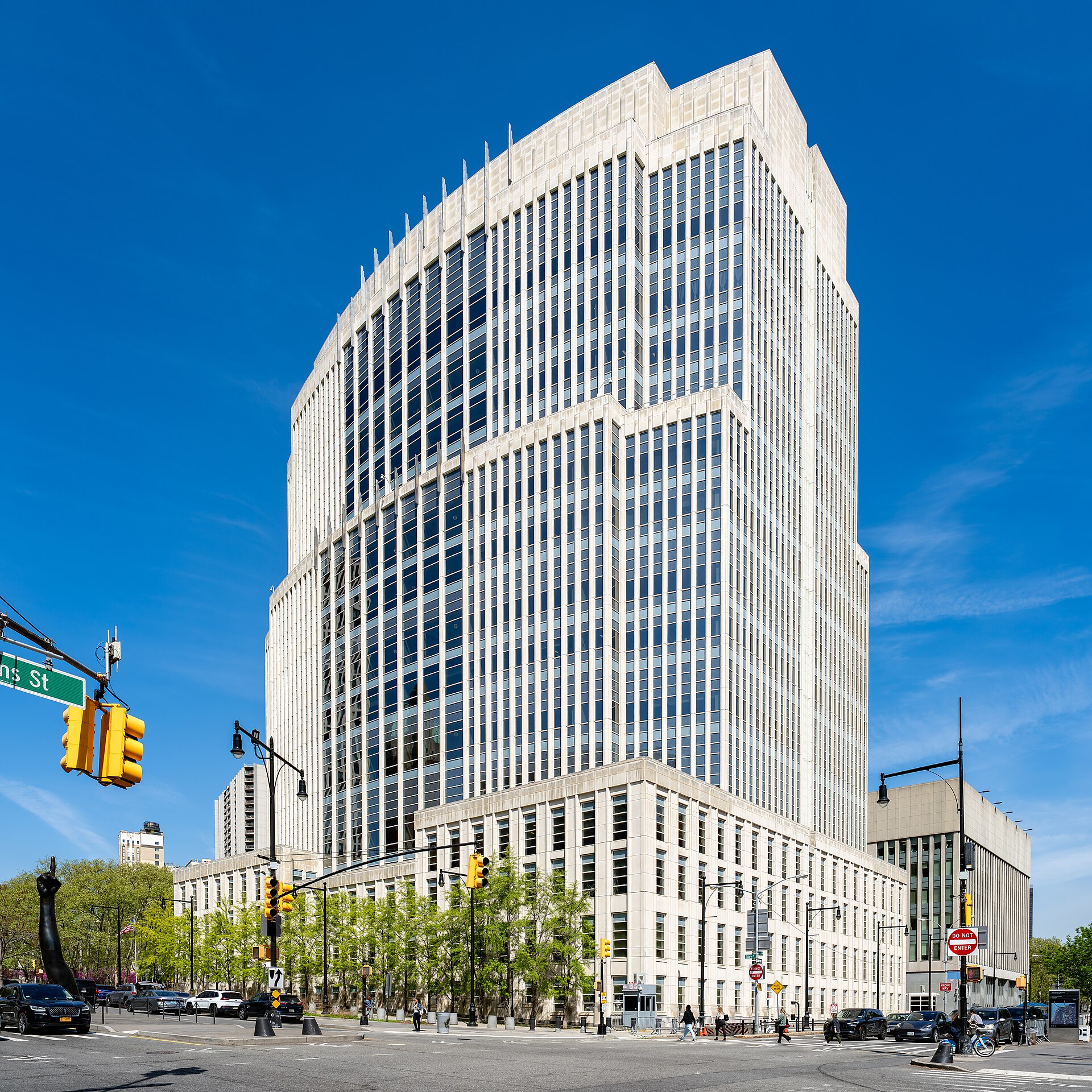
A federal jury in Brooklyn found Huawei Technologies guilty on 10 of the 12 counts it faced, including bank fraud, wire fraud, violating US sanctions on Iran, money laundering conspiracy and conspiring to steal trade secrets from American companies, Reuters and the US Department of Justice reported. Three subsidiaries were convicted alongside the parent company: Huawei Device, and the US units Futurewei Technologies and Huawei Device USA.
The jury acquitted Huawei of the most serious charge, racketeering conspiracy, which alleged the company operated as a criminal enterprise. It was also cleared of conspiring to obstruct justice.
“No person or company is above the law,” US Attorney General Todd Blanche said in a statement. “For decades, Huawei and three of its subsidiaries conducted their business in the United States on the basis of lies and theft.”
What the jury heard
The trial ran for more than two months, according to Reuters. Prosecutors called more than 60 witnesses, the defence 15.
The Justice Department said the evidence showed Huawei copied source code from Cisco routers, which it described as the “crown jewel” of Cisco technology. According to the department, Huawei engineers left Cisco’s own notes in the copied code and referred to the American company by spelling its name backwards, “ocsic”.
Prosecutors also told jurors that Huawei signed a non-disclosure agreement with T-Mobile over “Tappy”, a robot that tests touchscreens by mimicking a human finger, while intending to break it. Employees sent photos and technical details to China, the department said, and when that was not enough, one carried part of the robot out of the lab. Other cases involved antenna maker Quintel and chip start-up CNEX.
The other half of the case was about Iran. The Justice Department said Huawei ran its Iranian business through a company called Skycom, helped build internet and mobile services for the Iranian government, and supplied surveillance cameras that let the authorities monitor protests. It then lied to banks about that business to keep access to billions of US dollars, prosecutors said.
“For over two decades, Huawei built its global empire on a foundation of fraud, theft, and deception,” said Assistant Attorney General Tysen A. Duva of the department’s Criminal Division.
Huawei says it will appeal
Huawei rejected the verdict. “We believe the government’s remaining charges are equally without legal or factual merit,” the company said in a statement reported by CNBC. It said the five trade secret disputes cited by prosecutors had already been resolved as civil matters over the past two decades, and that no court had previously found it liable for wilful misappropriation.
The company said it would “take all necessary legal actions to defend our rights and interests”. Its lawyer, Brian Heberlig, told reporters the racketeering acquittal vindicated Huawei’s “good-faith compliance culture”. “We fully expect to appeal,” he said, according to Reuters.
In his closing argument, Heberlig had accused prosecutors of having “cherrypicked” a handful of unrelated incidents to build the story of a 20-year conspiracy, The Guardian reported.
US District Judge Ann Donnelly will sentence the company on September 14, 2027. Because the defendants are companies, not people, the penalties are financial: criminal fines, forfeiture and restitution, the Justice Department said.
The case began in December 2018, when Huawei’s chief financial officer Meng Wanzhou, the daughter of founder Ren Zhengfei, was arrested in Canada on a US warrant. She fought extradition for nearly three years before reaching a deferred prosecution agreement and returning to China in September 2021. In 2019 Washington put Huawei on a trade blacklist that cut its access to American technology. The same pressure now reaches Chinese AI firms, as the US ban on DeepSeek in federal systems showed.
Why it matters in Africa
Huawei is not a distant brand for most Africans. The company has more than 200,000 employees in about 170 countries, and a widely cited 2019 estimate, attributed to a researcher at the South African Institute of International Affairs and repeated by the Center for Strategic and International Studies, holds that it built about 70 percent of Africa’s 4G networks. That figure is several years old and has not been independently updated.
Ethiopia is a clear example. When Ethio Telecom switched on its first 5G service in Addis Ababa in May 2022, it said its “strategic partner” Huawei had deployed the network. In March this year, at the Mobile World Congress in Barcelona, Ethio Telecom said talks with Huawei, which it says manages a significant share of its infrastructure, were “nearing finalization” on 4G and 5G expansion and AI-enabled network features, Addis Standard reported. HahuPrime could not find a public announcement that the Huawei deal has since been signed.
The verdict does not, on its own, stop any government or operator outside the United States from buying Huawei equipment. But it gives Washington a court finding to point to when it urges allies to drop Huawei, something it has long done over 5G. It also arrives as African countries are spending heavily on new digital infrastructure, from Cassava’s Nvidia-powered AI factory to fresh fibre and data centres, and as US-China technology tension spills into boardrooms, as the turmoil at Nvidia showed this month.
Experts told Reuters the long case has not undermined Huawei’s business, which has diversified into areas including artificial intelligence. For operators in Addis Ababa, Nairobi or Lagos, the choice of supplier has usually come down to price, financing and reach. The question after Tuesday is whether a US criminal conviction adds a new cost to that calculation, or whether, as with previous US pressure, the networks keep being built anyway.
Sources
- US Department of Justice, Office of Public Affairs: “Chinese Tech Giant Huawei and Subsidiaries Convicted of Sanctions Violations, Fraud, Conspiracy to Steal Trade Secrets, and Money Laundering” (November 24, 2026)
- Reuters: “China’s Huawei convicted in sprawling US criminal trial over Iran business” (Karen Freifeld, November 25, 2026)
- The Guardian (with Reuters and AFP): “China’s Huawei convicted of stealing US trade secrets” (November 24, 2026)
- Associated Press: “Huawei is convicted in US of stealing trade secrets” (November 24, 2026)
- NBC News and CNBC reporting on the verdict and Huawei’s statement (November 24–25, 2026)
- Addis Standard and Developing Telecoms on Ethio Telecom’s vendor talks at MWC 2026 (March 2026)
- Ethio Telecom: pre-commercial 5G launch announcement (May 9, 2022)
- Center for Strategic and International Studies; Foreign Policy (2019) on Huawei’s share of Africa’s 4G networks