
Ethiopia’s water and energy minister says Cairo should fix flood irrigation and thirsty crops before blaming upstream dams, and must seek Addis Ababa’s consent for new Nile projects, sharpening a row that now runs from the Grand Ethiopian Renaissance Dam to the Red Sea.
By HahuPrime News Desk | November 24, 2026
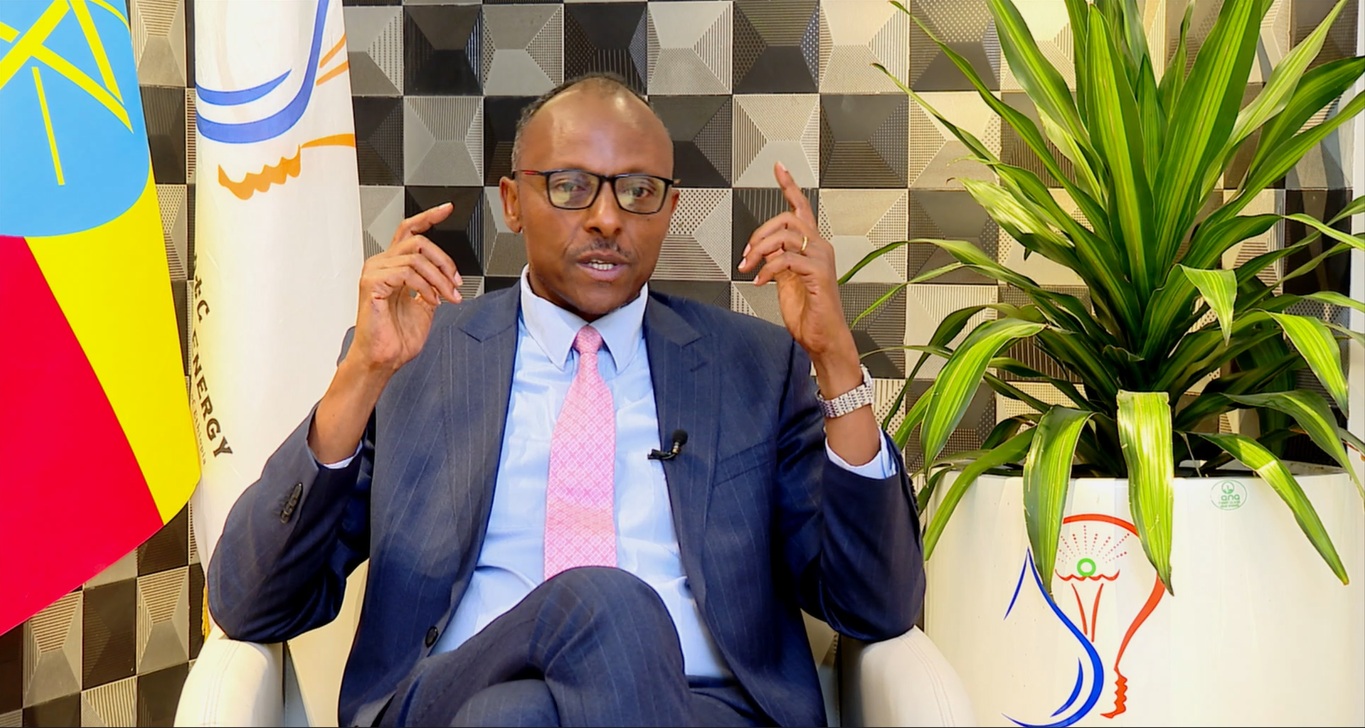
ADDIS ABABA — Seated between the Ethiopian flag and the banner of his ministry, Habtamu Itefa raised both hands as he made his point. Egypt, he told the state-run Ethiopian News Agency (ENA), should stop looking upstream for the cause of its water problems.
“They don’t have to point their finger toward Ethiopia; they have to look at their own yard and consume water efficiently, not abuse it,” the minister said in an interview ENA published on Tuesday.
The remarks came three days after Egypt, Sudan and Eritrea jointly rejected “unilateral measures” on water at a meeting in Aswan, and three weeks after Cairo and Khartoum called the Grand Ethiopian Renaissance Dam (GERD) a “persistent threat”.
Rice, sugarcane and desert canals
Habtamu’s case was built on Egypt’s farms. He criticised the continued use of traditional flood irrigation in a hot, arid country, saying much of the water is lost to evaporation. He pointed to rice grown on more than 500,000 hectares and sugarcane on more than 100,000 hectares, ENA reported, calling both major drivers of Egypt’s water consumption.
He also questioned the diversion of Nile water to desert reclamation schemes in the Toshka Valley and the Sinai Peninsula. In his telling, the Aswan High Dam, the Toshka Canal and the Al-Salam Canal toward Sinai were all large projects that Egypt built without Ethiopia’s participation or consent.
The minister then turned the “unilateral” charge, usually aimed at Addis Ababa, back on Cairo. “Whenever they go for any development, they have to have consent from Ethiopia because Ethiopia also has a plan,” he said, referring to Egypt’s reported plans to build a new city. “They have to stop unilateral actions.”
ENA did not name the city. The best-known Egyptian scheme of that kind is Jirian, a planned desert city west of Cairo that Reuters reported in 2025 would receive about 10 million cubic metres of Nile water a day through a new canal from the river’s Rosetta branch, as part of the wider New Delta farming project.
Habtamu set those projects against the 1959 Nile Waters Agreement, under which Egypt and Sudan divided the river’s flow between themselves without Ethiopia or other upstream states. He held up the 2015 Declaration of Principles on the GERD, signed in Khartoum by the leaders of all three countries, as the kind of framework Ethiopia says it has followed.
Ethiopia’s highlands supply more than 86 percent of the Nile’s annual flow, according to ENA. The minister said the country’s water and energy needs must be recognised as it tries to serve a population of about 130 million, while taking downstream interests into account.
Cairo’s side of the ledger
Egypt sees the arithmetic very differently. It depends on the Nile for nearly all of its fresh water and says any cut in its share would threaten its survival. Hani Sewilam, the minister of water resources and irrigation, has told the World Bank that Egypt’s annual water share has fallen to about 490 cubic metres per person, below the widely used water-poverty line of 1,000 cubic metres, Ahram Online reported.
Egypt has also taken steps of the kind Habtamu demanded. Its parliament approved a law in 2021 banning rice cultivation outside designated areas, according to a US Department of Agriculture report, and the government has spent years lining irrigation canals to cut losses from seepage. HahuPrime could not independently verify the minister’s figures on current rice and sugarcane acreage.
By Tuesday afternoon, HahuPrime had found no public response from Egypt’s foreign or irrigation ministries to the interview.
The positions of the two governments have hardened since Ethiopia inaugurated the GERD in September 2025 without a binding agreement on how the dam is filled and run. On November 2, Egypt’s Badr Abdelatty and Sewilam met their Sudanese counterparts in Cairo and said the dam remained a “persistent threat” because Ethiopia manages it alone. They reaffirmed their rights under the 1959 agreement and said Egypt was ready to take “all necessary measures” permitted under its joint defence pact with Sudan, as HahuPrime reported at the time.
Addis Ababa had already moved in the opposite direction. In early October, Habtamu said Ethiopia had formed a national committee to seek compensation over more than 22 projects it says were delayed or blocked by Egyptian pressure.
A water dispute inside a wider standoff
The Nile row no longer stands on its own. In early October, Ethiopia and Egypt expelled each other’s senior diplomats within hours. Addis Ababa has accused Egypt, Eritrea and Sudan of backing the Tigray People’s Liberation Front-led alliance fighting federal forces, accusations all three deny. Egypt now has military ties or facilities in Sudan, Eritrea, Djibouti and Somalia, The National has reported.
On November 21 in Aswan, the foreign ministers of Egypt, Eritrea and Sudan said Red Sea security belongs only to coastal states and rejected “unilateral measures, whether in the security field or on water security issues”, a statement HahuPrime read as aimed at landlocked Ethiopia. Sudan has separately accused Ethiopia at the UN of letting the Rapid Support Forces launch drones from its territory, which Addis Ababa denies.
Habtamu’s interview did not close the door to talks. He said lasting solutions would need “flexibility, mutual understanding and compromise”, urged Cairo to choose dialogue over opposing Ethiopia’s development, and proposed joint investment in Nile Basin water infrastructure, including dams on the Blue Nile, so that all riparian states share the benefits.
Whether Cairo takes that as an opening or a provocation may become clearer soon. Prime Minister Abiy Ahmed is due to answer lawmakers’ questions in parliament on Thursday, where foreign policy and the country’s neighbours are likely to come up. For now, neither capital shows signs of returning to the negotiating table.
Sources
- Ethiopian News Agency (ENA), interview with Water and Energy Minister Habtamu Itefa, November 24, 2026
- Egypt State Information Service and Abay Times, Egypt-Sudan “2+2” joint statement, November 2–3, 2026
- Egyptian Ministry of Foreign Affairs readout of the Egypt-Eritrea-Sudan meeting in Aswan, November 21, 2026
- The National, “Egypt and Ethiopia expel diplomats in tit-for-tat diplomatic row”, October 2, 2026
- Reuters, “Egypt plans desert city supplied with diverted Nile water”, June 1, 2025
- Ahram Online, Sewilam remarks on per-capita water share; US Department of Agriculture GAIN report on Egypt’s rice cultivation law, May 2021
- ENA, announcement of the Prime Minister’s appearance before the House of Peoples’ Representatives, November 24, 2026