
Yemen’s Houthis say they struck the Petro Rabigh complex on Saudi Arabia’s Red Sea coast and a radar site in Wadi al-Dawasir. Riyadh has confirmed no damage, the coalition says it shot down a missile aimed at the west of the kingdom, and neither account has been independently verified.
By HahuPrime News Desk | November 23, 2026
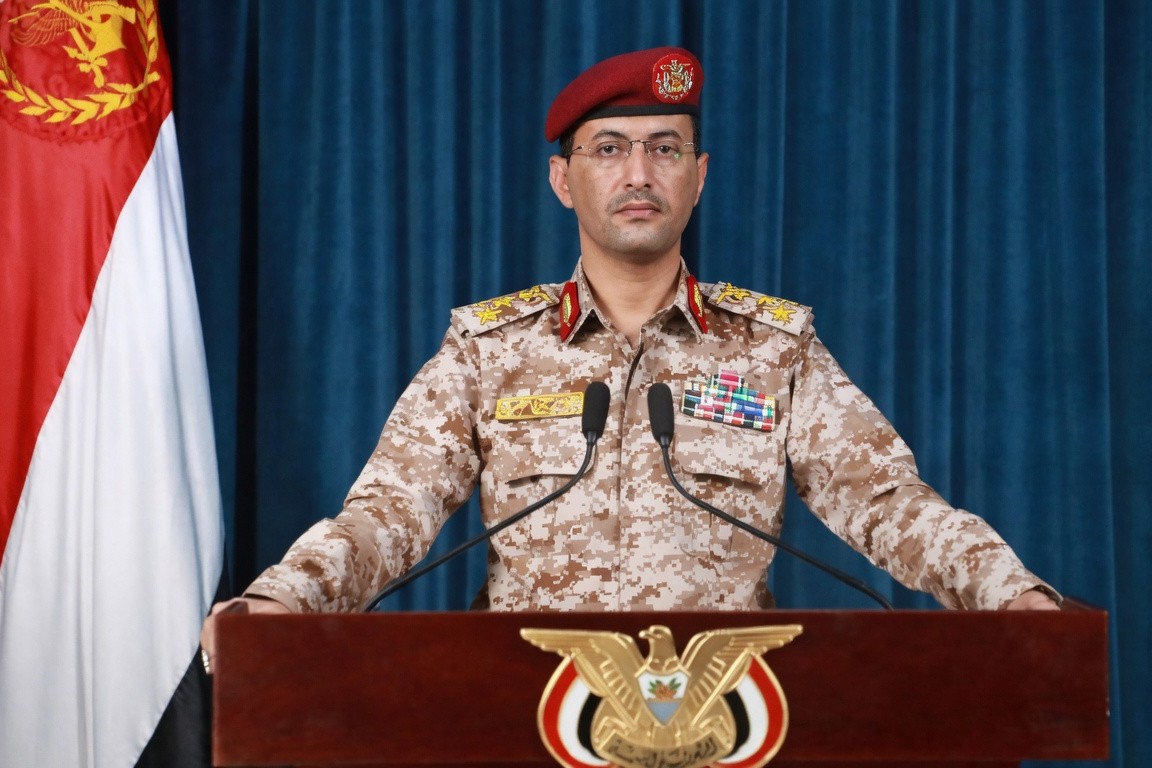
RIYADH — The statement was short. On Sunday evening, Brigadier General Yahya Saree, the Houthi military spokesman, said the group’s forces had carried out two operations “deep within Saudi territory.” The first, he said, targeted the Rabigh oil refinery on the kingdom’s Red Sea coast, and “the strike was direct.” The second hit a radar installation in the Wadi al-Dawasir region in two phases and “achieved its objective.”
He named no weapon, gave no time for either attack and offered no details of damage. The Houthi-run Saba news agency carried the statement at 19:42 Sanaa time.
Saudi authorities did not comment, Reuters reported, and neither Saudi Aramco nor any government body had published an account of damage at Rabigh by Monday. HahuPrime has found no independent confirmation that the site was hit. Videos shared online that claim to show fires at a Saudi oil facility have not been verified.
Rabigh, about 165 kilometres north of Jeddah in Mecca province, is home to Petro Rabigh, an integrated refining and petrochemical complex developed by Saudi Aramco and Japan’s Sumitomo Chemical, with access to deep-water export facilities.
Two versions of the same night
The Saudi-led coalition described the weekend differently. Its spokesman, Major General Turki al-Malki, said in a post on X shortly after midnight that air defences had “intercepted and destroyed a ballistic missile launched by the terrorist Houthi militia towards the western region.” He did not name a target.
On Sunday the coalition also said it had destroyed a drone heading for the Riyadh area, and later a second drone aimed at the south of the kingdom. It made no public mention of Wadi al-Dawasir, which lies in Riyadh province several hundred kilometres south of the capital.
No Saudi statement has linked that interception to Rabigh. One side says a refinery was struck directly; the other says a missile aimed at that part of the country was destroyed in the air. Neither has shown evidence beyond its own word.
That gap has become a pattern. Riyadh has acknowledged damage when it occurred in the capital, naming the Public Investment Fund tower in the King Abdullah Financial District last Thursday and an Aramco skyscraper earlier in the month. Saudi authorities have not confirmed any attack on the kingdom’s refineries, although the Houthis have claimed strikes on the East-West pipeline, on refineries in Jazan and Ras Tanura, and on the Shuqaiq power plant.
Strikes on Sanaa, and a week of escalation
Saudi warplanes, meanwhile, hit several sites in Sanaa early on Sunday, Middle East Online reported, including Mount Attan, which houses facilities linked to the missile brigade command of the former Yemeni army, and a fuel storage site it said the Houthis used for military purposes.
Anis al-Asbahi, spokesman for the Houthi-run health ministry, told the Yemen News Agency that Saudi aircraft had targeted a fuel station run by the state oil company on Sanaa’s 60th Street, “injuring six employees and causing material damage,” Al Jazeera and AFP reported. The coalition did not comment.
The Houthis also said Saudi Arabia had carried out 71 air and missile strikes on eight Yemeni provinces in 24 hours, among them Saada, Hajjah, Marib and Taiz. That figure could not be independently verified.
Sunday’s claims capped a week in which the war moved steadily onto Saudi soil and into the Red Sea. On Friday the coalition struck Hodeidah, the Houthi-held port that is also Yemen’s main entry point for aid, after Saree warned that Jeddah and all Saudi ports on the Red Sea would become “targets” if it did, as HahuPrime reported at the time. On Saturday the coalition said it had intercepted three ballistic missiles headed for Riyadh and two more over the Jazan region.
Saudi authorities say Houthi attacks have killed 26 people in the kingdom since September, 23 of them in strikes on airports.
Why the Red Sea coast matters now
A refinery on the Red Sea is a more sensitive target than it once was. With Iran restricting traffic through the Strait of Hormuz during the US-Israeli war with Tehran, which began in late February, Saudi Arabia has leaned on its East-West pipeline to move crude from its Gulf fields to western ports such as Yanbu. Shipping in the Gulf remains under pressure: the UK Maritime Trade Operations centre reported another incident involving a tanker in the Gulf of Oman on Sunday, a day after two tankers were struck near Hormuz, as HahuPrime reported.
Markets showed little alarm on Monday. Brent crude futures slipped 0.22 percent to $92.35 a barrel in early Asian trading, CNBC reported, suggesting traders were waiting for evidence of damage before pricing in any loss of supply.
The wider context is a Yemen war that had been largely frozen. A UN-brokered truce held from 2022 until fighting reignited in July, when the Houthis declared a blockade on Saudi ports. In September the group seized much of Yemen’s Red Sea coastline near the Bab al-Mandeb strait, and forces allied to the Saudi-backed government said earlier this month they would withdraw from areas around the strait to concentrate on defending Aden.
Across the water, the stakes are rising too. Egypt, Sudan and Eritrea said on Saturday that only coastal states should run Red Sea security, a position HahuPrime examined here, and Ethiopia, which depends on the corridor for most of its trade, is watching a sea lane turn into a front line again.
What comes next
The immediate question is whether Saudi Arabia or Aramco will say anything about Rabigh, and whether commercial satellite imagery or shipping data will show disruption at the complex. Until then, the Houthi claim stands alone.
The group has said it is preparing further operations and has told airlines that Saudi airspace is unsafe, exempting only the skies over Mecca and Medina. The coalition says its own campaign against missile and drone sites in Sanaa, Saada, Taiz and Hodeidah is continuing. Neither side has signalled any interest in a pause.
Sources
- Saba News Agency (Houthi-run): statement by Brig. Gen. Yahya Saree, November 22, 2026
- Reuters, via The Jerusalem Post: “Yemen’s Houthis say they attacked Saudi Rabigh oil refinery,” November 22, 2026
- Al Jazeera and AFP: “Saudi Arabia intercepts drone, missile as Houthis report attack on Sanaa,” November 22, 2026
- Xinhua: “Yemen’s Houthis claim strikes on Saudi oil refinery, radar facility,” November 23, 2026
- Yemen Herald (citing AFP and coalition statements), November 23, 2026
- Middle East Online: “Saudi jets strike Houthi strongholds after fresh attacks on kingdom”
- CNBC: “Yemen’s Houthis claim attacks on Saudi oil refinery as conflict widens,” November 23, 2026