
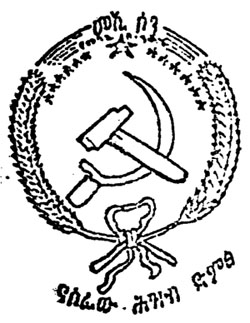
Negede Gobeze, a co-founder of the All-Ethiopia Socialist Movement (MEISON) and one of the best-known figures of the Ethiopian student movement of the 1960s, has died in Brussels at the age of 83, according to several Ethiopian outlets.
He died last Friday, 13 November, The Abay Times and Addis Standard reported. Members of Deldeye, a Europe-based Ethiopian discussion forum he helped found about twelve years ago, announced his death on social media and said he had been ill and receiving medical treatment, Borkena reported. Funeral arrangements had not been announced.
From Dessie to Paris
Negede was born in Dessie in October 1943. He studied economics at the University College of Addis Ababa before going to France on a scholarship, where he earned a doctorate in law from Aix-Marseille University. Abroad, he rose to lead the Ethiopian Students’ Union in France and later the Ethiopian Students’ Union in Europe.
In 1968 he was among the founders of MEISON, alongside Haile Fida and other leftist intellectuals. The movement became one of the two main Marxist currents of the era, alongside its rival, the Ethiopian People’s Revolutionary Party (EPRP).
The Derg years
After the 1974 revolution, MEISON offered what it called “critical support” to the military government known as the Derg. According to The Abay Times, Negede returned to Ethiopia in February 1975 and worked in the Provisional Office for Mass Organisational Affairs until 1977. He was abroad when the alliance collapsed in August that year, and the movement told him not to come back. Haile Fida and other MEISON leaders were detained within days.
His record remains contested. Supporters remember a committed revolutionary intellectual who in later decades argued for democratic reform and dialogue among Ethiopia’s political rivals. Critics, especially survivors and relatives of EPRP members, have long questioned MEISON’s role during its alliance with the Derg, a period marked by widespread repression and the Red Terror.
Negede revisited those years in his own writing. The Abay Times notes that he argued the killings of peasants in the countryside during the Red Terror matched or exceeded the better-remembered urban massacres.
Decades in exile
In Europe he stayed active in opposition politics and advocacy. He founded COSETH, a solidarity committee supporting political prisoners and refugees, and in 1990 GRAPECA, a research group working for peace in Ethiopia and the Horn of Africa that held a peace and reconciliation conference in Addis Ababa in December 1993. He also helped set up the radio initiatives Radio Selam and Keste Damena.
He wrote widely on Ethiopian politics, constitutional reform and history, including an Amharic book on why the revolutionary movement of the 1970s failed to transform the country. Outside politics, he wrote poetry, played the krar and harmonica, and collected traditional Ethiopian song lyrics.
Ethiopia Observer, which described him as a Marxist intellectual and political campaigner, reported that he had lived in exile in Brussels for decades and had been ill for several years after suffering a stroke.