
Overnight on Monday, attackers reached into the control systems of supermarket fridges in at least nine European countries and switched them to defrost. By morning, shelves of meat, dairy and ice cream had warmed to as much as 50C. It is the second such wave in three weeks, and the EU now calls it a deliberate attempt to disrupt the food supply.
By HahuPrime News Desk | November 3, 2026
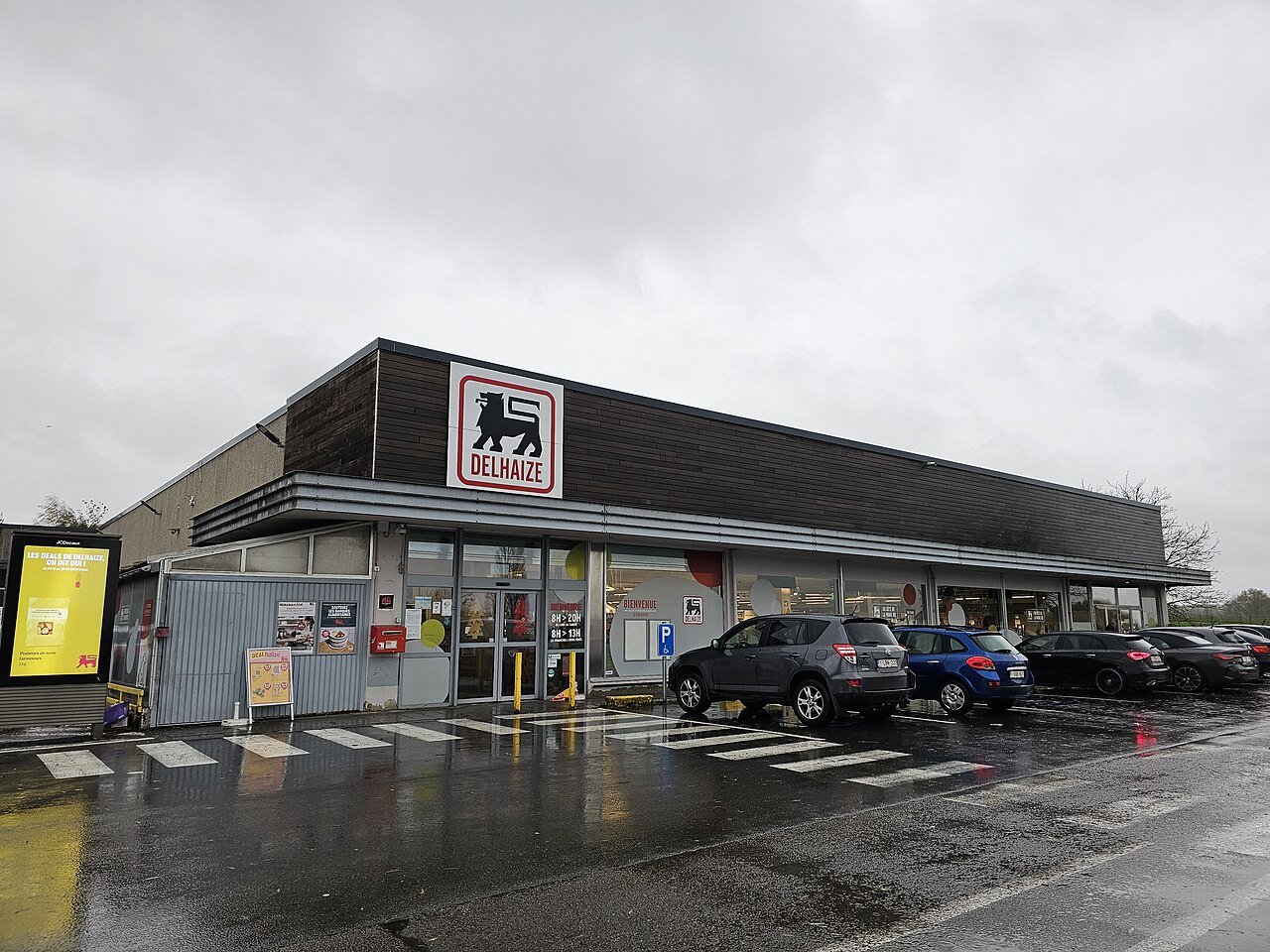
BRUSSELS — The staff at a Delhaize supermarket in Hoeilaart, in Flanders, arrived on Monday to find their freezers running hot. The manager later told the Belgian news site Het Laatste Nieuws that the branch had lost about 100,000 euros of produce, and that the figure did not include the cost of closing the shop. In southern Sweden, an ICA store in Sjobo put it more bluntly on social media: “Our refrigerators and freezers have been hacked overnight and they have set the temperature to 50 degrees.”
Those two stores were part of a much wider pattern. Supermarkets in Belgium, Estonia, Finland, Ireland, Italy, Luxembourg, the Netherlands, Portugal and Sweden reported refrigeration failures overnight from Sunday to Monday, according to AFP. SecurityWeek counted more than 100 affected stores, ranging from large chains to small butcher shops. Nobody has claimed responsibility.
The European Union’s food and agriculture commissioner, Christophe Hansen, did not soften his words. The incidents, he said, “are a deliberate attempt to disrupt our food supply chain and undermine consumers’ confidence in it, a warning that we must take seriously.”
How a fridge gets hacked
Modern supermarket cooling is run by small controllers that let maintenance companies check and adjust temperatures remotely. That convenience is also the weakness. Stephan Moelans, chief executive of the Belgian refrigeration firm Sabcobel, which runs systems for Delhaize, told the Belga news agency that the attackers forced the units’ evaporators into defrost mode. The fridges did exactly what they were told and warmed up.
The timing looks chosen. The temperatures were changed in the early hours, when few staff were around to notice. Giuseppe Spadaro, who heads the group that runs Coop-branded supermarkets in Sicily, told the Italian agency ANSA that “the attack happened at 4:00 am” and targeted “our remote-control system for frozen food sections.”
Several retailers and suppliers pointed to equipment made by the Danish manufacturer Danfoss. A spokesperson for Sweden’s ICA said the affected stores were all connected to an external control system from Danfoss, and an Estonian supplier told the broadcaster ERR the units hit there were older Danfoss models. Dutch broadcaster NOS reported that Danfoss and Copeland devices were targeted in the Netherlands, where Danfoss said at least 17 companies were affected. Danfoss told NOS it had warned customers on October 13 to take their systems off the open internet. “Most stores took action at that time, but a small number did not.”
Fixing this is not as simple as a software patch. Moelans said the affected equipment also needs physical changes. Security researcher Kevin Beaumont told SecurityWeek that every freezer hit on Monday had a management screen reachable from the internet, and that many of the devices are so old that no patch exists. The internet-scanning firm Censys says it can still see just over 1,000 Danfoss StoreView interfaces exposed online worldwide.
There are hints of preparation. The security firm Lupovis told SecurityWeek that its decoy Danfoss sensors saw a burst of login attempts from October 20 to 30, mostly using publicly documented factory passwords. Officials have not said how the attackers got in, so that link remains unconfirmed.
A second wave after France
Monday’s attack looks very much like the one that hit France overnight from October 11 to 12. Around 700 French supermarkets, including Intermarche, Carrefour and Monoprix stores, had their cooling units forced into defrost, according to reports cited by CNN and SecurityWeek. Local media said millions of euros of food had to be thrown away. France’s national cybersecurity agency later linked that wave to controllers made by Danfoss, Copeland and Dixell. Investigators have not established whether the two waves were carried out by the same people.
France appears to have learned quickly. Censys counted 1,825 exposed Danfoss StoreView systems in France before the October attack and 220 at its latest check. Elsewhere, the lesson had not fully landed. Sabcobel said it had begun securing installations after France, but some systems had not yet been upgraded, and those were among the ones hit.
The damage on Monday was uneven. Carrefour Belgium said about 15 of its 700 stores were disrupted. “It’s a cyberattack, there is no other reason,” spokesman Mich Vergauwen told AFP. In Ireland, Musgrave said 13 SuperValu stores were affected. In Sweden, Coop confirmed that a handful of its roughly 800 stores were hit; it gave AFP a figure of six and the BBC a figure of seven. IKEA said its store in Mons, Belgium, was affected too.
Why it matters beyond Europe
Belgian federal prosecutors have opened an investigation, and Italy’s government planned a cybersecurity meeting with its intelligence services on Tuesday. The UK’s National Cyber Security Centre said it was working with partners to understand the incident, though no British stores have reported problems. In the United States, the BBC reports, authorities are investigating refrigeration failures at several military bases in August and working with French officials to see whether there is any link.
Roni Kokkola of Finland’s National Cyber Security Centre said the spread was not a surprise. “We’ve seen this in Europe in the past few months, so it spreading beyond France to other countries has been expected,” he told AFP. “Nowadays, it’s very typical that all kinds of vulnerabilities are being exploited ever more actively and rapidly.”
The lesson travels well. Supermarkets, cold stores and vaccine fridges across Africa and the Middle East increasingly rely on the same kind of remotely managed equipment, often bought second-hand or kept running long after the manufacturer stops updating it. A connected fridge with a default password is not a convenience. It is an open door.
For shoppers in Belgium and Sweden on Monday, the result was simple and very physical: bags of spoiled food carried out to the bins, and empty freezer cabinets. Coop in Sweden says its fridges are working normally again, and the ICA store in Sjobo has reopened. Who switched off the cold, and why, is still unknown.
For more on how attackers are targeting everyday systems, read our reports on the FBI’s findings on North Korea’s $6 billion Binance theft, the Quest Diagnostics patient records breach and Google’s AI model built only for cyber defenders.
Sources
- AFP: Fridge cyberattack hits supermarkets across Europe
- BBC News: Shop freezers in seven European countries hit by cyber-attack
- SecurityWeek: Over 100 European Stores Hit as Supermarket Fridge Attacks Return
- Censys: European refrigerator controller redux, a new wave of refrigeration attacks
- CNN: What to know about the cyberattack that targeted supermarket refrigeration systems in France