
The UN mission that watched over a 1991 ceasefire in Western Sahara for 35 years has begun packing up after a US-Russia standoff at the Security Council. Morocco is celebrating. The Polisario Front warns of consequences, and the UN chief is urging “maximum restraint”.
By HahuPrime News Desk | November 2, 2026
LAAYOUNE — On Saturday, hours before the mandate ran out, the mood in Mechoua Square was festive. Dozens of women in melfas, the long, brightly coloured Sahrawi wraps, and men in flowing darra robes waved Moroccan flags and held up portraits of King Mohammed VI, according to a Reuters video report described by Al Jazeera.
They were celebrating the end of something that had been part of the city’s landscape for a generation. At midnight on October 31, the mandate of the United Nations Mission for the Referendum in Western Sahara, known by its French acronym MINURSO, expired. On Sunday, UN Secretary-General António Guterres confirmed that the mission’s operations had ended and that a “liquidation period” had begun.
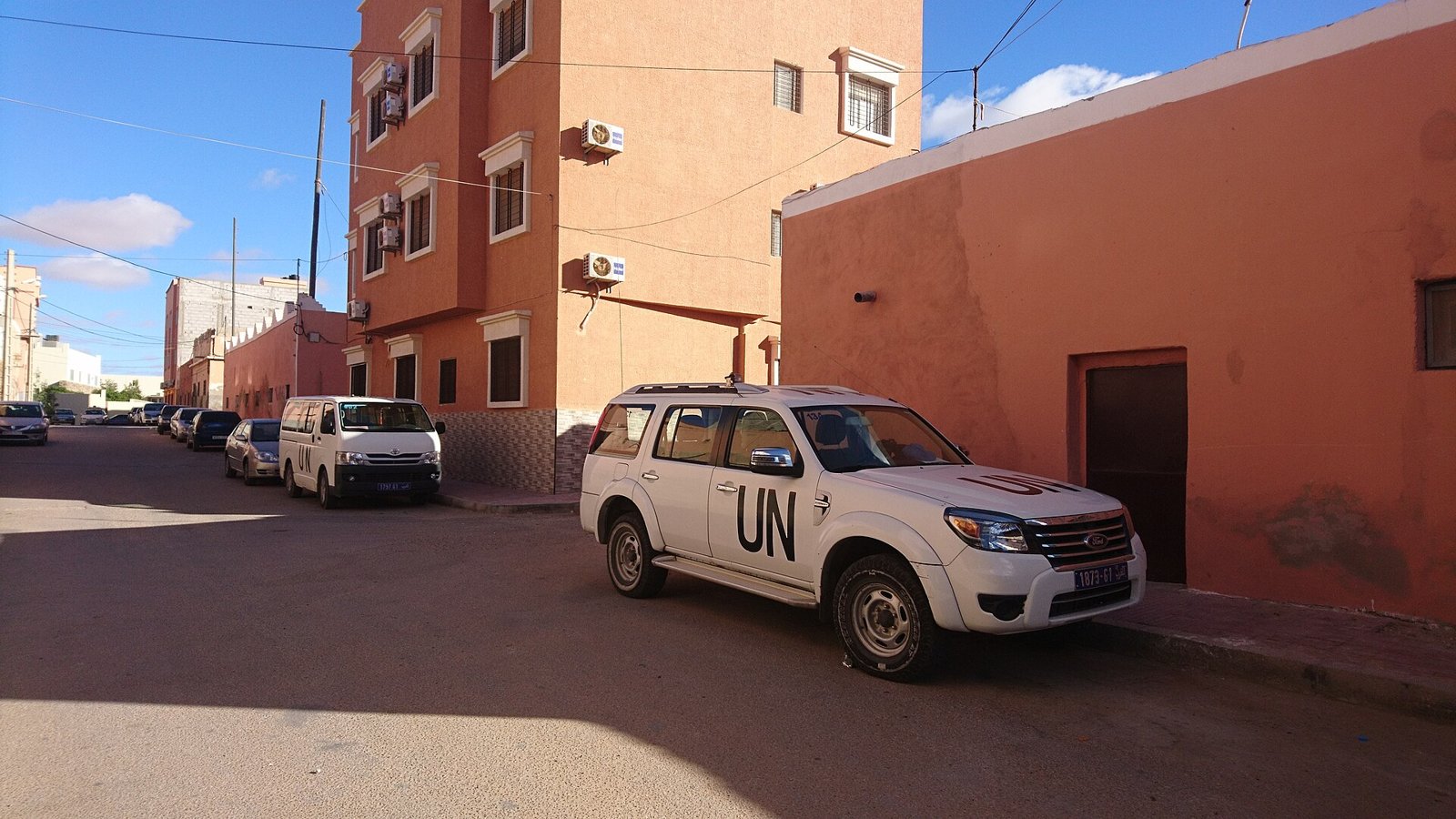
The white UN vehicles that have patrolled the territory since 1991 will now be shipped home or disposed of. Nobody can yet say what fills the gap.
How a routine renewal collapsed
For years, the Security Council renewed MINURSO’s mandate every autumn with little drama. This year it did not. On Friday, Russia vetoed a US-drafted resolution that had the support of 11 of the council’s 15 members, including France and the United Kingdom. China, Pakistan and Somalia abstained.
The US text would have extended the mission for a year while cutting its size, dropping the word “referendum” from its name and making Morocco’s 2007 autonomy plan the only basis for further talks, according to the UN and Al Jazeera. Under that plan, Western Sahara would run its own internal affairs but stay under Moroccan sovereignty.
US Ambassador Mike Waltz said it was “truly unfortunate” that in 2026 a veto was used to “preserve the letter R” in the mission’s name. He cited UN findings that nearly two-thirds of children under five in the Sahrawi refugee camps near Tindouf, in Algeria, suffer from anaemia. “We will not support a status quo that condemns all of them to another five decades,” he told the council.
Russia’s ambassador, Vassily Nebenzia, said the draft would have imposed “one-sided solutions” and called his vote “a life-saving veto, so to speak”. Moscow then put forward its own text, a simple one-year rollover to October 31, 2027. It won only three votes, from Russia, China and Somalia, with the United States voting against and 11 members abstaining, according to the UN’s record of the meeting.
Somalia’s delegate explained that a technical rollover “would have provided continuity” and that any solution “cannot be predetermined.” Mogadishu has just seen the UN close its own political mission there.
Celebration in Rabat, alarm in Algiers
Morocco’s royal palace called the non-renewal a “significant development” towards removing the Western Sahara question from the Security Council’s agenda. It said UN staff and equipment should leave in the coming days, and that Morocco remained committed to the ceasefire. Foreign Minister Nasser Bourita told state media that the “R” for referendum had become an “anachronism,” Reuters reported.
Algeria, which hosts the Sahrawi refugee camps and backs the Polisario Front, expressed “deep regret” and blamed what its foreign ministry called the “excessive bias” of the United States towards Morocco. In the council chamber on Friday, Algeria’s representative described the US draft as “an egregious injustice” and asked: “Who fears the voting paper?”
Morocco’s ambassador answered in kind. He accused Algeria of lecturing the council and of blocking the UN refugee agency from registering people in the camps. “Let these people go back to Morocco. Let them go home,” he said.
The Polisario Front, which seeks an independent state, was blunter on Sunday. In a communique from its UN representative, Sidi Mohamed Omar, it said that Morocco, which it calls “the occupying state,” and its allies “bear full responsibility” for undermining MINURSO and “for the consequences that may result.” It said the Sahrawi people would defend their rights “by all legitimate means,” while also pledging to keep cooperating with the UN.
What the mission did, and what is now missing
MINURSO was never large. When its mandate ended it had about 200 civilian staff, military observers and staff officers from more than 35 countries, according to the UN. It ran a headquarters in Laayoune, nine team sites on both sides of the sand berm that divides Moroccan-held land from Polisario-controlled areas, a liaison office in Tindouf and a mine clearance unit. Twenty of its personnel died during its 35 years in the territory.
Its original job, organising a vote in which Sahrawis would choose between independence and integration with Morocco, was never done. Disputes over who could vote stalled it in the 1990s. But the mission kept a second role: watching the ceasefire line and reporting violations. That role became more important after the Polisario declared in 2020 that it was resuming its armed struggle, and low-level fighting has continued since.
Oxfam has warned that losing MINURSO’s “monitoring and de-escalation functions risks undermining security and stability,” Al Jazeera reported. Guterres said he remained concerned about “the risk of hostilities escalating” and urged all sides “to exercise maximum restraint.” He also stressed that the mission’s departure “does not abrogate” the Sahrawi people’s right to self-determination.
Diplomacy will continue through the UN’s personal envoy, Staffan de Mistura, who with the United States has hosted talks this year, including meetings in Washington and Madrid. Last year’s Security Council resolution 2797 already named Morocco’s autonomy plan the basis for negotiations, and Rabat now has the backing of Washington, Paris and London.
Decades of conflict drove at least 170,000 Sahrawis into the Tindouf camps, according to Al Jazeera, and some born there are now raising children of their own. For them, none of this changes daily life yet. What has changed is that, for the first time since 1991, no international observers stand between the two armed sides along the berm.
The end of MINURSO follows the closure of the UN’s political mission in Somalia on the same day, which HahuPrime reported on Saturday. It also comes days after the Russia–Africa summit in Moscow, where Egypt’s Sisi warned against Red Sea “militarisation” and Russia offered to host talks between Ethiopia and Eritrea.
Sources
- UN News, “Western Sahara: UN ‘stands ready’ to keep supporting peace efforts as MINURSO mission ends,” November 1, 2026
- UN Meetings Coverage and Press Releases, SC/16498, and webcast record of the Security Council meeting, October 30, 2026
- Reuters via CNBC Africa, “UN peacekeeping mission in Western Sahara ends after 35 years, UN chief says,” November 2, 2026
- Al Jazeera, “Why is Morocco celebrating the defeat of a UN resolution on Western Sahara?” November 1, 2026, and “Rival US and Russian resolutions on Western Sahara fail at UN,” October 31, 2026
- Permanent Mission of the Russian Federation to the UN, explanation of vote by Vassily Nebenzia, October 30, 2026
- Sahara Press Service, Frente POLISARIO communique, November 1, 2026