
The FBI says a North Korean unit it calls TraderTraitor stole more than $6 billion from the world’s largest crypto exchange. Binance says it has replaced most of the money and has started letting customers take their coins out again.
By HahuPrime News Desk | November 1, 2026
Shortly after dawn in Europe on Sunday, Binance posted one line on X that millions of customers had been waiting nearly three days to read. “First batch network now opened in phase one of withdrawals is $BTC bitcoin network,” the exchange wrote. For the first time since Thursday night, people could move bitcoin off the platform.
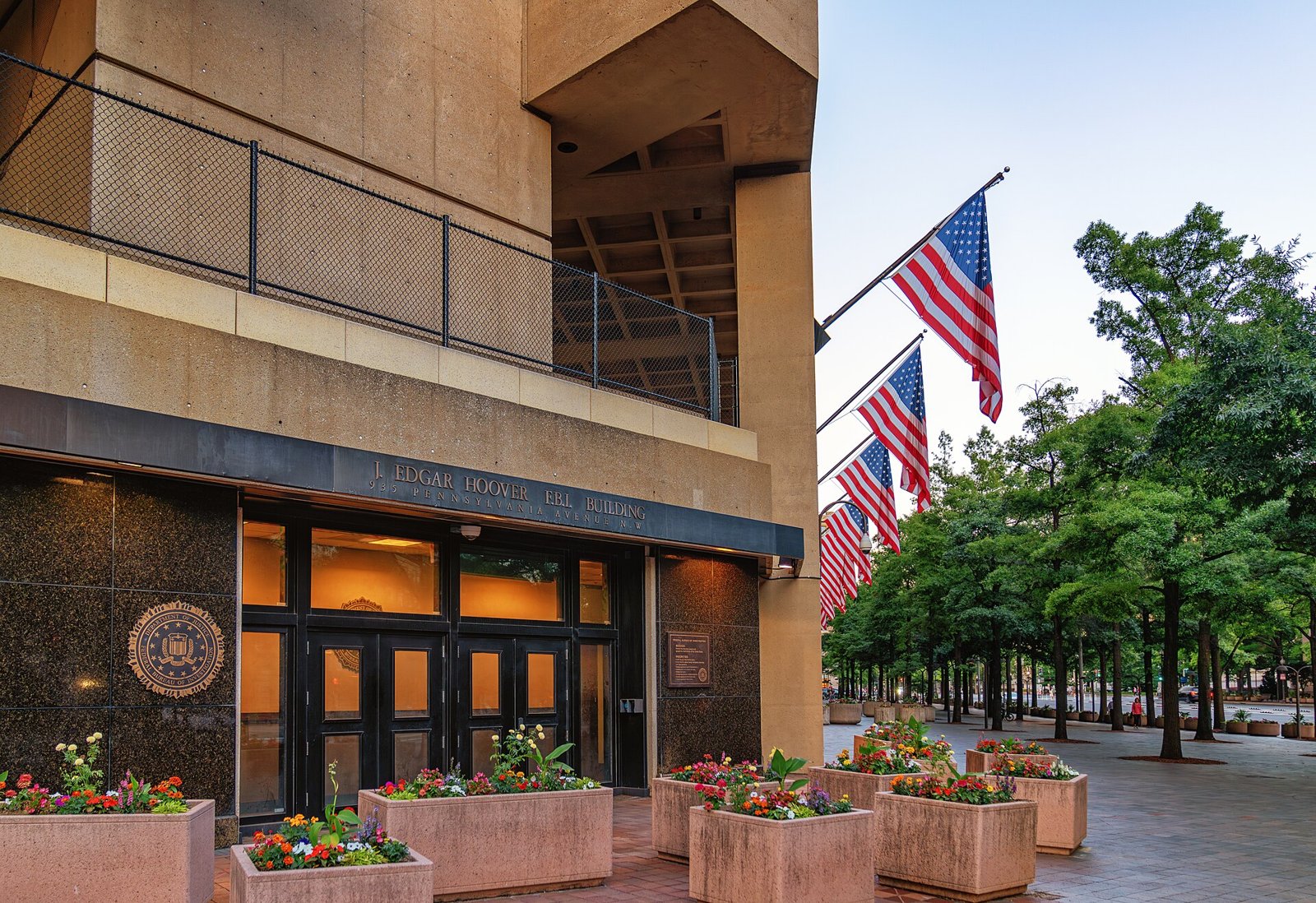
By then the question of who had emptied its wallets had an official answer. On Saturday the US Federal Bureau of Investigation said North Korea was behind the theft, the largest crypto heist on record.
“The Federal Bureau of Investigation (FBI) is releasing information advising the Democratic People’s Republic of Korea (North Korea) was responsible for the theft of more than $6 billion USD in virtual assets from cryptocurrency exchange Binance, on or about October 29, 2026,” the bureau said in its alert.
A familiar name behind a record theft
The FBI calls the operation “TraderTraitor.” The US Cybersecurity and Infrastructure Security Agency describes it as a North Korean state-sponsored group that has gone after crypto firms since at least 2020. It is believed to be part of the Lazarus Group, which became notorious in 2014 when it was accused of hacking Sony Pictures over “The Interview,” a comedy that mocked Kim Jong Un.
The same group was blamed for the theft of about $1.5 billion from the Bybit exchange in February 2025. That was the record until Thursday. As HahuPrime reported when the hack broke, blockchain analysts at TRM Labs and Chainalysis had already pointed at TraderTraitor within hours. The FBI has now put the US government’s name to that conclusion.
Working with the Secret Service and the tax agency’s criminal investigators, the FBI said it had watched the hackers convert stolen tokens mainly into ether. It expects the money to be “further laundered” through decentralised finance platforms and instant swap services. The bureau published a list of wallet addresses and urged node operators, swap services, analytics firms and exchanges “to block transactions with or derived from” them.
Not everyone in Washington sounded sure. “I’m not concerned. We’re learning about it. We don’t know if it’s North Korea,” President Donald Trump told reporters at his Florida residence late on Saturday, according to AFP.
North Korea, which is under heavy international sanctions over its nuclear and missile programmes, has denied similar accusations in the past.
Binance pays the bill, one network at a time
Binance’s first explanation, published on Thursday night, said the breach “may involve a compromised DevOps engineer’s laptop,” which let an attacker reach a service container and send withdrawals that had not been approved. It said no wallet private key had leaked. A full technical post-mortem has not yet been published.
The exchange’s bigger promise is that customers will not lose money. It said on Saturday that it had set aside more than $6.34 billion of company funds. “Binance will absorb the financial impact of the stolen funds, not our users,” it said on X. Co-chief executive Richard Teng said in a video that the company was “committed to covering all hacked losses through our company funds,” Euronews reported. “Your assets are safe,” he added.
By Saturday Binance said it had bought back enough tokens to cover 90 percent of what was taken. On Sunday it told CoinDesk the figure had reached about 95 percent. The rest, it said, is in smaller tokens that are “less liquid” and harder to buy in bulk. Binance said earlier that about $3 billion had been frozen on-chain with help from partners. Tether and Circle, the two big stablecoin issuers, said they had frozen about $1.6 billion and more than $800 million respectively.
Withdrawals are coming back in phases, starting with the assets people asked for most in the past week. “We are taking a phased approach,” the exchange said, so that “stability and security checks” are finished before each network reopens. By late Sunday morning, bitcoin, ether, BNB, XRP, Dogecoin, USDT and USDC were moving again on several networks. Binance warned of delays and asked users whose withdrawals failed to try again later. Deposits stayed open throughout.
The hack shook the wider market. Bitcoin fell nearly 5 percent after the news on Friday, ether nearly 6 percent and Binance’s own BNB token close to 10 percent, AFP reported.
Why African traders were watching closely
Binance is a household name for crypto users from Lagos to Nairobi, and the freeze hit them too. Kenyan traders were told to expect slower processing as withdrawals returned, The Kenya Times reported, putting the theft at about KSh819 billion. In South Africa, IOL described it as a heist of roughly R100 billion.
In Nigeria the incident lands on top of an old fight. Binance stopped its naira deposits, withdrawals and trading pairs in March 2024, but Nigerians can still use their accounts. The Central Bank of Nigeria is pursuing a court case in which it accuses the exchange of “hidden operations” in the country without authorisation, Nairametrics reported. Nigeria’s fintech sector is under scrutiny of its own this week, after OPay pulled its New York listing.
For ordinary users, the lesson is an old one. Coins left on an exchange are only as safe as that company’s security and its balance sheet. This time Binance had deep enough pockets to make customers whole. Breaches like this, and the hack that exposed Quest Diagnostics patient records, often begin with one person’s compromised device.
What happens next
The hunt now turns to the money. Investigators will try to trace and freeze the ether as it passes through swap services. In past North Korean thefts, only a small share was ever recovered. Binance has promised a detailed post-mortem. The harder question for regulators is how one laptop could open the door to billions.
HahuPrime will follow the investigation and the restoration of withdrawals as they develop.
Sources
- FBI, “North Korea Responsible for $6 Billion+ Binance Attack,” public service alert, October 31, 2026
- AFP, “FBI says North Korea behind $6 billion crypto theft from Binance” and “Binance says resuming withdrawals after major hack,” November 1, 2026
- Reuters, “FBI links North Korea to theft of $6 billion from Binance,” October 31, 2026
- Associated Press, “FBI blames North Korea for stolen billions from Binance,” October 31, 2026
- Euronews, “FBI blames North Korea for $6.3 billion Binance crypto hack,” November 1, 2026
- CoinDesk, “Binance begins phased withdrawals starting with bitcoin,” November 1, 2026
- Nairametrics, “Binance resumes withdrawals in phases after $6 billion cyberattack,” November 1, 2026
- The Kenya Times, “Relief for Kenyan Crypto Traders as Binance Restores Withdrawals,” November 1, 2026
- Binance statements on X and its support site, October 29 to November 1, 2026