
Congo’s Ebola outbreak has now killed more than 5,000 people, and Africa’s top health official says the continent is “not winning”. As cases appear far from the epicentre, a row over travel bans between Kenya and Saudi Arabia shows how fast fear can move.
By HahuPrime News Desk | November 1, 2026
BUNIA — In Jina, a village in Congo’s Ituri province, Pastor Richard Ndjaridjo recently buried his son. The burial team wore protective suits. Before they lowered the body, they let the family pray. “We were able to pray and pay tribute to my son before the burial,” Ndjaridjo said in testimony shared by the World Health Organization. “The team respected our traditions and explained the safety measures. That reassured me.”
Moments like that decide whether an outbreak is contained. Across eastern Congo, there are not yet enough of them.
Deaths passed 5,000 on Saturday, according to Health Ministry figures reported by the Associated Press. Of 10,351 people confirmed infected since the outbreak was declared in mid-May, 5,026 have died, a fatality rate of nearly 50 percent. Another 2,788 have recovered.
“It is a very tragic milestone because it is just not a number,” Dr Patrick Otim of the WHO told the AP. “It is families and communities that have been devastated by this outbreak.”
A virus with no vaccine
The outbreak is caused by the Bundibugyo virus, a rare species of Ebola with no approved vaccine or treatment. It is the largest of Congo’s 17 Ebola outbreaks and the second deadliest ever recorded, behind the 2014–2016 West Africa epidemic that killed about 11,000 people.
The virus has reached 67 of Congo’s 178 health zones. Ituri and North Kivu, in the conflict-torn east, account for 9,782 cases and 4,792 deaths.
The numbers that worry experts most are not the totals. About 80 percent of new cases come from outside the lists of known contacts, according to the Africa Centres for Disease Control and Prevention (Africa CDC). Most infections, in other words, travel along chains health workers cannot see. One in three of the dead never reached a treatment centre, Otim said. “These are people we never had opportunity to try to save.”
In late October the WHO launched a trial in Bunia, called TUMAINI, Swahili for “hope”, to test whether Ervebo, the vaccine used against the more common Zaire strain, also protects against Bundibugyo.
Unpaid nurses in a war zone
Eastern Congo is home to the Rwanda-backed M23 rebels, who partly control North Kivu, and to the Allied Democratic Forces insurgency along the Ugandan border. Distrust is another front. AFP reported that a nurse was killed in Tshopo province in late October after local youths accused health workers of trying to infect people with tablets.
Then there is money. On Friday, staff at a treatment centre in Tchomia, Ituri, stopped work over four months of unpaid wages, with five confirmed patients inside. “We are tired of requesting our salaries,” striking worker Moise Mugenyi told the AP. “Today, being able to feed our families has become a real problem.”
“We are not winning so far”
Uganda recorded 20 cases before the WHO declared it Ebola-free in August. Kenya has counted nine cases and two deaths since October 6. Nigeria’s only confirmed patient, a Swiss woman, was evacuated to Geneva. It is the first Ebola outbreak recorded in three African regions.
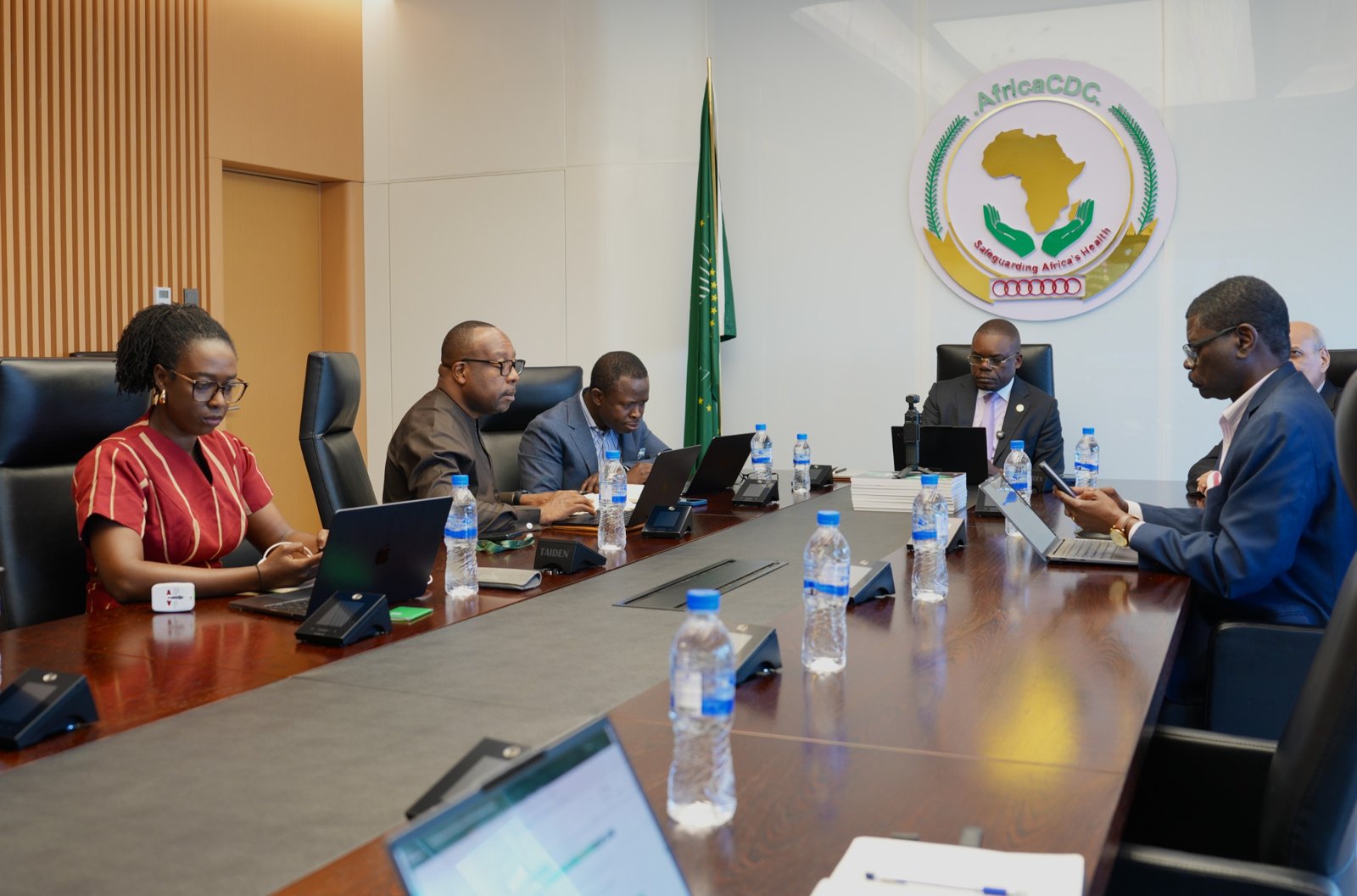
On October 28 more than 40 African health ministers joined an emergency meeting called by Africa CDC. Its director-general, Dr Jean Kaseya, did not soften the message. “I stood before more than 40 African Ministers and said what the data tells us: we are not winning so far,” he said. “Together, we agreed to prepare every country, coordinate across our borders and keep those borders open while watching them closely.”
Africa CDC lists ten countries at risk, Ethiopia among them, alongside Rwanda, Kenya, Tanzania, Angola, Burundi, the Central African Republic, the Republic of Congo, South Sudan and Zambia. Ethiopia’s Health Ministry said on October 19 that it had set up screening at air and land entry points and round-the-clock isolation and monitoring for travellers from affected countries.
Kenya and Saudi Arabia clash over a travel ban
Keeping borders open is harder than promising it. On October 30 Saudi Arabia suspended its citizens’ travel to Kenya, stopped issuing visas to people coming from Kenya and barred anyone who had been there, or in any country with an active outbreak, in the past 21 days, the Saudi Press Agency reported.
Nairobi hit back within hours. In a diplomatic note reported by The Star, Kenya’s Foreign Ministry called it “a blanket, punitive measure not supported by epidemiological evidence”. It said all nine cases belonged to a single cluster with no community transmission, and warned the ban would hurt Kenyan pilgrims, workers, students and trade. Kenya asked Riyadh to justify the measure to the WHO and said it could take the issue to Africa CDC with other affected countries.
Washington has tightened its rules too. From November 3, every air traveller to the United States must sign a statement that they have not been in Congo in the previous 21 days, the US Centers for Disease Control and Prevention said.
What comes next
African heads of state are due to take up the response next. The WHO is reviewing two vaccine candidates designed against Bundibugyo. Until one works, the fight stays basic: find the sick early, trace contacts, pay health workers, and earn the trust of families like the Ndjaridjos.
Read HahuPrime’s earlier reports on Kenya’s first Ebola cases and on the famine warning in Sudan.
Sources
- Associated Press (via PBS News), October 31, 2026
- AFP, October 27, 2026
- UN News and WHO African Region, October 28–30, 2026
- Anadolu Agency and Africa CDC, October 28–29, 2026
- Saudi Press Agency, October 30, 2026; The Star (Kenya), October 31, 2026
- Xinhua, Ethiopian Ministry of Health statement, October 19, 2026
- US Centers for Disease Control and Prevention, October 30, 2026