
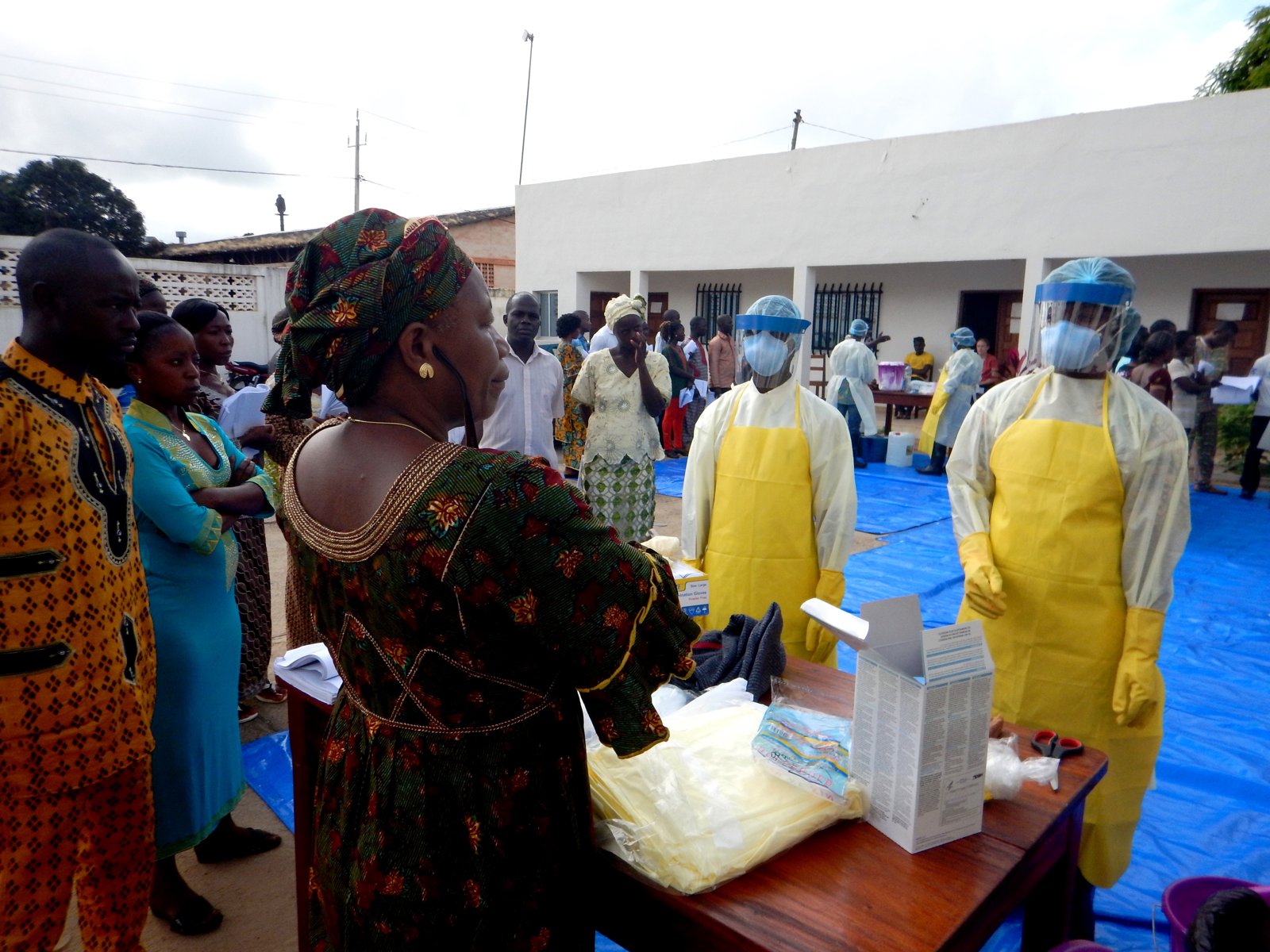
Kenya’s Health Ministry says four more people have tested positive for the Bundibugyo strain of Ebola, including three health workers who treated the country’s first patient. All four were already in quarantine, and officials say there is no sign of community spread.
By HahuPrime News Desk | October 18, 2026
NAIROBI — For two days in early October, three Kenyan health workers looked after a 40-year-old man who had just flown in from Congo by way of Uganda. He died on October 5. On Saturday, the Health Ministry said all three had tested positive for Ebola, taking the number of Kenya Ebola cases to seven in less than two weeks.
The health workers, two men and a woman aged 29, 35 and 32, cared for the first patient on October 3 and 4 and had been in quarantine since October 9, Director-General for Health Patrick Amoth said in a statement reported by the Daily Nation. The fourth new case is a male relative of the man who died, in quarantine since October 6. Reuters described them as the first known infections passed on inside Kenya.
- Kenya has confirmed seven Ebola cases, including the first patient, who died on October 5.
- Three of the four new patients are health workers who treated that first patient.
- The ministry says 128 of 130 known contacts are in quarantine and there is no evidence of community transmission.
- There is no approved vaccine or treatment for the Bundibugyo strain.
“All four individuals developed fever as their first symptom and were immediately isolated, with specimens collected for testing,” Amoth said, according to Xinhua. Samples were confirmed at both the National Virology Reference Laboratory and the Kenya Medical Research Institute. The ministry said the four are receiving supportive care at a designated treatment facility, and that the second and third patients, both relatives of the first, are stable.
Contact tracing and the 21-day watch
The ministry’s case for calm rests on one number. Of 130 people identified as contacts of the first patient, 128, or 98.5 percent, have been traced and placed in quarantine, it said, above the 85 percent benchmark it cites for breaking chains of transmission. Teams are still looking for the remaining two.
Officials also warned that the count may rise before it falls.
“New cases among quarantined contacts are possible until their 21 days monitoring period ends; if they develop any symptoms, they will be detected and treated just as quickly.” — Patrick Amoth, Kenya’s Director-General for Health
“The risk to the general public remains low as there is no evidence of community transmission,” the ministry said. It has not imposed restrictions on travel, trade or public gatherings, and has set up a hotline for anyone who thinks they may have been exposed, the Associated Press reported.
The Africa Centres for Disease Control and Prevention, which is headquartered in Addis Ababa, said the early detection of all four cases among people already in quarantine showed the value of contact tracing and timely isolation. It called for protective equipment, training and continued support for frontline health staff, who it said face significant risks while caring for patients.
How Ebola reached Nairobi
Kenya’s outbreak is an offshoot of a much larger one. The Bundibugyo epidemic in the Democratic Republic of Congo, declared in May, has caused more than 9,000 cases and more than 4,000 deaths, Reuters reported, making it the second-largest Ebola outbreak on record. Uganda recorded 20 cases and two deaths before the World Health Organization and Africa CDC declared its outbreak over on August 27.
The first Kenyan patient had been ill in Congo for about a month before he travelled by road into Uganda and flew to Nairobi on October 3, according to Reuters. His journey has raised questions about screening at the Congo-Uganda border, closed since May, and at Jomo Kenyatta International Airport.
Ebola spreads through direct contact with the blood, vomit or other bodily fluids of a sick person, or with contaminated bedding and clothing. It does not travel through the air the way flu or measles does. The Daily Nation noted that health workers face the greatest risk early in an infection, when symptoms may not yet point to Ebola.
For travellers in the region, the effects are already visible. Since October 7, passengers arriving at Nairobi’s main airport from ten countries, including Ethiopia, Uganda, South Sudan and Congo, have been sent to a dedicated gate for enhanced screening, Health Cabinet Secretary Aden Duale announced, as Kenyans.co.ke reported. For Ethiopian passengers flying into Kenya, which the IMF now ranks as East Africa’s largest economy, that means a health declaration and a check at Gate 16 before entry.
The WHO advises against closing borders or suspending flights over Ebola. When Uganda’s outbreak ended, Director-General Tedros Adhanom Ghebreyesus said careful management of points of entry lets countries “keep people and goods moving while ensuring people stay safe.”
The next marker is the end of the 21-day monitoring period for the quarantined contacts, during which officials say more cases may still appear. The ministry has promised updates on all seven patients, and the search for the last two contacts continues.
Sources
- Daily Nation: Ebola: Kenya on high alert as three medics among four new cases
- Reuters via Daily Monitor: Kenya confirms four new Ebola cases, bringing total number to seven
- Associated Press: Kenya’s Ebola cases rise to 7, including health workers who cared for the first patient
- Xinhua: Kenya confirms 4 new Ebola cases, total rises to 7
- Africa CDC: Africa CDC reaffirms support to Kenya following confirmation of four additional Ebola cases
- WHO Africa: Uganda ends Ebola outbreak following completion of 42-day countdown
- Kenyans.co.ke: Travellers from DRC, Uganda and Ethiopia among 10 countries to face enhanced Ebola screening at JKIA