
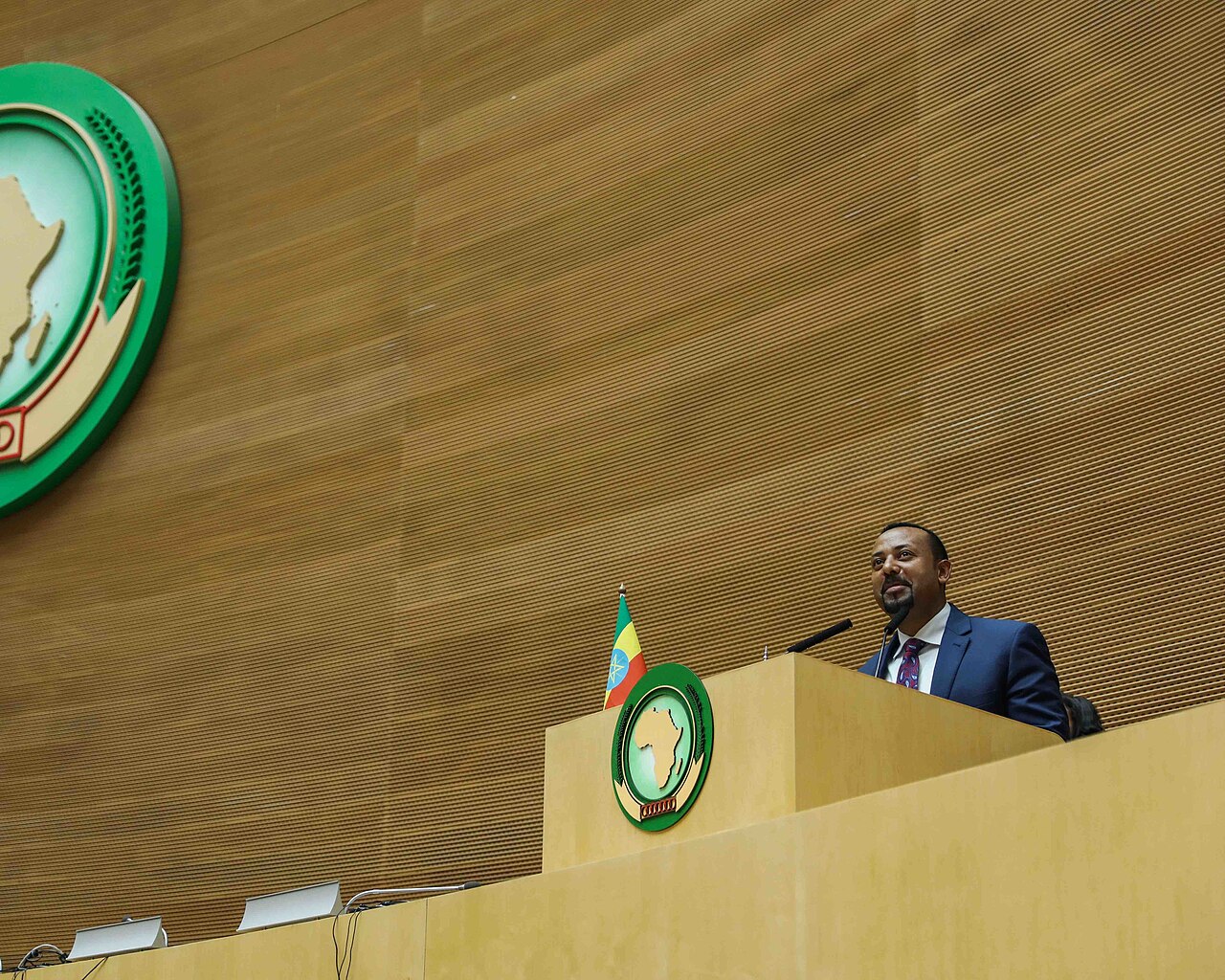
Prime Minister Abiy Ahmed, who had said little in public about the weeks of fighting in the north, gave a Tigrinya-language interview on state television. He warned Eritrea of grave consequences if it keeps backing Ethiopia’s armed opponents and urged TPLF leaders to surrender. Asmara had not publicly answered by Tuesday morning.
By HahuPrime News Desk | October 20, 2026
ADDIS ABABA — For almost four weeks after fighting returned to Tigray, Prime Minister Abiy Ahmed left the talking to officials, advisers and written statements on X. On Monday he spoke at length himself, and he did it in Tigrinya, the main language of the region his forces have just retaken.
The interview, broadcast on October 19 by the state broadcaster’s Tigrinya service, had two audiences: the Tigray People’s Liberation Front (TPLF), which Abiy blamed for the collapse of the 2022 Pretoria peace agreement, and the government in Asmara.
“Serving as a base for Ethiopia’s enemies instead of being a partner in development will not bring benefits. I believe that ignoring our calls will have very, very, very severe consequences,” Abiy said, according to a translation by AFP. The news agency noted that he had largely refused to comment on the conflict until then.
A warning wrapped in an economic argument
Much of what Abiy said about Eritrea was a case about decline. According to state-affiliated Fana Media Corporation, he said Eritrea once had more than 300 industries, compared today’s Asmara unfavourably with Arba Minch and Jigjiga, and described Massawa as largely empty and Assab as uninhabited.
“When Eritrea was part of Ethiopia, its cities were vibrant and beautiful. Today, Eritrean cities seem like ghost towns,” he said, in AFP’s translation.
He accused Eritrea’s ruling People’s Front for Democracy and Justice (PFDJ) of becoming a tool of Ethiopia’s enemies. Its backers could supply ammunition but not development, he argued, Fana reported. “Good neighbourly relations and partnership are the only way forward,” he said.
Talk of Eritrea’s years inside Ethiopia is likely to be read harshly in Asmara, which won independence in 1993 and fears landlocked Ethiopia wants a Red Sea port by force. Information Minister Yemane Gebremeskel wrote on X earlier this month that “the Ethiopian regime has been pursuing, in effect, an unprovoked war of aggression against Eritrea for more than three years now”, pointing to Addis Ababa’s 2023 declaration that it would secure access to the sea.
On Monday Yemane dismissed a Fana Arabic report on rebuilding Ethiopia’s navy as packaging for what he called the ruling party’s “declared war of aggression”. HahuPrime found no Eritrean response to the interview itself by Tuesday morning.
The accusations run both ways. In a letter to the UN Security Council this month, Foreign Minister Gedion Timothewos wrote that “the all-out invasion of parts of northern Ethiopia by Eritrea is a matter of public record”. AFP has reported that Eritrea deployed thousands of troops inside Ethiopia before pulling back under drone strikes. Asmara denies sending troops or backing the TPLF. It has cut diplomatic ties and asked the UN for Chapter VII action against Ethiopia.
“Its existence is coming to an end”
On Tigray, Abiy said the federal government had kept its side of the Pretoria bargain, from the ceasefire to restoring flights, banks and telecoms. The TPLF, he said, used the peace to buy weapons, including drones, and to recruit young people, some by force. Ethiopian Business View reported that he also accused the party of looting minerals and seizing grain meant for people in need. These are the government’s allegations. When fighting broke out on September 23, Tigrayan authorities described their own forces’ action as defensive.
“The TPLF did not exist 50 years ago, and now its existence is coming to an end,” Abiy said. The people of Tigray, by contrast, had existed for thousands of years, he said, according to The Abay Times.
He called on armed young people to hand over their weapons and join the disarmament, demobilisation and reintegration (DDR) programme, and urged the TPLF’s military and political leaders to surrender peacefully. “We will carry out development across all parts of Tigray. Until a regular administration is established through elections, our people should preserve their unity and institutions,” he said.
The six-month caretaker administration Abiy named on October 16 has already been rejected in a statement circulated in the TPLF’s name. HahuPrime found no public TPLF response to Monday’s interview.
What it means on the ground
Getachew Reda, the prime minister’s adviser on East African affairs, described federal consolidation. In a CGTN Africa interview reported by Abbay TV on Monday, he said most of Tigray’s major towns were under the control of the Ethiopian National Defense Force (ENDF), that humanitarian deliveries would be strengthened and that the TPLF’s forced recruitment of young people had ended. Getachew, who has also issued his own warnings to Eritrea, said federal actions in Tigray were consistent with the spirit of the Pretoria agreement.
He also said many TPLF leaders and commanders had rejected further conflict, and that ENDF and Tigray Peace Forces operations were coming in the Tembien, Adet and Zana areas to disarm remaining fighters, according to a YeneTube report logged by the monitor Frontlines.et. The conflict monitor ACLED recorded fighting between federal and Tigrayan forces in Zana woreda on October 19, and federal drone strikes in Adet woreda the day before.
In Mekelle, the new mayor, Shishay Amare, told AFP: “Our role is to create the right conditions for elections by ensuring peace and stability across Tigray.” He added: “I am confident that this will be done within six months, according to our plan.”
The task is heavy. Around 750,000 Tigrayans were still displaced as of February, according to UN refugee agency figures cited by Reuters, and the region faces drought.
Outside powers want restraint. US Secretary of State Marco Rubio warned at the weekend that the military build-up on the Ethiopia-Eritrea border could become a wider war. “We urgently call for de-escalation and a return to dialogue,” a UK government spokesperson said on October 15. Tsedale Lemma, publisher of Addis Standard, told DW the international community was “absolutely underestimating” the risk.
Abiy’s message to Asmara set partnership against “very, very, very severe consequences”. He did not say what those consequences would be.
Sources
- AFP (via Yahoo News): Ethiopia PM warns Eritrea of ‘severe consequences’ if supports enemies
- Fana Media Corporation: PM Abiy Tells Eritrea to Embrace Peaceful Relations and Shared Development with Ethiopia
- Ethiopian Business View: Abiy Accuses TPLF of Looting Resources to Buy Drones
- The Abay Times: Abiy says TPLF broke Pretoria deal and warns Eritrea of grave consequences
- Abbay TV: Getachew Reda Says Federal Government to Strengthen Humanitarian Aid Delivery in Tigray
- Frontlines.et: Statement in Hawelti Sub City, Tigray, 19 Oct 2026
- ACLED: Ethiopia Alerts archive
- Al Jazeera (AFP and Reuters): Ethiopia and Eritrea accuse one another of launching war
- Reuters (via Daily Nation): Ethiopia installs caretaker government in Tigray
- DW: Can diplomacy stop another Ethiopia-Eritrea war?
- Yemane Gebremeskel (X): Post of October 19, 2026