
TIME names its 2026 AI 100 — and leaves two of the field’s biggest names off the list
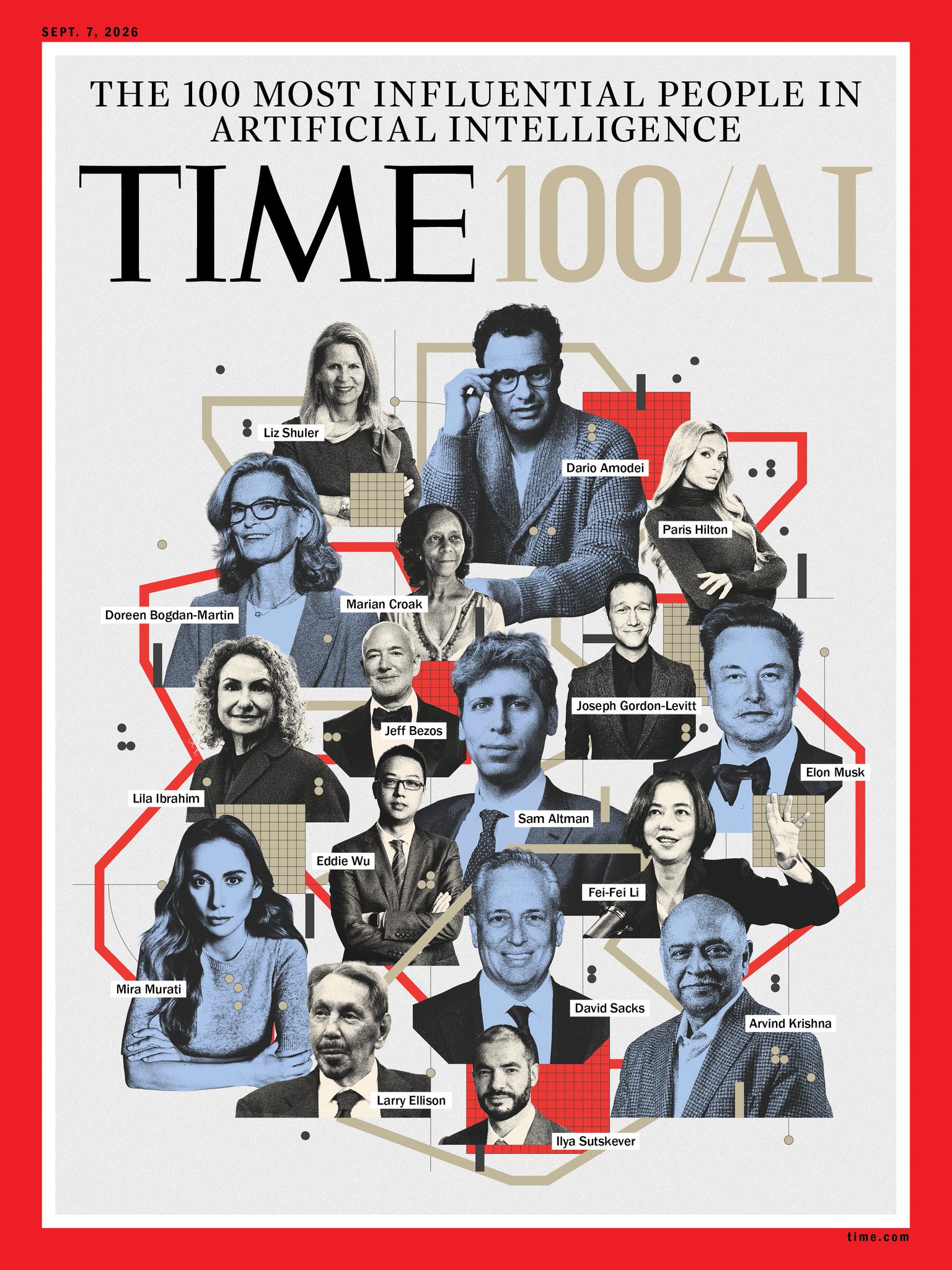
TIME has published its 2026 TIME100 AI list, the magazine’s annual snapshot of the people it considers most influential in artificial intelligence. The cover and accompanying profiles mix familiar frontier-lab chiefs with policy advocates, infrastructure builders and a few unexpected cultural figures.
OpenAI’s Sam Altman, Greg Brockman and Mark Chen lead the “Leaders” category. Elon Musk, Anthropic co-founders Dario and Daniela Amodei, Amazon’s Jeff Bezos and Oracle’s Larry Ellison also feature prominently. TIME says the list is meant to capture the year’s main storylines: companies preparing for public markets, the race to build data centres, growing use of AI in government and the military, competition from Chinese labs, and public debate over jobs, safety and regulation.
Two omissions have drawn the most attention. Demis Hassabis, co-founder of Google DeepMind and a 2024 Nobel laureate for AlphaFold, is not included. Three weeks before the list appeared he stepped down as DeepMind CEO to become chair of the lab and chief scientist at Alphabet, saying he wanted to focus on longer-term AGI work and Isomorphic Labs, the company’s drug-discovery arm. TIME instead highlighted Lila Ibrahim, DeepMind’s new chief AI readiness officer, whose brief is preparing institutions and society for rapid AI change.
NVIDIA chief Jensen Huang is also absent, despite the company’s GPUs remaining the backbone of most large-scale AI training. TIME did include other hardware and infrastructure figures, including Broadcom’s Hock Tan and Oracle’s Ellison.
Among the more surprising names is Paris Hilton. TIME cites her campaign against non-consensual deepfake pornography and her lobbying for stronger legal protections for victims. Actor Joseph Gordon-Levitt appears for his work with creators on AI and copyright. The mix has prompted familiar criticism that the list now weights cultural and political influence as heavily as technical contribution.
TIME has been clear that the list is not a ranking of scientific achievement. Editor-in-chief Sam Jacobs and the team led by Ayesha Javed describe it as a guide to the people driving the year’s biggest AI stories. That approach explains both the breadth of the selection and why some of the field’s best-known scientists and executives rotate on and off from year to year.
The debate the list has triggered is itself revealing. AI is no longer only a research story. It is also a story about power, money, law, celebrity and who gets to define what counts as “influence.” TIME’s 2026 edition leans into that wider frame — and has left some of the people who built the technology wondering why they were left out.