
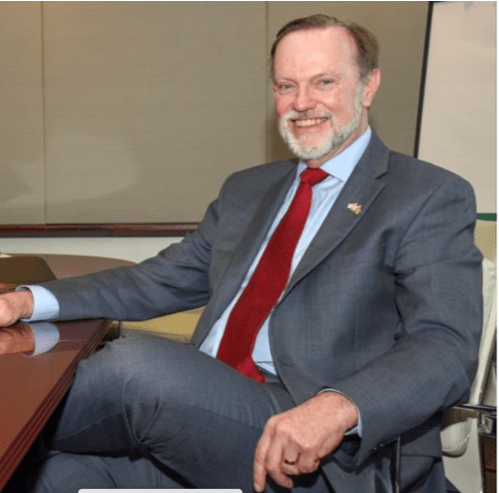
Washington, D.C. – April 27, 2026 – In a candid interview on the Global Power Shifts podcast, veteran U.S. diplomat Tibor Nagy Jr., former Assistant Secretary of State for African Affairs and U.S. Ambassador to Ethiopia, painted a sobering picture of the Horn of Africa. While global attention remains fixed on other crises, Nagy argues that deep-seated tensions in Ethiopia, Eritrea, and beyond risk escalating into renewed conflict.
Nagy, who served under the first Trump administration and visited Asmara in 2018 for high-level talks, expressed skepticism about current U.S. efforts to lift sanctions on Eritrea and normalize relations with President Isaias Afwerki’s government. He noted that every recent U.S. administration has attempted similar outreach, but Eritrea has consistently failed to respond positively.
“Isaias understands that if he totally normalizes relations with the U.S., pressure would start mounting on turning his nation—which I characterize as a massive prison camp—into something more open,” Nagy said. He described Eritrea as lacking a constitution, holding no elections, and enforcing indefinite national service, calling it “Africa’s North Korea.” Despite the country’s charm and the resilience of its people, Nagy believes practical normalization is unlikely because it would threaten the regime’s control.
Instead, Nagy advocates a strategic pivot toward Somaliland, highlighting its recent formal ties with Israel—including ambassadorial exchanges—as a stronger foundation for U.S. engagement in the Red Sea region. “For the Trump administration, it would make much more sense to go with Somaliland,” he stated, emphasizing that physical diplomatic presence signals a deeper, more reliable partnership than symbolic gestures.
Ethiopia’s Fragile Path to Elections
Turning to Ethiopia, Nagy voiced concern over the upcoming June 1 national elections. With the Tigray People’s Liberation Front (TPLF) barred from participating and Tigray’s involvement unresolved, he warned that the vote risks exacerbating ethnic divisions rather than resolving them.
“Keeping the TPLF from being able to register… is a huge mistake,” Nagy said, drawing parallels to the U.S. decision to disband Saddam Hussein’s Ba’ath Party in Iraq, which led to widespread instability. He stressed that the TPLF remains deeply embedded in Tigray’s social fabric.
Nagy praised Ethiopia’s potential as a major success story but highlighted persistent fractures in regions like Amhara, Tigray, and Oromia. He described the current approach as “putting wallpaper over rotting walls,” calling for genuine national reconciliation rather than rushed elections. Ethnic federalism, he noted, works better in prosperous nations dividing wealth than in poorer ones dividing scarcity.
Nagy’s message to the Ethiopian government: Make the election as inclusive as possible, allowing real choices for voters. To the Ethiopian people: Exercise patience, remembering that the state belongs to them, not its leaders.
The interview comes amid reports of the Trump administration exploring sanctions relief for Eritrea and ongoing Red Sea security concerns. Nagy’s analysis underscores a region where strategic opportunities—like deeper U.S. ties with Somaliland—could outweigh persistent challenges with isolated regimes.
The full episode of Global Power Shifts also covers broader topics, including political shifts in Hungary. As tensions simmer in the Horn, Nagy’s decades of on-the-ground experience offer a veteran perspective on why sustained reconciliation, not quick fixes, will determine the region’s future.