
Tensions Over the Nile: Egyptian President El-Sisi’s Message “Save us” and Response from Ethiopian-American Researcher Timnit Gebru
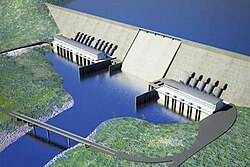
The dispute over the Grand Ethiopian Renaissance Dam (GERD), located on the Blue Nile (Abbay River) in Ethiopia’s Benishangul-Gumuz region, remains a point of contention between Egypt and Ethiopia. On October 12, 2025, Egyptian President Abdel Fattah el-Sisi, in a recorded speech at the opening of the 8th Cairo Water Week, described Egypt’s water security as an “existential issue.” He rejected unilateral measures on the Nile that ignore international norms and called for a legally binding agreement on the GERD’s operation to ensure coordinated and fair use of the shared river.
Sisi stated that the Nile is the lifeline for Egypt, providing over 90-97% of the country’s freshwater for its population of more than 100 million people, supporting drinking water, agriculture, industry, and hydropower. He emphasized that development on the river should be a shared responsibility among all riparian states based on the principles of international water law, including “no significant harm,” and affirmed Egypt’s preference for diplomacy while warning that the country would take “all necessary measures” to protect its interests if needed.
The GERD is situated entirely on Ethiopian mainland territory, on the Blue Nile, which originates at Lake Tana in the Ethiopian highlands. Ethiopia contributes approximately 85-86% of the Nile River’s total annual flow through the Blue Nile and other tributaries. The dam, inaugurated on September 9, 2025, is Africa’s largest hydropower project, with an installed capacity of up to 5,150 MW. Ethiopia views it as a sovereign development initiative on its own river, designed primarily for electricity generation rather than consumptive use like large-scale irrigation. Ethiopian officials have consistently stated there is “no intention to harm” downstream countries, and technical assessments, including the 2013 International Panel of Experts (IPoE) report involving experts from Egypt, Sudan, Ethiopia, and others, indicated potential overall benefits (such as flood regulation) with no significant long-term adverse impacts under cooperative management. Filling and initial operations occurred during relatively favorable hydrological periods without causing major observed disruptions downstream.
Sisi’s remarks prompted criticism on social media, including from Timnit Gebru, an Ethiopian-born AI researcher. Gebru responded on X, characterizing parts of Egypt’s position as reflecting a double standard, noting that Egypt had previously constructed its own major dams on the Nile while opposing Ethiopia’s project on a river originating in Ethiopian territory. She highlighted stalled negotiations, the relevance of technical studies on hydrological impacts, and the importance of equitable utilization for upstream states.
Historical Context on Dams
Egypt has built significant infrastructure on the Nile. The Aswan Low Dam was constructed between 1899 and 1902, with later height increases. The Aswan High Dam was built from 1960 to 1970 (completed in 1970) with Soviet assistance, creating Lake Nasser for flood control, irrigation storage, and hydropower. These projects were advanced under colonial-era and bilateral agreements (notably the 1929 and 1959 Nile Waters Agreements between Egypt and Sudan), which allocated most of the river’s flow to downstream users and were not joined by Ethiopia. Ethiopia has long regarded these arrangements as inequitable.
Core Issues in the Dispute
The disagreement involves interpretations of international water law: “equitable and reasonable utilization” (supporting upstream development rights) versus “no significant harm” (protecting downstream users). Egypt expresses concerns about potential risks to flow timing and reliability during droughts, given its arid climate and near-total dependence on the Nile. It seeks enforceable mechanisms for real-time data sharing, drought rules, and coordinated operation.
Ethiopia maintains that the GERD, as a non-consumptive hydropower facility on its sovereign territory, supports national development and regional benefits like potential power exports, without substantially reducing downstream water volumes in average or cooperative scenarios. Independent modeling often shows that major additional harm would typically require prolonged multi-year droughts combined with uncoordinated actions.
In January 2026, U.S. President Donald Trump sent a letter to Sisi offering to restart U.S. mediation to resolve Nile water sharing “once and for all.” The proposal aimed to balance predictable water supplies for Egypt and Sudan with Ethiopia’s electricity generation needs (including possible exports). Sisi welcomed the offer, while Sudan expressed support; Ethiopia has historically favored flexible coordination and raised concerns about external involvement.
The Nile Basin involves legitimate interests for all parties: Ethiopia’s right to develop resources on its territory for energy and growth; Egypt’s critical dependence on the river; and Sudan’s position as a midstream country. Past African Union-mediated talks have stalled, but technical evidence suggests opportunities for mutual benefits through benefit-sharing and joint management if trust can be built.
As of early 2026, with the GERD operational on Ethiopian soil, the path forward lies in science-based cooperation that respects sovereignty, development needs, and downstream security, rather than unilateral actions on any side.
The prime news