
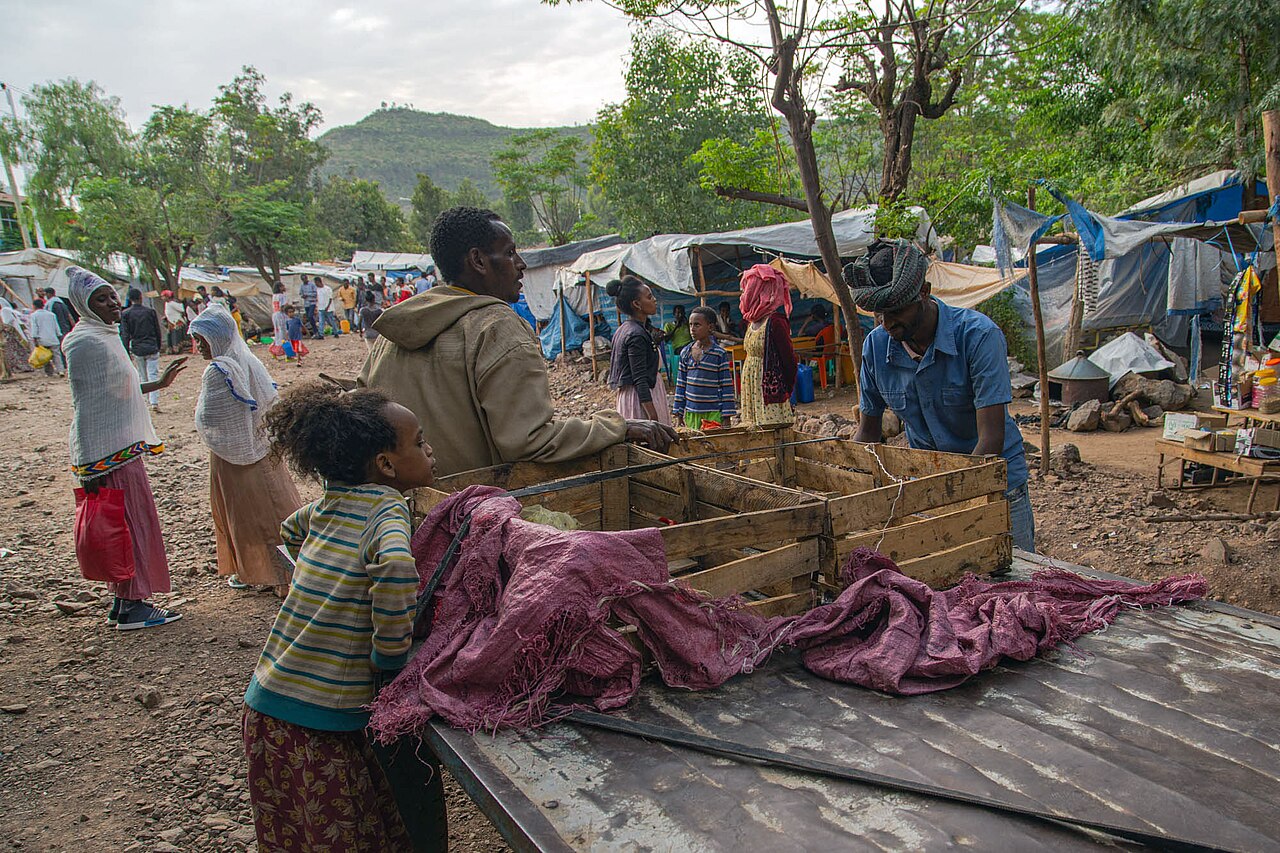
Families living in displacement camps in Tigray were already going hungry before fighting returned to northern Ethiopia, according to new survey findings released on Friday by the US-based humanitarian group Refugees International.
The group said it worked with local partners to survey 452 households with young children in four locations across Tigray in August and September, weeks before the conflict that began in late September. Of those, 250 households were in sites for internally displaced people and 202 were in host communities. Refugees International stresses that the figures describe the households surveyed, not the region as a whole, and says it intends them as a baseline against which conditions since the fighting can be compared.
Hunger before the guns
In the displacement sites, six in ten households said someone had gone to sleep hungry in the previous month, and nearly eight in ten said adults were eating less so their children could eat. Most families said they were buying food on credit or borrowing it. In host communities, four in ten households reported someone going to bed hungry.
Food aid was almost absent, the report says. It reached only 4 percent of displaced households surveyed and almost none of the host households, although cash assistance, often irregular, reached nearly all displaced families and about half of host households.
Screening of young children using arm-circumference measurements found 23 percent of those checked in displacement sites below the cut-off for acute malnutrition, including 4 percent in the severe range. In host communities the figure was 32 percent, though the group notes that one of the districts was chosen precisely because malnutrition there was already known to be high.
A health system without fuel
Health officials interviewed by the researchers said Tigray’s health sector needs about 130,000 litres of fuel a month to run properly. Citing the region’s Trade and Export Agency, the report says fuel deliveries to Tigray fell sharply during 2025 and stopped entirely in January this year. By September, officials said, the health sector had received no fuel at all and more than 250 ambulances were standing idle.
The report also cites Tigray’s Disaster Risk Management Commission as saying that 1.8 million displaced people, including refugees who had fled to Sudan, have returned home, but that only 35,000 of them received government help to do so.
Fighting continues
The findings come as clashes continue in the region. The independent outlet Warkaw, citing the conflict monitor ACLED, reported fighting between federal forces and Tigrayan forces on 10 and 11 November in Laelay Adiyabo district in north-western Tigray. Refugees International warned that renewed war risks a return to the killings, sexual violence and access blockages of the 2020–2022 conflict, and directed its recommendations to the US government, Congress and the Ethiopian government.
The Ethiopian government has not publicly responded to the report.
Sources
- Refugees International: Tigray Humanitarian Snapshot
- Refugees International: statement on new Tigray data
- Warkaw: Renewed fighting in Ethiopia’s Tigray deepens fears for displaced families