
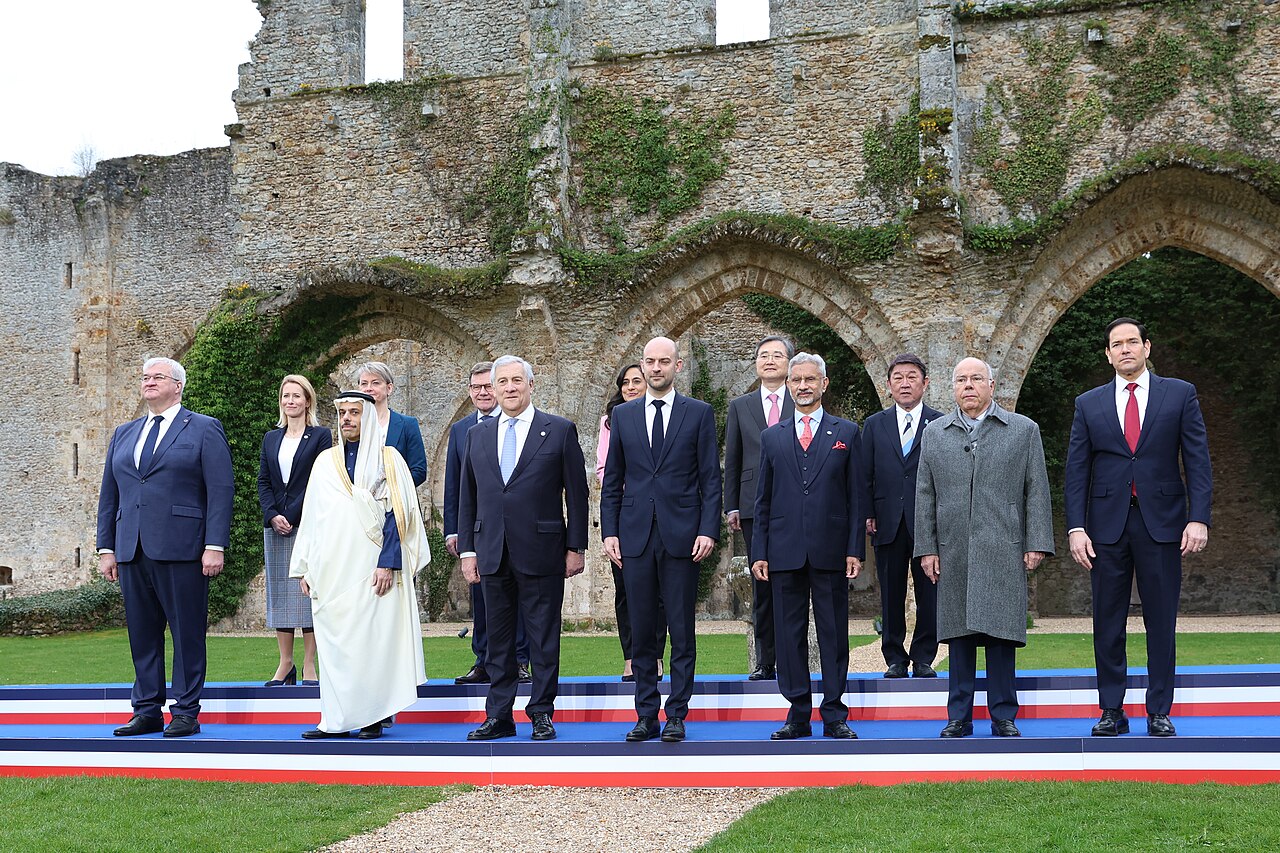
The world’s leading industrial democracies have added their voice to growing international alarm over the Horn of Africa, warning that rising tensions between Ethiopia and Eritrea could spill into a wider regional conflict.
In a joint declaration issued after their meeting in Paris on 9 and 10 November, the foreign ministers of the Group of Seven (Canada, France, Germany, Italy, Japan, the United Kingdom and the United States), together with the European Union’s top diplomat, said they “noted with great concern the worsening security situation in the Horn of Africa, specifically between Ethiopia and Eritrea, which bears the risk of regional escalation amid rising cross-border tensions.”
Restraint, aid access and sovereignty
The ministers said further escalation could have serious consequences for regional stability, for humanitarian crises they described as already dire, and for security and international trade, including in the Red Sea, one of the world’s busiest shipping corridors.
They called on “all parties to exercise maximum restraint” and to pursue diplomatic solutions. The statement also asked for safe and unhindered humanitarian access and the protection of civilians, especially women and children.
In a line likely to be read closely in both Addis Ababa and Asmara, the G7 reaffirmed “the importance of respecting the sovereignty, political independence and territorial integrity of all countries in the region.” The ministers said they supported efforts by the United Nations and the African Union to reduce tensions and to facilitate dialogue between the two sides.
The declaration was published by the French G7 presidency and by member governments, including the United Kingdom and Canada, during the middle of the week. It does not name any party as responsible for the tensions.
A fragile relationship
According to the African Press Agency, relations between the two neighbours have deteriorated since Ethiopia pressed its demand for sovereign access to the Red Sea, including its stated interest in reaching the sea through Eritrea’s port of Assab. Eritrea has repeatedly rejected that claim, Kenya Today reports.
Ethiopia and Eritrea fought a border war from 1998 to 2000 that killed tens of thousands of people. A peace deal in 2018 restored diplomatic ties, but relations soured again in the later stages of the 2020–2022 Tigray war.
The G7 warning comes as fighting has resumed in Tigray and as diplomatic pressure builds from several directions. Earlier this week, Ethiopian officials told a visiting UN envoy that Eritrea and Sudan were arming groups inside Ethiopia, an accusation both governments deny. A group of US senators has also urged Secretary of State Marco Rubio to press for a ceasefire in Ethiopia.
Neither the Ethiopian nor the Eritrean government had publicly responded to the G7 declaration at the time of writing.
Sources
- GOV.UK: Joint declaration following the G7 Foreign Ministers’ Meeting in Paris
- G7 Évian 2026 (French presidency): Joint declaration
- APAnews: Horn of Africa crisis worries G7 nations
- Kenya Today: G7 foreign ministers flag risk of wider Horn of Africa instability