
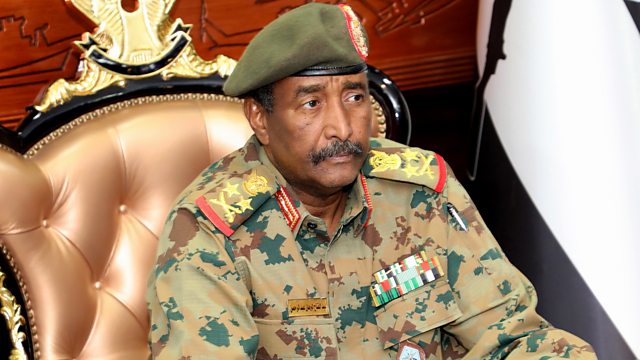
Addis Ababa, May 5, 2026 — Ethiopia’s Ministry of Foreign Affairs on Tuesday strongly rejected recent accusations by Sudanese officials of Ethiopian involvement in Sudan’s civil war, including claims of drone strikes launched from Ethiopian territory against facilities in Khartoum. The statement came hours after Sudan announced it was recalling its ambassador to Ethiopia, with Sudanese Foreign Minister Mohi El-Din Salem warning of potential “open confrontation.”
In its official press release, Ethiopia dismissed the accusations made during a joint Sudanese press conference as “baseless.” It highlighted what it described as Sudan’s support for TPLF (Tigray People’s Liberation Front) mercenaries operating against Ethiopian interests, including alleged arms and financial assistance that facilitated incursions along Ethiopia’s western frontier. The ministry accused Sudanese officials of acting “at the behest of external patrons seeking to advance their own nefarious agenda.”
Despite the sharp tone, Ethiopia reaffirmed its solidarity with the Sudanese people and reiterated its position that there is “no military solution” to Sudan’s conflict. It called for an immediate humanitarian truce, a sustained ceasefire, and an “independent, inclusive and transparent civilian-led dialogue and transition process” to restore civilian rule.
The exchange marks a sharp deterioration in relations between the two neighbors. Sudan’s accusations include recent claims that drones struck Khartoum’s international airport and other facilities, allegedly launched from Bahir Dar in Ethiopia. These follow earlier Sudanese allegations of Ethiopian support for the Rapid Support Forces (RSF) paramilitary group fighting the Sudanese Armed Forces (SAF) in the civil war that erupted in 2023.

Ethiopia has consistently denied direct involvement in Sudan’s conflict. Its May 5 statement frames Sudanese claims as politically motivated while pointing to alleged cross-border threats from Sudan-backed forces.
On the other hand, independent investigations have added another layer to the regional dynamics. A February 2026 Reuters investigation, based on satellite imagery, internal Ethiopian security documents, diplomatic cables, and multiple sources, including a senior Ethiopian government official, reported the existence of a secret RSF training camp in Ethiopia’s remote Benishangul-Gumuz region (Menge district), approximately 20 miles from the Sudan border.
According to the reporting:
- Construction began around April 2025, with a major expansion in late 2025.
- By early January 2026, around 4,300 RSF fighters were reportedly training there (capacity up to 10,000).
- The United Arab Emirates allegedly financed the camp’s construction, provided military trainers, and supplied logistical and military support.
- Nearby Asosa airfield reportedly saw upgrades, including UAV facilities, also linked to UAE funding in the reports.
- Additional investigations by Le Monde and others have documented suspected UAE-linked cargo flights routing through Ethiopia as part of broader supply networks to the RSF.

The UAE has categorically rejected these allegations. A senior UAE official stated that the Emirates “categorically rejects” any provision of weapons, funding, trainers, or logistical support to the RSF, directly or indirectly, and emphasized that it is “not a party” to Sudan’s conflict. The UAE highlights its humanitarian contributions to Sudan, totaling billions of dollars over the past decade.
Ethiopia’s government did not provide an official on-the-record response to the Reuters findings at the time of publication. The May 5 press statement makes no direct reference to the reported camp.
The pattern of mutual accusations reflects the complex web of regional and international involvement in Sudan’s devastating civil war — one of the world’s deadliest, with hundreds of thousands killed and millions displaced. Reports of external support to both the RSF (including alleged UAE routes through Ethiopia) and the SAF (from actors such as Egypt) have been documented by UN experts, intelligence assessments, and investigative outlets. Ethiopia’s reference to “external patrons” in its statement aligns with this broader context of proxy dynamics, though Addis Ababa frames its own role as one of restraint and mediation.
The proximity of any reported training activities to the Grand Ethiopian Renaissance Dam (GERD) and volatile border areas adds significant risk of spillover. Both Ethiopia’s call for civilian-led dialogue and international appeals for a ceasefire face challenges amid these competing external interests.
As the situation develops, transparency from all parties — Ethiopia, Sudan, the UAE, and others — will be critical to de-escalation. The humanitarian imperative for an immediate truce remains urgent regardless of the political and military maneuvering.
ToJ The Prime News.