
Ethiopia earned more than 878 million dollars from coffee exports in the first quarter of the current fiscal year, a 15 percent rise from a year earlier, though the result still fell short of the government’s target, the Ethiopian Coffee and Tea Authority said.
The authority, in a statement issued late Saturday, said exporters shipped more than 131,069 tonnes of coffee between July and September and generated a record 878.5 million dollars, according to reports by Xinhua and the African Press Agency. The Ethiopian fiscal year began on 8 July. Officials noted that the performance, while stronger than last year, came in slightly below the projection for the period.
Addis Fortune, which published a more detailed breakdown of the same figures, put earnings at 878.52 million dollars — about 154 million dollars short of a one-billion-dollar revenue goal, or 85 percent of the plan. The paper said the 131,069.51 tonnes of green coffee beans amounted to 91 percent of a 144,433-tonne shipment target.
China has moved firmly into the top tier of buyers. The authority said Ethiopia earned 103 million dollars from 15,125 tonnes sold to the Chinese market, a record of more than 100 million dollars from that destination and roughly 12 percent of both volume and earnings in the quarter. China now ranks as the third-largest market for Ethiopian coffee, after Saudi Arabia and Germany.
Addis Fortune reported that Saudi Arabia remained the leading destination, taking about 28,363 tonnes worth 196.85 million dollars, or 22 percent of the volume. Germany imported about 22,924 tonnes valued at 136.69 million dollars, roughly 17 percent of shipments.
Coffee is a mainstay of Ethiopia’s farm-based economy and one of its most important sources of foreign currency. The country is widely regarded as the birthplace of Arabica coffee and ranks among Africa’s leading producers and exporters. Its beans are known internationally for a wide range of flavours, from fruity and wine-like to chocolatey.
The latest numbers arrive as Ethiopia looks to commodity exports to bring in hard currency. Officials have presented the first-quarter result as evidence of solid growth, even as they acknowledge the miss against their own plan. The accounts carried by the news agencies did not explain why volume and revenue lagged the targets, or whether weather, logistics or prices were the main constraint.
What the figures do make clear is a shifting map of buyers. Traditional markets in the Gulf and Europe still take the largest share, but China has become a significant new outlet, accounting for more than one in ten of the beans Ethiopia sent abroad in the first three months of the year.
Sources
- Xinhua: Ethiopia’s Q1 coffee export hits 878 mln USD amid booming Chinese market
- African Press Agency: Ethiopia earns over $878m from three-month coffee export
- Addis Fortune: Coffee Shipments Fall Short of First-Quarter Target
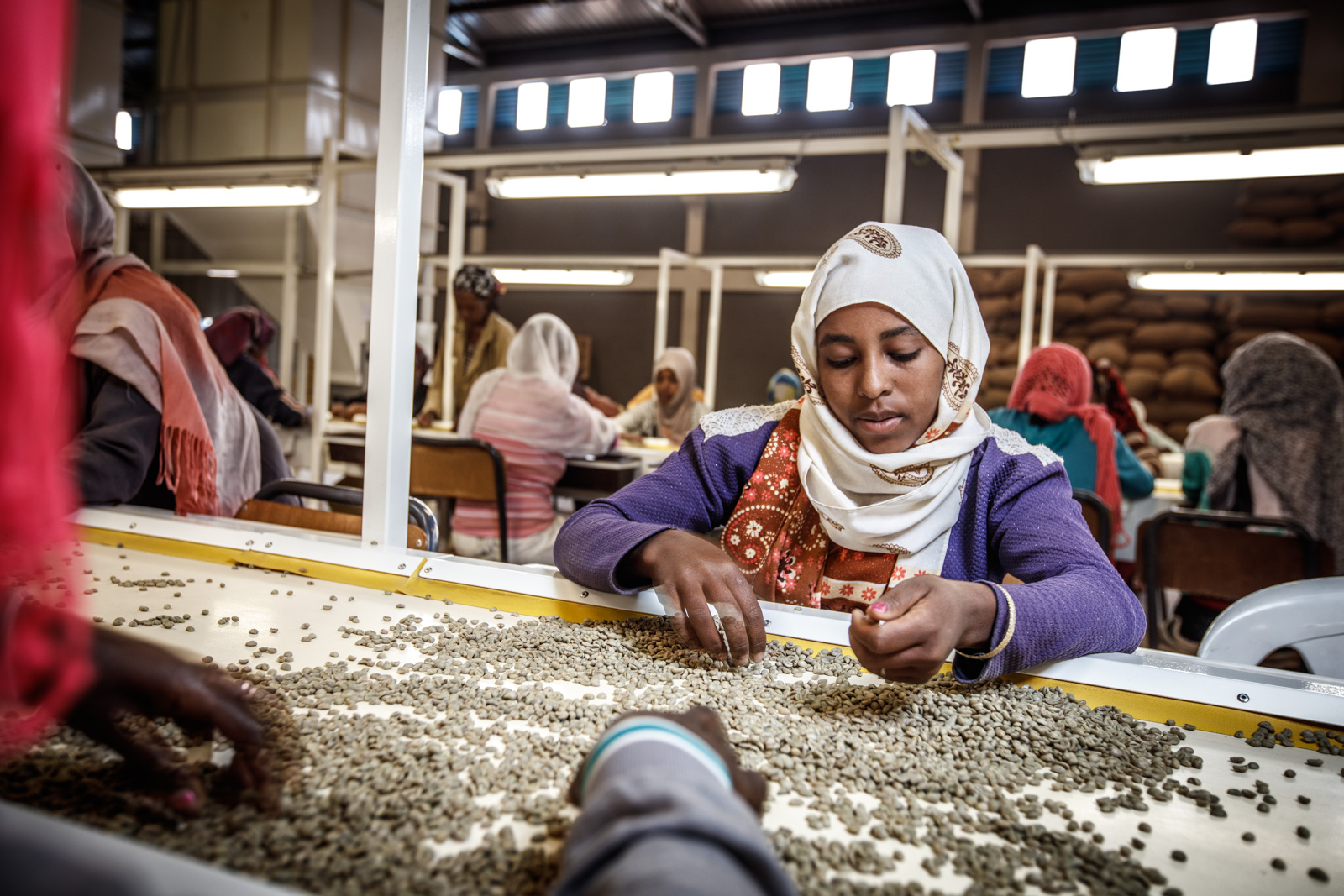
Photo: Workers sort green coffee beans at a processing plant in Addis Ababa, January 2017 (file photo). Niels Van Iperen, CC BY-SA 4.0, via Wikimedia Commons.
