
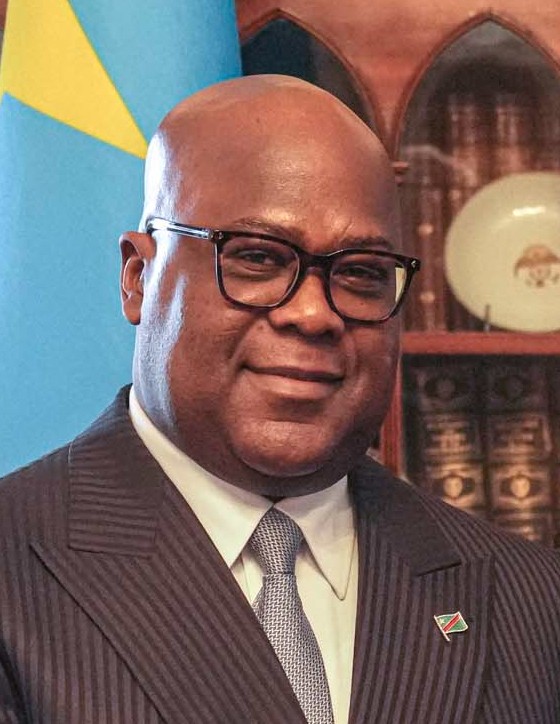
President Félix Tshisekedi of the Democratic Republic of Congo has signed into law a bill that sets out how constitutional changes, and even an entirely new constitution, could be put to a national vote. Critics fear the move could open a path for him to stay in power beyond 2028, when his second and final term ends.
The law was signed on Monday and announced on state television late on Tuesday by a deputy presidential spokesperson, Reuters reported. Parliament had approved the bill earlier, after months of political tension and protests in Kinshasa.
What the law does
The new law replaces a 2005 referendum law that, according to RFI, was written for a single vote: the December 2005 referendum that approved the constitution still in force today. The new text lays down common rules for future referendums, including how campaigns are run, how votes are counted, and how disputes are settled.
Its explanatory memorandum says that, in case of “absolute necessity”, any existing constitutional provision could be changed by referendum, or a new constitution could be adopted, RFI reported. Paul-Gaspard Ngondankoy, the lawmaker behind the bill, told the broadcaster that the limits on revising the constitution bind state institutions such as parliament, but that voters consulted directly could also decide on protected provisions.
Under the process he described to RFI, a petition signed by 250,000 Congolese would first be handed to the president. A panel of experts would then draft a text, parties and civil society would be consulted, and a constituent assembly of national, provincial and local elected officials would review it before it went to voters. If voters rejected it, the current constitution would remain in place.
Why critics are worried
The current constitution limits presidents to two terms, and its Article 220 bars any change to the number or length of those terms. Opposition camps, including those of Martin Fayulu and Moïse Katumbi, fear the referendum route could be used to get around that safeguard, RFI reported.
Tshisekedi has denied seeking a third term but has said he would accept one if Congolese people wanted it, according to Reuters. In May he also said elections due in late 2028 might not go ahead on schedule if fighting in eastern Congo continues and parts of North and South Kivu remain under rebel control.
The question has also reached peace talks in Doha. RFI said it had seen a 1 November letter in which the political-military movement led by former president Joseph Kabila asked Qatari mediators to seek official clarity on Kinshasa’s intentions.
No referendum has been called, and the law does not itself change the constitution. No date has been announced for any vote, Reuters said.
Photo: Félix Tshisekedi at the US State Department in Washington. Official State Department photo by Freddie Everett, public domain, via Wikimedia Commons.
Sources
- Reuters via CNBC Africa: Congolese president signs contested referendum law amid fears over third-term bid
- RFI: RDC, promulgation de la loi sur l’organisation du référendum (in French)