
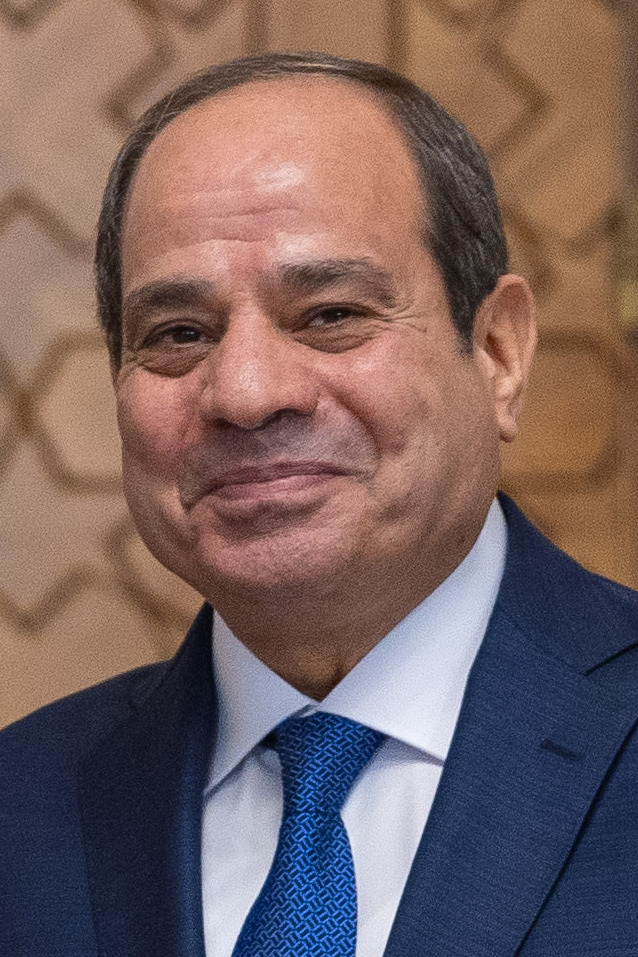
Egypt’s parliament has given President Abdel Fattah el-Sisi a mandate to take “all necessary measures” to defend Saudi Arabia against Houthi attacks. Cairo insists the mission is purely defensive, but the vote brings the Arab world’s most populous country a step closer to a war on the Red Sea’s southern gate.
By HahuPrime News Desk | October 26, 2026
CAIRO — The doors of Egypt’s House of Representatives stayed shut on Monday. Behind them, in the chamber at the New Administrative Capital, Speaker Hisham Badawi chaired the third closed session in nine days on a single question: should Egypt send its armed forces to help defend Saudi Arabia? No tally was published when it was over.
The result came in a short statement. The House, it said, had approved “by a two-thirds majority of its members” a mandate for the president “to take the necessary measures to support the Kingdom of Saudi Arabia, following coordination between the two fraternal nations, in order to defend its territory, sovereignty and holy sites against any external aggression,” according to the text quoted by Arab News.
Two-thirds is the bar Egypt’s constitution sets. Under Article 152, the president cannot send troops abroad on a combat mission without consulting the National Defence Council and winning that majority in parliament. The council backed defensive help for Riyadh on October 18.
A shield, not a sword
The statement did not say what Egypt would actually send. A regional official briefed on the matter told the Associated Press that Egypt will deploy air defence systems and aircraft to help shoot down missiles and drones fired at Saudi Arabia, and that no Egyptian ground troops will go into Yemen. Taher al-Khouly, deputy head of parliament’s legislative committee, told Reuters that Egyptian forces would go to Saudi Arabia in coordination with Riyadh and at its request. No formal Saudi request for Egyptian troops has been announced.
Sisi has spent the past week trying to calm nerves at home. “I have heard a great deal of talk suggesting that we are preparing to launch an attack on Yemen, or something to that effect. That is certainly not the case,” he said, according to the AP. “Our focus is on the defense of the kingdom’s territory and its borders.”
He put the same limit in writing. Before the vote, Foreign Minister Badr Abdelatty and intelligence chief Hassan Rashad flew to Riyadh with a letter from Sisi to Crown Prince Mohammed bin Salman, Reuters reported. It said Egypt’s support would be confined to defending Saudi territory and borders, not attacking Yemen. Essam Farid, the speaker of the Senate, described Egypt’s role as “a shield that protects, not a sword that attacks.”
Not everyone in parliament was convinced. The Egyptian Social Democratic Party said its 11-member bloc would abstain, citing too little information about the mission’s aims, scope, duration and cost, and the risks to Egyptian soldiers. The Civil Democratic Movement, an opposition coalition, rejected any military role in a regional war and said Cairo should stick to mediation.
Why Riyadh matters to Cairo
The money explains part of the decision. Saudi Arabia is one of Egypt’s main financial backers. It has supplied billions of dollars in aid, central bank deposits, investment and energy since Sisi took power in 2013. Remittances from Egyptians working in the kingdom are also a major source of foreign currency.
Geography explains the rest. The Houthis, who control Yemen’s capital Sanaa and are backed by Iran, have pushed along the Yemeni coast towards the Bab el-Mandeb Strait. That narrow channel is the southern door to the Red Sea, and through it to Egypt’s Suez Canal, one of the country’s most important earners of hard currency.
The fighting has escalated sharply this month. The Houthis have struck Riyadh’s international airport and facilities of state oil giant Saudi Aramco, disrupting flights and oil exports, Reuters reported. Washington has ordered some diplomats and their families to leave Saudi Arabia, and Britain said last week it would fly Royal Air Force Typhoon jets to help protect Saudi cities and infrastructure. The Houthis have also threatened more strikes on the kingdom.
The Houthis, for their part, warned Cairo off. Yahya Ali al-Rai, speaker of the Houthi-run House of Representatives in Sanaa, urged Egyptian lawmakers last week to reject the request, saying it would threaten Egypt’s own national security and stability.
The ghost of the 1960s
For many Egyptians, the word Yemen still carries weight. In 1962, President Gamal Abdel Nasser sent tens of thousands of troops to North Yemen to back a republican coup against the royalists, who were supported by Saudi Arabia. The campaign dragged on for years. The state-run Al-Ahram daily has called it “one of the low points” of Nasser’s presidency, and it is widely blamed for weakening Egypt before its defeat by Israel in 1967, the AP noted.
This time, Cairo and Riyadh are on the same side. In 2015, Egypt joined the Saudi-led coalition in Yemen mainly as a naval partner, sending warships to guard Red Sea shipping lanes. Egypt has not carried out a large-scale foreign ground deployment since the 1991 Gulf War, according to Reuters.
Egypt is also not part of the Mecca mutual defence pact that Saudi Arabia signed with Pakistan and Turkey in August. On Monday, top officials from the three countries were in Tehran meeting Iranian leaders in a push to cool the conflict, which Reuters describes as a front in the wider US-Israeli war on Iran.
That leaves Egypt’s diplomats with a double task. Abdelatty said Cairo wanted to explore “every opportunity” to end the Yemen conflict through talks. Former foreign minister Mohammed El-Orabi told Arab News the vote had been expected. “Egypt’s position is clear: it will take the necessary measures to defend the Kingdom,” he said, adding that Cairo would keep pushing for a political solution.
For the Horn of Africa, the stakes are close to home. The same strait that Egypt now says it will help protect sits beside Djibouti and Eritrea, and Red Sea access is already a live dispute in the region, as Prime Minister Abiy Ahmed made clear when he told the Tana Forum that sea access is “existential” for Ethiopia. What Egypt sends to Saudi Arabia, and when, now depends on a request from Riyadh that has not yet been made public.
Sources
- Reuters: Egypt approves military support for Saudi Arabia after Houthi attacks escalate
- Associated Press (via Los Angeles Times): Egypt’s parliament authorizes military support for Saudi Arabia to defend against Houthi attacks
- Arab News: Egyptian parliament authorizes President El-Sisi to take action to defend Saudi Arabia
- Arqam Magazine: Egypt’s Parliament Authorizes El-Sisi to Take Necessary Measures to Support and Defend Saudi Arabia
- Anadolu Agency: Egypt postpones until next week vote on military support for Saudi Arabia