
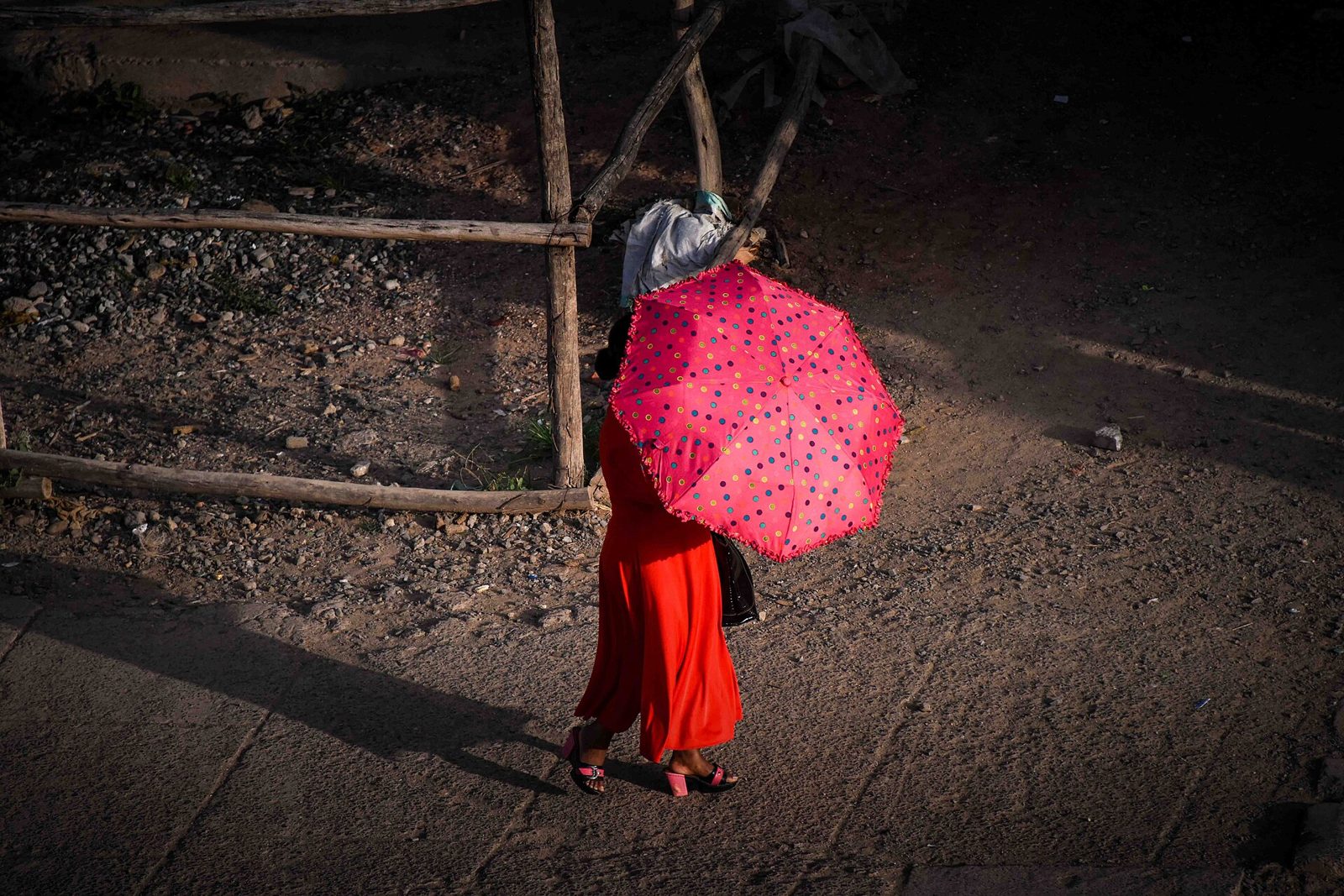
People in Adigrat, the eastern Tigray city that Eritrean troops passed through earlier this month, told AFP they are glad the soldiers have gone. They also describe a city without working police, closed schools and growing hunger, as Eritrea continues to deny its forces were ever there.
By HahuPrime News Desk | October 19, 2026
ADDIS ABABA — Burnt-out trucks still sit in the middle of the roads in central Adigrat. According to AFP, which reported from the city this weekend, they are the remains of federal drone strikes against Eritrean troops who were in the area only a little over a week earlier.
“We were terrified,” said Hagos, a 48-year-old father of four who gave only one name. He described an October 7 strike near his home in a village about 15 kilometres north of Adigrat, in which missiles hit a truck that he said was carrying mortars and Eritrean soldiers. “Explosions continued for more than three and a half hours,” he told the agency.
- Adigrat residents told AFP they welcomed the departure of Eritrean troops after federal drone strikes pushed them back.
- They said police and security structures have collapsed, schools have been shut for days and food is running short.
- Accounts differ on Zalambessa: AFP says Eritrean soldiers are present in the border town, while conflict monitor ACLED recorded them withdrawing through it on October 12.
- Eritrea has called reports of an incursion false. The TPLF has rejected the federal caretaker administration for Tigray.
What Adigrat residents describe
Adigrat lies about 40 kilometres south of the Eritrean border, on the main road to Mekelle. AFP, citing a foreign security source, reported that Eritrea had deployed thousands of troops in northern Tigray in support of the rebels who launched an offensive against the federal government in September. Some of those forces have since returned to Eritrea, the agency said, while others remain near the border on the Ethiopian side.
For many residents, the memory of the 2020–22 war shapes how they saw the soldiers. Eritrean troops fought alongside federal forces in that conflict, which cost an estimated 600,000 lives, and were accused of war crimes including rape. Haymanot, 33, said she heard several explosions near her village on October 10, when drones struck Eritrean forces and fighters of the Tigray People’s Liberation Front (TPLF).
“I did not want them here. They have now left, and I hope they never return.”
“Seeing the Eritrean army here is like seeing the devil,” said Elias Desta, 36, who told AFP the soldiers had arrived on foot and in trucks. Their departure has not brought calm, he said. “The police and security systems have collapsed. Some prisoners have been released, and there are many robberies and stabbings in the city.”
Residents said federal forces now patrol the streets with heavy weapons. Schools have been closed for several days, and shops and restaurants that remain open are running low on supplies. “People are facing severe hunger and need assistance,” Elias said.
HahuPrime reported drone strikes around Adigrat in early October, before the city changed hands. Three residents told Reuters that government forces and an allied militia entered Adigrat on October 10.
Competing claims along the border
Eritrea has rejected the accounts. It has said reports of an incursion are false and part of an Ethiopian plan to justify a war of aggression, according to Reuters. Ethiopia told members of the UN Security Council this month that Eritrean troops had advanced up to 60 kilometres inside Tigray. Asmara, in turn, asked the Council to act under Chapter VII.
Initial reports differ on the far north. AFP said the situation remains tense in Zalambessa, the Ethiopian border town, where it reported Eritrean soldiers are present. The US-based conflict monitor ACLED recorded Eritrean forces withdrawing into Eritrea through Zalambessa on October 12, and federal and allied forces taking control of the town the same day. The research group Critical Threats cited an open-source analyst who said Eritrean forces had dug in just north of it.
Inside Tigray, the political fight has sharpened. In a statement on Saturday reported by Anadolu Agency, the TPLF called the federal government’s new six-month caretaker administration a “Prosperity structure” whose decisions would have “no legality or enforceability”. It warned that institutions cooperating with it would be held accountable. The government has named Asefa Abrahaga Hagos as chief administrator and Shishay Amare as mayor of Mekelle, with a mandate to restore services and prepare elections.
The pro-government Tigray Peace Force has made claims of its own. Its spokesman, Col. Solomon Hailemariam, said in a statement reported by DW Amharic and relayed by Mereja that “the core members of the extremist group have crossed into Eritrea”, and offered remaining TPLF fighters a grace period to report to rehabilitation centres. That claim could not be independently verified. Neither could weekend posts by Tigrayan-aligned accounts saying their forces had taken Hagere Selam, east of Mekelle, and pushed federal troops back from Rama towards Adwa.
What happens next
The government’s reception points for fighters who want to disarm include Adigrat, Mekelle, Adwa, Axum and Shire, according to the Ethiopian News Agency. Hundreds of former combatants have already registered in Mekelle. Analysts warn against reading the loss of towns as the end of the war. “We shouldn’t imagine that this conflict is completely over just because the TPLF has lost Mekelle,” Magnus Taylor of the International Crisis Group told the Associated Press last week.
The border is now the main concern for diplomats. US Secretary of State Marco Rubio said on Saturday that troops were surging on both sides of it. In Adigrat, Elias said he hoped the caretaker administration would restore order and open the way for aid. The administration has six months before the elections it has promised.
Sources
- In Tigray, Ethiopians welcome the departure of Eritrean troops (AFP via The Standard)
- Ethiopians welcome the departure of Eritrean troops (AFP via Citizen Digital)
- Ethiopian forces regain control of border city after reported Eritrean incursion (Reuters via Arab News)
- Ethiopia’s TPLF rejects new Tigray administration as illegitimate (Anadolu Agency)
- Tigray Peace Force says core TPLF members crossed into Eritrea and offers fighters a grace period (Mereja)
- Ethiopia Alerts archive (ACLED)
- Ethiopia War Security Review, October 16, 2026 (Critical Threats)
- Ethiopia war, 18 Oct 2026: what happened (Frontlines.et)