
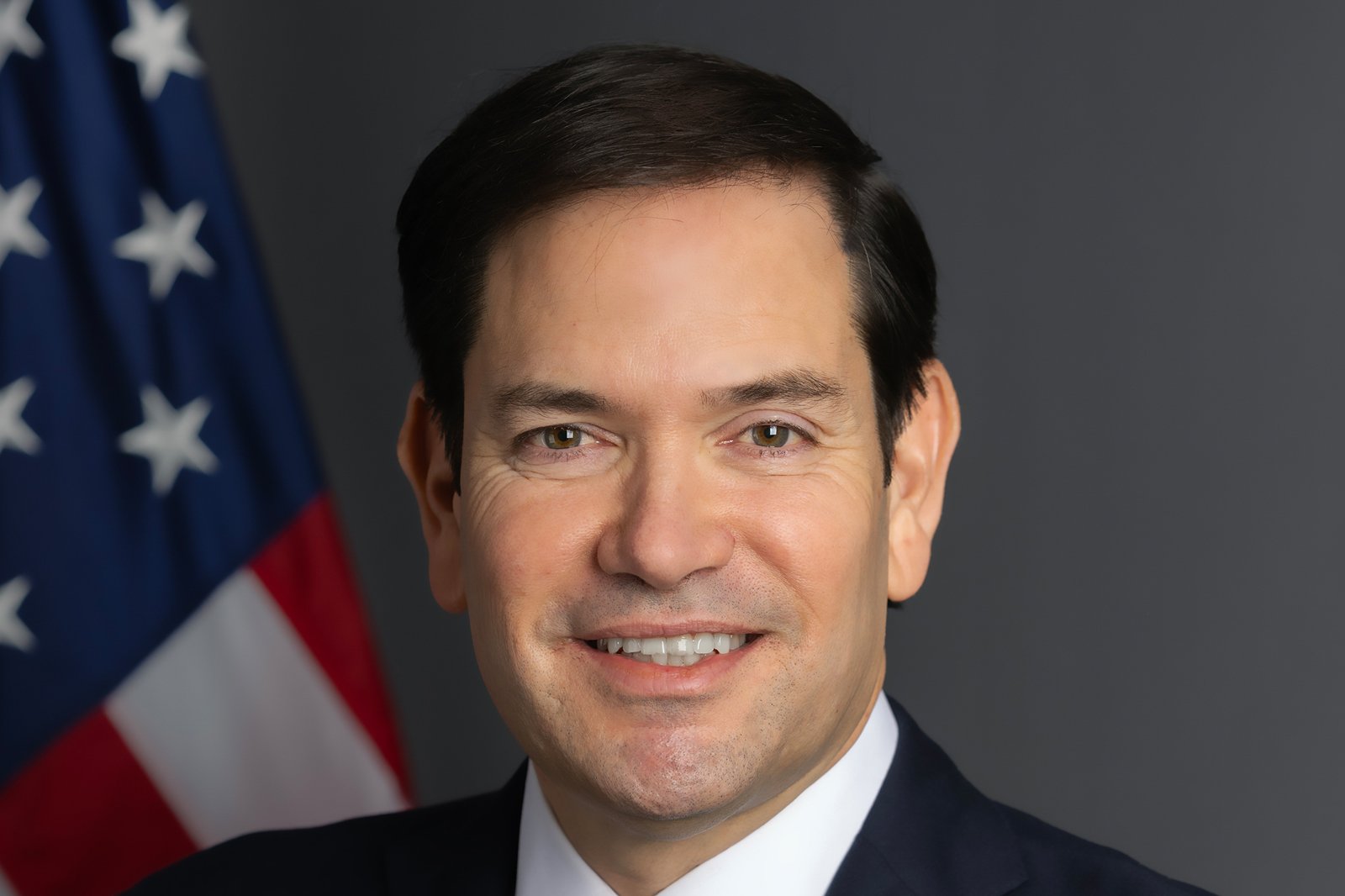
US Secretary of State Marco Rubio said troops were “surging on both sides” of the Ethiopia-Eritrea border and warned the build-up could turn into a broader war, while defending Washington’s recent lifting of sanctions on Eritrea’s military and ruling party.
By HahuPrime News Desk | October 18, 2026
WASHINGTON — The question came at the end of a quick exchange on the tarmac. Before boarding his plane at Joint Base Andrews on Saturday evening for a trip to Uzbekistan and India, Marco Rubio was asked how high the risk of war between Ethiopia and Eritrea had become, and whether it had been a mistake to lift Ethiopia-related sanctions shortly before the violence flared.
“No, I don’t think the sanctions lifting – these were very small sanctions, and they don’t really have anything to do with what’s happening over there,” Rubio said, according to the State Department transcript. “You see troops surging on both sides of the border as a result of that. And anytime you see troops on both sides of the border in a place like that, you’re always worried that that can turn into a broader conflict.”
- Rubio said troops were massing on both sides of the Ethiopia-Eritrea border and warned of a wider conflict that “could ultimately pull in other countries.”
- He described the groups attacking inside Ethiopia as “separatists” and the drone strikes on Addis Ababa as terrorist attacks, but urged a “wise and measured” Ethiopian response.
- He defended the September removal of US sanctions on Eritrea’s military and ruling party as a way to open contact with Asmara.
- Eritrean officials had not publicly responded to the remarks by Sunday evening.
What Rubio said on Ethiopia and Eritrea
Rubio’s account of how the crisis began closely followed the language Addis Ababa has used. “You have these separatists that were attacking inside of Ethiopia. You had an Ethiopian response to it,” he said. He did not name the groups he meant, or say who carried out the drone attacks on the Ethiopian capital that he mentioned.
He said he had spoken to the Ethiopian side personally “a few days ago” and told them that “no one is supportive of terrorism and the terrorist attacks that came against them,” but that “it’s a time to sort of be wise and measured in how you respond to that and make sure it doesn’t turn into a broader war which could ultimately pull in other countries.”
“The last thing the world needs right now is another war.”
That call took place on Wednesday. The State Department’s readout said Rubio told Prime Minister Abiy Ahmed that “all countries in the Horn of Africa must respect the sovereignty and territorial integrity of their neighbors and avoid cross-border incursions,” and that the only sustainable solution lay in dialogue under the 2018 Ethiopia-Eritrea peace framework. The Ethiopian News Agency’s account, as summarised by Natna News, spoke only of bilateral, regional and multilateral issues and Abiy’s welcome for continued US support, without mentioning Eritrea. Eritrea’s information minister, Yemane Gebremeskel, wrote on X the next day that there was “no intersection point between the two readouts.”
The sanctions question
The sanctions Rubio called “very small” lapsed on September 18, when the national emergency declared under Executive Order 14046 in 2021 expired. The Treasury’s Office of Foreign Assets Control then removed the Eritrean Defense Forces, the ruling People’s Front for Democracy and Justice, the Red Sea Trading Corporation, the Hidri Trust and two senior Eritrean officials from its blacklist. The Biden administration had imposed the measures over Eritrea’s role in the 2020-2022 war in Tigray.
Asmara welcomed the move at the time. “The unilateral sanctions imposed by the Biden Administration five years ago were not warranted by any metrics,” Yemane told Reuters, calling the decision a welcome gesture.
Rubio presented the step as a diplomatic tool. “We don’t have the closest relationship with Eritrea, obviously, over the years, although we’ve had communication with them – more than usual – in the past few months,” he said. “It’s hard to serve the role of mediator and peacemaker unless you can talk to both sides.”
The remarks drew sharply different readings online. Several Ethiopian commentators on social media welcomed his use of the words “separatists” and “terrorist attacks” as a sign that Washington accepted the government’s framing. Kjetil Tronvoll, a Norwegian scholar of Horn of Africa politics, wrote on X that the comments suggested “a different US stance” from the State Department’s earlier formal statements, and called the use of the term “separatists” “conceptually flawed.”
A border under strain
Rubio spoke as both governments trade accusations at the United Nations. Ethiopia has told the Security Council that Eritrean troops pushed as far as 60 kilometres into Tigray, and Eritrea’s foreign minister, Osman Saleh, has urged the council to condemn what he called Ethiopia’s “deplorable declaration of war,” The Abay Times reported. Eritrea has also asked the council for Chapter VII action against Ethiopia. Neither side’s claims about troop positions have been independently verified.
Inside Tigray, the federal government says its forces have retaken Mekelle, and it has installed a six-month caretaker administration, AP reported. The TPLF-led regional authorities have rejected it. Near the border town of Zalambessa, a resident told Turkey’s Ilke News Agency that Ethiopian troops were about five kilometres south of the town while Eritrean soldiers stayed on its northern outskirts.
Washington has been sounding the alarm since October 3, when the State Department said the Horn of Africa “cannot sustain another military conflict and humanitarian crisis.” In Congress, Representatives Gregory Meeks and Sara Jacobs said the two countries were on a dangerous path and urged both to honour the 2018 peace agreement. The two neighbours fought a border war from 1998 to 2000 that killed tens of thousands, and Eritrean troops fought alongside federal forces in the 2020-2022 Tigray war.
As of Sunday evening, neither Asmara nor Addis Ababa had issued a formal response to Rubio’s remarks. Rubio flew on to Uzbekistan and India, leaving the State Department’s call for talks under the 2018 framework as Washington’s stated position.
Sources
- Secretary of State Marco Rubio Remarks to the Press, Joint Base Andrews (US State Department, Oct 17, 2026)
- Secretary Rubio’s Call with Ethiopian Prime Minister Abiy (US State Department, Oct 14, 2026)
- U.S. Statement on Increased Tensions Between Ethiopia and Eritrea (US State Department, Oct 3, 2026)
- Expiration of Emergency With Respect to the Situation in Ethiopia; Ethiopia-related Designations Removals (OFAC, Sept 18, 2026)
- US removes sanctions on Eritrean Defense Forces, Treasury website shows (Reuters)
- Rubio Urges Restraint as Ethiopia-Eritrea Tensions Risk Wider Regional War (The Reporter Ethiopia)
- “The world doesn’t need another war” Rubio urges restraint amid Ethiopia-Eritrea tensions (Capital)
- Abiy Ahmed says he held a phone call with US Secretary of State Marco Rubio (Natna News)
- Ethiopia’s government forms caretaker administration in Tigray (AP)
- Ethiopian forces advance toward Eritrean border as regional war fears grow (Ilke News Agency)
- The week in Ethiopia: Eritrea accusations at the UN (The Abay Times)