
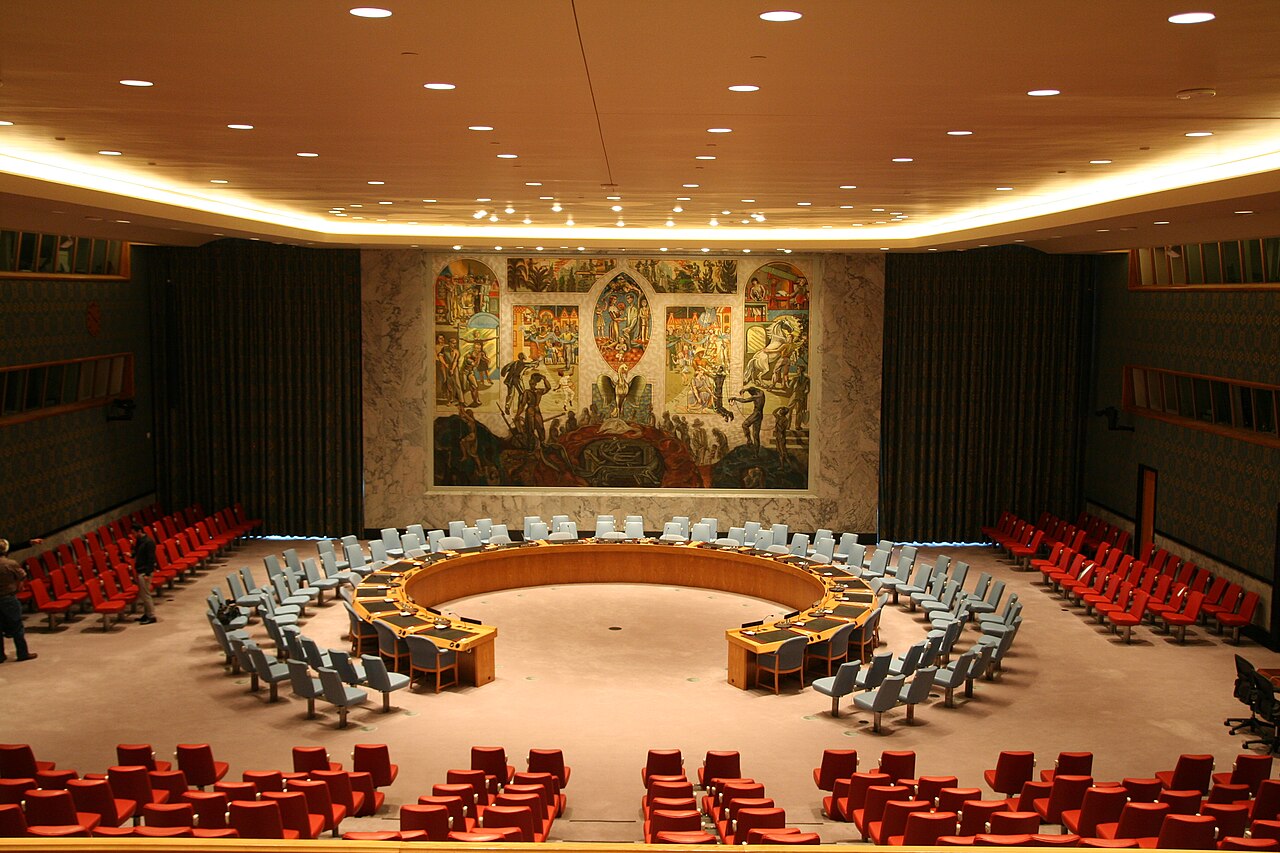
Eritrea’s foreign minister briefed diplomats in Asmara and renewed a call for UN Security Council action under Chapter VII, as Ethiopia cites self-defence and Washington urges restraint on a frontier strained by fighting in Tigray.
By HahuPrime News Desk | October 16, 2026
ASMARA / ADDIS ABABA / NEW YORK — Eritrea’s foreign minister told resident diplomats in Asmara on Wednesday that Ethiopia’s ruling party had “effectively declared open war” in pursuit of what Addis Ababa calls sovereign access to the Red Sea, and he asked the United Nations Security Council to condemn that policy and adopt deterrent measures under Chapter VII of the UN Charter.
- Foreign Minister Osman Saleh briefed diplomats in Asmara on 15 October and restated Eritrea’s Chapter VII request to the Security Council.
- Ethiopia has told the Council it is acting in self-defence under Article 51, accusing Eritrea of deploying troops into Tigray — claims Asmara rejects and that have not been independently verified.
- US Secretary of State Marco Rubio urged de-escalation in a 14 October call with Prime Minister Abiy Ahmed, stressing respect for sovereignty and the 2018 peace framework.
According to Eritrea’s Ministry of Information, Shabait, Osman Saleh said that over three years the Prosperity Party had repeatedly floated “all possible options, including the use of force,” to secure Red Sea access. He cited statements by senior Ethiopian officials, including the prime minister, that he said rejected Eritrea’s sovereignty and contemplated control of the Red Sea and the port of Assab. Those ambitions, he argued, violate Article 2(4) of the UN Charter and the 2018 Agreement on Peace and Friendship.
Saleh also described the diplomatic rupture: he said Ethiopia’s embassy in Asmara stopped answering Eritrean correspondence from May 2026 and left on 8 August without notice, and that Addis Ababa expelled ten Eritrean diplomats on 1 October, including staff accredited to the African Union and UNECA. He referred diplomats to Eritrea’s earlier Security Council submission and asked the Council to act on it.
Competing letters at the Security Council
The briefing follows conflicting letters to the Council. Ethiopian Foreign Minister Gedion Timothewos accused Eritrea of deploying mechanised and infantry units into Ethiopian territory and of arming insurgent groups, invoking Article 51 to say Ethiopia was taking measures in self-defence. He did not publicly specify those measures or identify occupied areas. Anadolu Agency reported the letter; the Associated Press said it could not independently verify the troop claims.
In reply, Saleh rejected the self-defence claim as a pretext for aggression, accused Ethiopia of seeking to seize “sovereign access to the sea,” and asked the Council to condemn what he called a declaration of war. Al Jazeera, citing AFP and AP, reported Addis Ababa’s allegation of Eritrean advances of up to about 60 kilometres into Tigray — an allegation Asmara dismissed. A foreign security source earlier told AFP that 5,000 to 8,000 Eritrean soldiers were present in Tigray; that figure has not been independently confirmed.
Council members held closed Horn consultations this month after a US request, according to Security Council Report. Secretary-General António Guterres has called for a cessation of hostilities and dialogue under the 2022 Pretoria Agreement. Eritrea maintains it was not a party to Pretoria — a point Saleh repeated in Asmara.
Washington urges restraint as northern fighting reshapes the map
On 14 October, US Secretary of State Marco Rubio spoke with Abiy Ahmed. A State Department readout said Rubio supported “de-escalation by all sides,” pointed to the 2018 Ethiopia–Eritrea peace framework, and stressed that Horn countries “must respect the sovereignty and territorial integrity of their neighbors and avoid cross-border incursions.” Africanews and AP later carried the same message alongside Human Rights Watch accounts of civilian harm from shelling in southern Tigray that the group could not attribute.
The clash is unfolding against a shifting military picture. After late-September fighting, government-allied forces entered Mekelle following a TPLF withdrawal, and federal authorities this week installed a six-month caretaker administration for Tigray. Analysts have warned that advances toward the Eritrean border raise the risk of a direct interstate clash — a caution voiced to AP by the International Crisis Group and carried by Africanews on Friday.
HahuPrime has previously reported how a security vacuum in Mekelle tested restraint as Ethiopia–Eritrea ties ruptured, and how Egypt, Eritrea, Somalia and Sudan affirmed after an early-October New Alamein summit that Red Sea governance should remain the preserve of littoral states — language widely read in Addis Ababa as aimed at Ethiopia’s sea-access campaign.
What remains verified is limited. Cross-border troop numbers, the location of any occupations, and Ethiopia’s “self-defence” measures have not been independently established. Both capitals are framing the crisis for the Council while military lines near the frontier shift. Diplomats will watch whether the Council can agree even on a press statement, and whether African Union good offices can reopen a channel between Addis Ababa and Asmara. Without verified de-escalation on the ground, the risk that a northern campaign becomes a wider Horn war remains the central danger.
Sources
- Minister Osman Saleh briefs members of Diplomatic Community — Shabait
- Secretary Rubio’s Call with Ethiopian Prime Minister Abiy — US Department of State
- Eritrea urges UN to intervene in standoff with Ethiopia — Al Jazeera
- Ethiopia tells UN Security Council it has no choice but to defend itself against Eritrea — Anadolu Agency
- US State Secretary calls for de-escalation by Ethiopia and Eritrea — Africanews / AP
- Ethiopian gains in Tigray risk wider war with Eritrea, analyst warns — Africanews / AP
- Horn of Africa: Closed Consultations — Security Council Report
- Eritrea’s foreign minister briefs the diplomatic community in Asmara — Natna News