
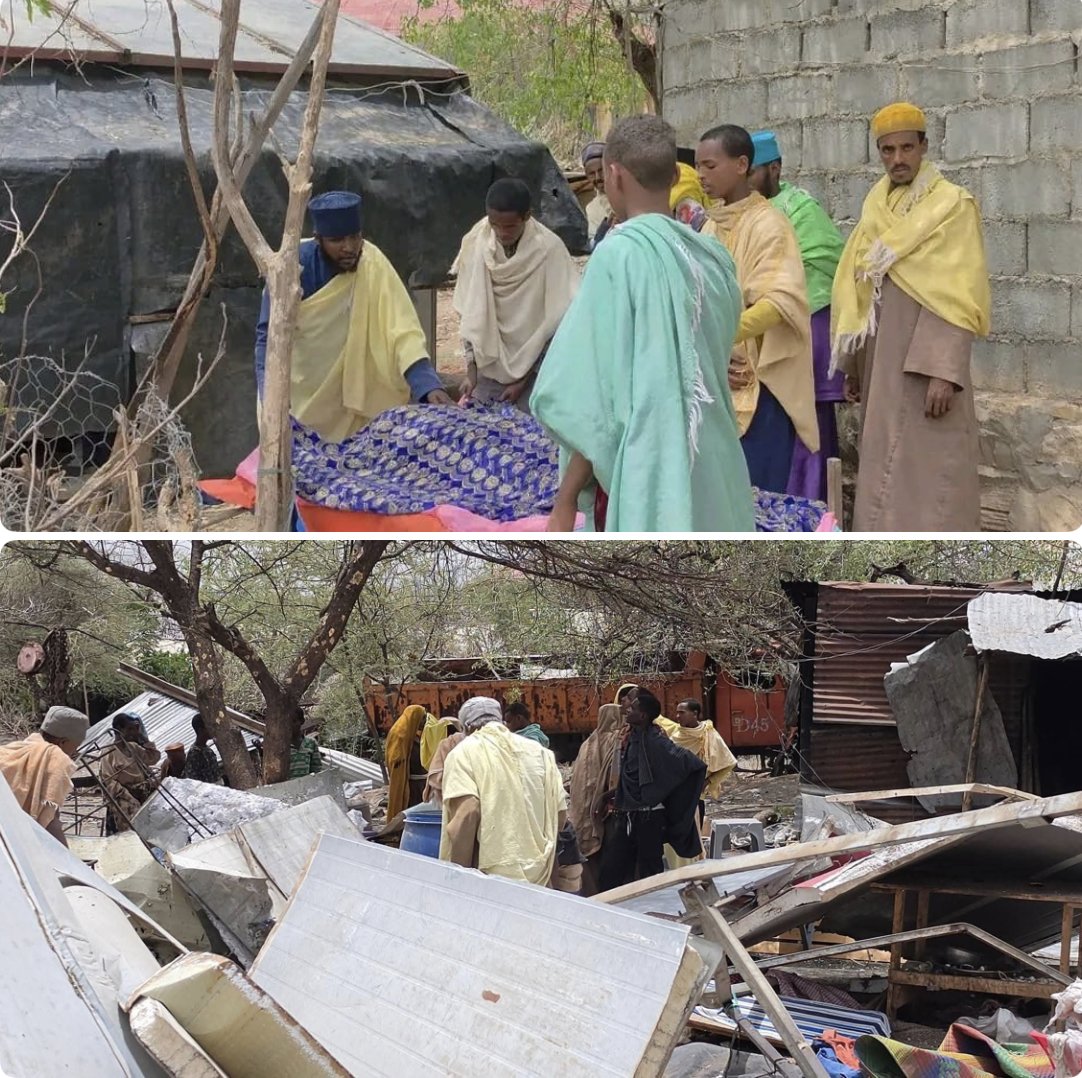
July 24, 2026 — In the quiet hush of morning prayer at St. Arsema Monastery, where the rugged cliffs of Ethiopia’s Abay gorge meet the timeless rhythm of Orthodox liturgy, seven monks lost their lives not in old age or illness, but in a sudden blast that shattered centuries of peaceful devotion. Ten more lie critically wounded in hospitals, their bodies broken while their faith remains a quiet anchor for grieving families and a shaken community.
These were not distant figures in a far-off conflict. They were fathers, brothers, teachers, and spiritual guides—men who had chosen lives of simplicity, fasting, and service. One survivor, his voice trembling in a relayed audio message shared among church networks, whispered: “We were singing hymns when the sky brought fire. Brother Tekle was reading from the Gospel… he is gone now.” Details of individual names are still emerging out of respect for mourning families, but their collective loss feels intensely personal to the thousands who looked to Arsema as a spiritual home.
Lives Devoted to Prayer Ended in an Instant
Imagine rising before dawn every day for decades, tending gardens that fed both body and soul, copying ancient manuscripts by candlelight, and offering counsel to pilgrims who traveled hours on foot. That was the world of the monks at St. Arsema, an ancient sanctuary under the South Wollo Diocese of the Ethiopian Orthodox Tewahedo Church near Mekane Selam. Many had left behind families and worldly ambitions years earlier, seeking closeness to God in the monastery’s stone walls.
On July 22, around 10:30 a.m., as they gathered for the Divine Liturgy—some preparing simple meals for the community, others deep in prayer—the drone strike tore through their midst. Shrapnel and collapsing masonry did what centuries of isolation had protected them from. Nuns and monks who had survived previous hardships now found themselves carrying the injured on makeshift stretchers, their robes stained not with incense but with blood. A local church insider, who asked not to be named for safety reasons, described the scene: “These were gentle souls. One elderly monk had taught children in the village for over 40 years. Another was known for his beautiful voice in the choir. They harmed no one. Why strike a house of God?”
The injured, many in critical condition, include young novices and seasoned elders. Families who had entrusted their loved ones to monastic life now wait anxiously by hospital beds or makeshift clinics, torn between grief and the demands of a region where medical resources are stretched thin.
A Monastery—and a Community—in Mourning
St. Arsema is more than stone and timber; it is the heart of the surrounding villages. Pilgrims come for blessings, farmers seek spiritual guidance during droughts, and new generations learn the ancient chants and values that bind Ethiopian Orthodox identity. The monastery’s destruction ripples outward: disrupted worship, frightened novices unsure whether to stay or flee, and villagers who once found solace there now organizing prayers under open skies. One Amhara activist shared a photo of damaged walls on social media, captioning it with a simple plea: “Even in a monastery, Amharas are not safe.” The image shows debris where hymns once filled the air, a stark reminder of how conflict intrudes on the most intimate spaces of human life.
Conflict That Spares No One
This tragedy did not happen in a vacuum. Ethiopia’s Amhara region has endured years of tension between federal forces and Fano self-defense militias. While authorities describe operations as necessary against armed groups, civilians—including clergy—too often pay the price. The strike on Arsema echoes a March 2026 artillery attack on another South Wollo monastery that killed six and injured over twenty.
For residents, the pattern feels deeply personal. “We send our sons to monasteries for peace, not to become targets,” said one woman from a nearby village in a voice note circulating among diaspora communities. Parents, siblings, and entire parishes now mourn not just the dead but a sense of violated sanctuary.
Voices of Grief and Calls for Humanity
The Ethiopian Orthodox Tewahedo Church has responded with sorrow and resolve. Leaders have condemned the attack as an assault on faith itself, calling for prayers across the country. In homes and churches from Addis Ababa to remote highlands, candles burn for the victims. Social media overflows with messages of solidarity: “Lord, have mercy. Pray for Ethiopia.”
International observers and human rights groups echo the demand for accountability. “These monks dedicated their lives to peace,” said one advocate. “Their deaths should compel all sides to remember the human faces behind every statistic—mothers who will never hug their sons again, communities losing their moral anchors.”
As of today, the federal government has remained largely silent on this specific incident, though past statements in similar cases have expressed regret for unintended civilian harm while defending security needs.
The Road Ahead: Healing Hearts and Seeking Justice
In the days since the strike, small acts of humanity stand out amid the pain: neighbors donating food for funeral rites, distant relatives traveling dangerous roads to offer comfort, and monks from other monasteries opening their doors to the displaced. Yet the deeper wounds—trauma, fear, and eroded trust—will take far longer to mend. For the families of the fallen, each sunrise brings a fresh wave of absence. A father who will never again receive his son’s blessing. A village choir missing its clearest voice. A monastery that, while physically damaged, still holds the prayers of those who remain.
This is not merely another incident in a complex conflict. It is a profound human tragedy: lives cut short in pursuit of holiness, families shattered, and a sacred tradition under threat. As Ethiopia searches for lasting peace, the story of St. Arsema demands that all parties remember the individuals behind the headlines—the monks who prayed, the wounded who suffer, and the communities left to rebuild not just walls, but faith in humanity itself.
Hahuprime News Service prioritizes verified accounts, survivor testimonies, and contextual depth in reporting from complex regions.
If you have concrete evidence and reports, let us know.