
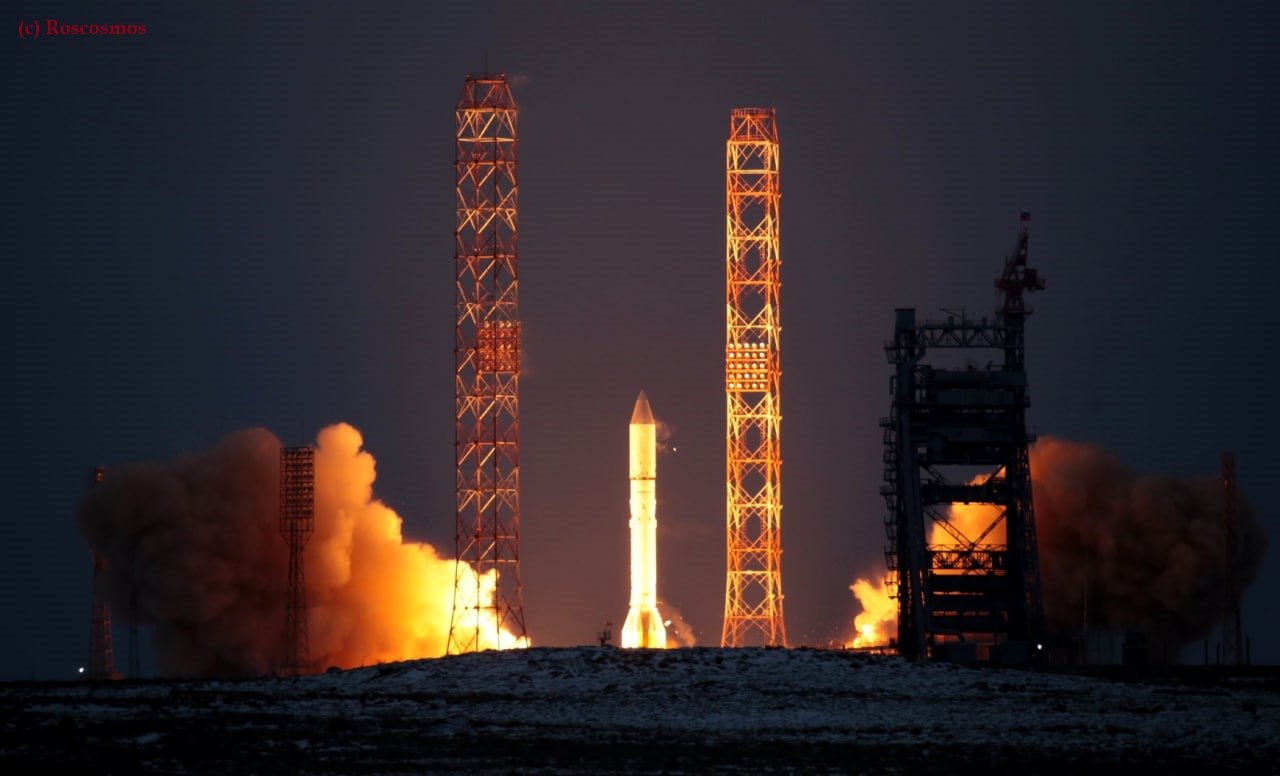
Russia successfully launched a Progress MS-33 cargo spacecraft to the International Space Station (ISS) today from the Baikonur Cosmodrome in Kazakhstan, marking the resumption of Russian flights to the orbital outpost from a key launch pad repaired after damage late last year.
The Soyuz-2.1a rocket lifted off at 11:59 UTC (3:00 p.m. Moscow time / 7:59 a.m. EDT) from Site 31/6 at Baikonur. Roscosmos confirmed the spacecraft separated nominally from the rocket’s upper stage about nine minutes after liftoff and entered its planned orbit. The uncrewed Progress MS-33—also designated Progress 94 by NASA—is carrying more than 2.5 tonnes (approximately 2,500–2,600 kg) of supplies, including food, water, propellant for ISS refueling, scientific equipment, and other essentials for the station’s multinational crew.
Docking to the Poisk module on the Russian segment of the ISS is scheduled for March 24 at approximately 4:35 p.m. Moscow time (1:35 p.m. GMT / 9:35 a.m. EDT), following a roughly 49.5-hour rendezvous profile.
The mission represents the 186th flight in the long-running Progress series, which has been delivering cargo to space stations since the 1970s. The Progress spacecraft, derived from the reliable Soyuz design, remains a cornerstone of Russia’s contribution to ISS logistics despite geopolitical tensions and Western sanctions affecting the Russian space program.
Today’s launch was particularly significant as it was the first from Site 31/6 since November 2025, when the previous mission (Soyuz MS-28 crewed flight) caused structural damage to parts of the launch infrastructure during ascent. Repairs to the pad were completed in recent months, allowing Roscosmos to restore regular operations from the historic facility. The successful liftoff demonstrates the effectiveness of those restoration efforts and Russia’s continued commitment to sustaining its role in the ISS partnership.
Online reactions to the launch were mixed. Official Russian channels and supporters celebrated the event as a display of technical reliability, with the Russian Embassy in South Africa sharing dramatic footage of the liftoff and describing it as a “thrilling moment.” Some users praised the achievement amid ongoing international challenges, while critics in replies questioned the age of the Soyuz-based technology or linked it to broader geopolitical commentary.
The ISS currently hosts Expedition crews conducting research in microgravity, biology, materials science, and technology demonstrations. Regular cargo deliveries like Progress MS-33 help maintain station operations ahead of planned crew rotations, including the upcoming Soyuz MS-29 mission targeted for mid-2026.
Roscosmos has not reported any anomalies during today’s ascent, though one update noted a minor issue with antenna deployment on the cargo ship that did not affect the primary mission objectives. Ground teams continue to monitor Progress MS-33’s journey toward autonomous docking later this week.
Russian MFA and ISS