
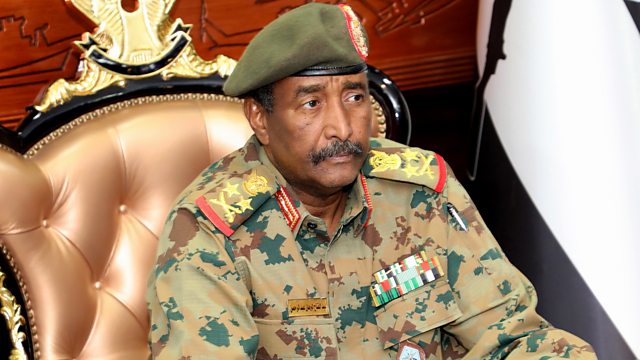
The Sudanese government has formally requested that the United States designate the Rapid Support Forces (RSF), the paramilitary group led by Mohamed Hamdan Dagalo (commonly known as “Hemedti”), as a terrorist organization. This call came shortly after the U.S. announced its own designation of the Sudanese Muslim Brotherhood (a local branch of the transnational Islamist group) as a terrorist entity.
On March 9, 2026, the U.S. Department of State, under Secretary Marco Rubio, designated the Sudanese Muslim Brotherhood as a Specially Designated Global Terrorist (SDGT). The department also stated its intent to formally classify it as a Foreign Terrorist Organization (FTO), with the FTO designation taking effect on March 16, 2026 (following publication in the Federal Register). The U.S. accused the group of using unrestrained violence against civilians to undermine peace efforts in Sudan and to promote a violent Islamist ideology. Specifically, Washington highlighted that many of its fighters receive training and other support from Iran’s Islamic Revolutionary Guard Corps (IRGC), and that the group’s armed wing, the al-Baraa Bin Malik Brigade (previously designated under Executive Order 14098 in September 2025), has been involved in mass executions of civilians amid the ongoing civil war.
In response, Sudan’s Ministry of Foreign Affairs welcomed the U.S. action against the Muslim Brotherhood but emphasized that consistency is needed. The ministry argued that all groups violating international humanitarian law, committing acts of terrorism, crimes against humanity, war crimes—including genocide—should face similar terrorist designations. It explicitly urged the U.S. to designate the RSF as a terrorist organization, citing the group’s documented record of such violations during the conflict.
The civil war in Sudan erupted in April 2023 between the Sudanese Armed Forces (SAF), led by General Abdel Fattah al-Burhan (the de facto leader of the transitional government), and the RSF paramilitary forces under Hemedti. The conflict has caused widespread atrocities, massive displacement, and a severe humanitarian crisis.
Reports indicate complex ties between the SAF and Islamist elements, including the Muslim Brotherhood (also referred to as remnants of the former regime’s Islamic Movement). The U.S., along with allies like Egypt and Saudi Arabia, has pressured al-Burhan to sever connections with such groups to avoid further sanctions and to support a democratic transition. The recent U.S. designation of the Sudanese Muslim Brotherhood puts additional strain on the SAF, as analysts note that Islamist militias have provided significant fighters (up to 20,000) and support to the army in its fight against the RSF.
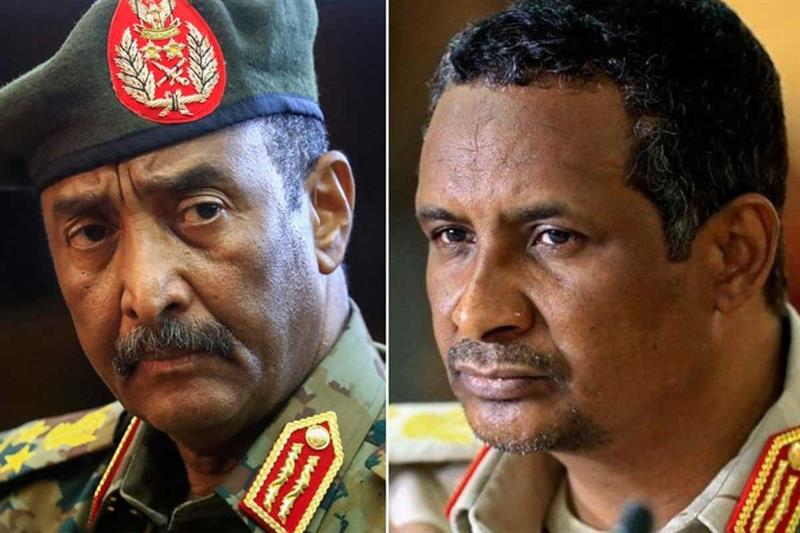
The RSF has faced growing international calls for terrorist designation due to accusations of widespread abuses, including ethnic targeting, sexual violence, executions, and attacks on civilians—some describing actions in regions like Darfur as genocidal. While the U.S. has not yet designated the RSF (despite congressional pushes, petitions, and hearings as recent as late 2025 and early 2026), Sudan’s request leverages the timing of the Muslim Brotherhood decision to push for parity in labeling both sides’ alleged perpetrators of atrocities.
This development reflects escalating U.S. efforts under the current administration to counter Iranian influence (via IRGC links) and Islamist networks in the region, while Sudan seeks to isolate its rival paramilitary force internationally amid the protracted war.