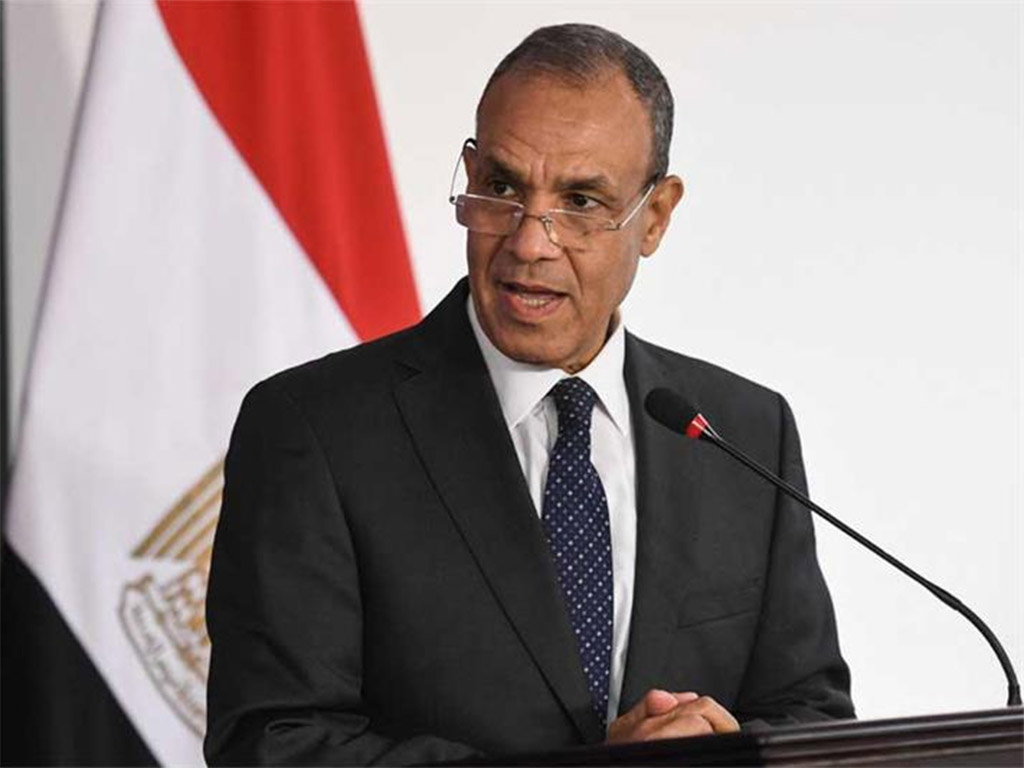
Egypt’s Foreign Minister Badr Abdelatty has said Ethiopia “will remain landlocked until the end of the world,” excluding it from Red Sea governance and deepening tensions tied to the GERD dispute.
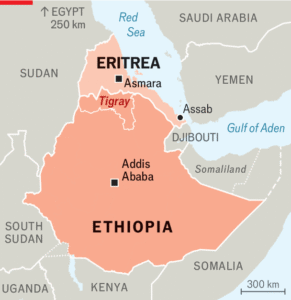
Egypt’s Foreign Minister Badr Abdelatty has reignited regional tensions after declaring that “Ethiopia will remain landlocked until the end of the world.” In an interview with Saudi broadcaster Al Arabiya, Abdelatty said the governance and security of the Red Sea is a matter for the countries that border it, excluding landlocked states from participation.
“Geography is a divine decree that man cannot change,” Abdelatty said, adding that only littoral nations have the legal, strategic, and moral responsibility to administer the Red Sea.
Abdelatty also announced that Egypt and Saudi Arabia are working on a new framework for managing the Red Sea — one of the world’s busiest trade and energy routes. Egypt argues that the eight coastal states (Egypt, Sudan, Eritrea, Djibouti, Saudi Arabia, Yemen, Jordan, and Israel) alone should have legitimate authority in governing the sea.
Prime Minister Abiy Ahmed has repeatedly argued that Ethiopia’s bid for maritime access is a “historical and acceptable request.” In October 2023, Abiy asked Parliament to reconsider Ethiopia’s need for an outlet to the sea. At the launch of his book Yemedefer Mengist (Government of Synergy) on 16 September 2025, Abiy countered critics by saying:
“If there is an Ethiopian who believes that Ethiopia will forever remain a prisoner of geography, he is dead standing up.”
Abiy’s rhetoric directly contradicts Abdelatty’s claim, and Ethiopian officials continue to press the issue through diplomatic channels even as neighboring states view the campaign cautiously.
Getty Images
The growing Red Sea debate overlaps with the long-running dispute over the Grand Ethiopian Renaissance Dam (GERD) on the Blue Nile. Speaking at the UN General Assembly, Minister Abdelatty accused Ethiopia of “endangering the lives of millions” downstream and warned Egypt may pursue international legal action.
Ethiopia’s Deputy Permanent Representative to the UN, Yoseph Kassaye, dismissed these allegations as “unfounded and misleading,” accusing Egypt of bringing “unreliable accusations” to the Security Council.
Nearby Eritrea has urged restraint. A group of Eritrean intellectuals warned international bodies on 8 October 2025 that “no country has the legal or moral right to forcibly change another country’s borders.” During a five-day visit to Cairo, President Isaias Afwerki praised Egypt’s role in regional stability, and President Abdel Fattah el-Sisi reiterated support for Eritrea’s sovereignty.For Egypt, the Red Sea debate is also an economic issue. The Suez Canal — a major source of national revenue — has suffered after repeated Houthi attacks on Red Sea shipping routes. President el-Sisi estimated in May 2025 that the canal was losing around $800 million per month because of regional instability.The dispute highlights how questions of geography, water security, and maritime access intersect with national pride and regional power. Analysts warn that as Egypt and Ethiopia pursue competing strategies, alliances across the Horn of Africa may shift — with consequences for trade, energy routes, and maritime safety in one of the world’s most strategic waterways.
The HahuPrime News Desk reports on Ethiopia, Eritrea, the Horn of Africa, East Africa, the Red Sea and the Middle East. Our reports separate confirmed facts from claims and analysis, attribute every claim, and list their sources. Corrections: info@hahuprime.com.